



Last Updated on March 31, 2026
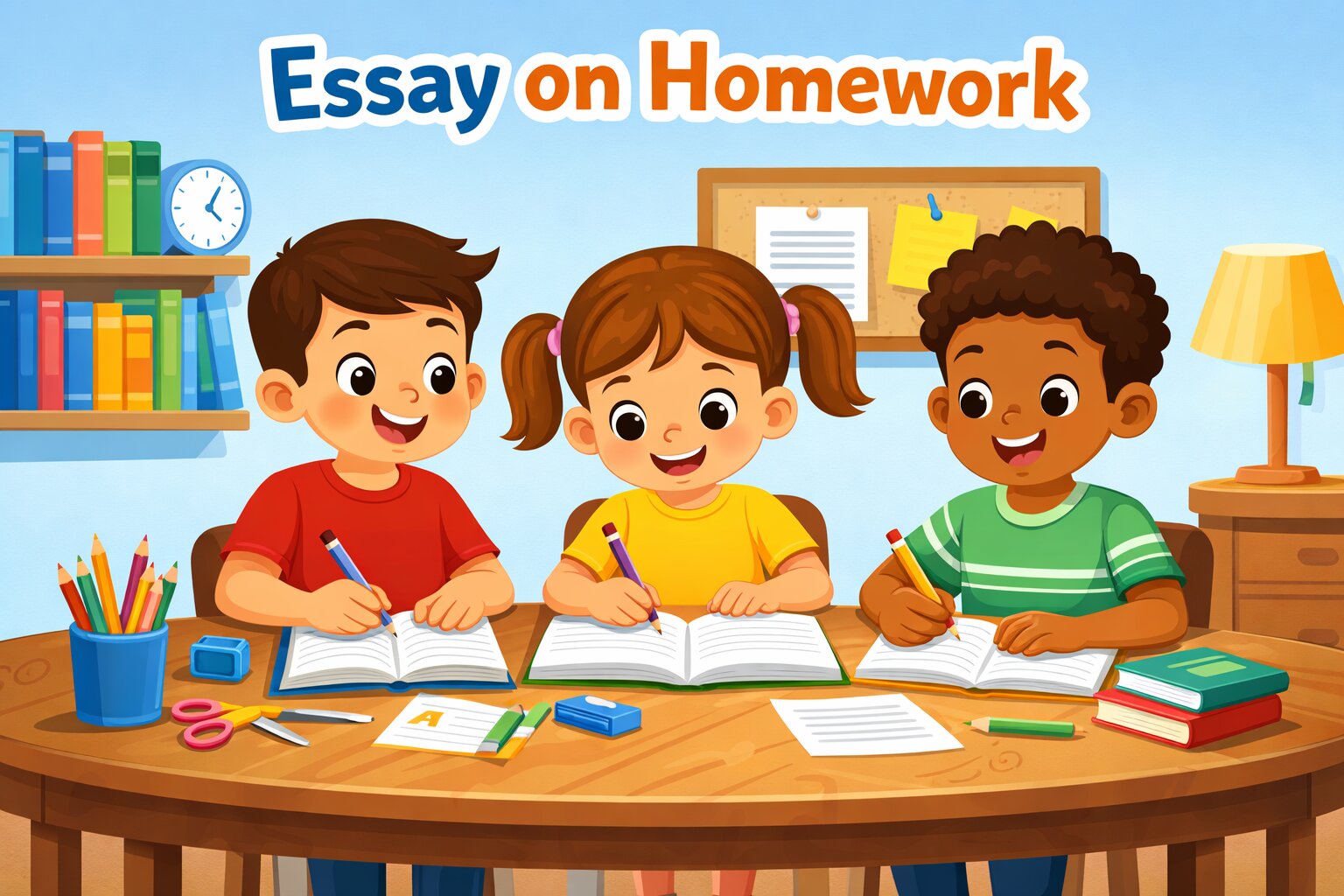
In the bustling world of education, homework continues to stir lively debates among students and children. Writing an essay on homework allows young minds to examine their place in daily learning routines. A well-crafted homework essay in English sheds light on how assignments extend classroom lessons into the home environment, building skills such as focus and perseverance. Yet, perspectives vary widely.
Thank you for reading this post, don't forget to subscribe!
This collection features a thoughtful analysis of the pros and cons of a homework essay, balancing advantages such as reinforcing knowledge and fostering independence with challenges such as fatigue and limited free time. Homework bridges school and home, promoting discipline while prompting questions about balance.
Through these essays, children explore their true value fostering academic growth, creativity, and responsibility. Whether advocating its merits or urging moderation, these pieces encourage critical thinking, equipping learners for success in an ever-evolving educational journey.
Key Points To Remember When Writing An Essay on Homework
In this section, we explore essential strategies for success. Discover how to master an essay about homework with focused tips on structure, balance, and impact.
- Hook readers with a question like “Is homework helpful or harmful?” and outline your stance on its value
- Define homework clearly and explain its purpose in reinforcing school lessons at home
- Balance pros (e.g., builds discipline and skills) with cons (e.g., causes stress and cuts playtime)
- Use examples like daily maths practice or project deadlines to illustrate homework’s real impact
- Include children’s viewpoints or surveys to show how homework affects study-life balance
- Conclude by recommending smart homework habits, like fixed timetables or limited hours
10 Lines On Homework
Young learners often need simple, concise ways to express ideas about school tasks. This essay for classes 1, 2, and 3 distils key thoughts into just 10 lines on homework.
- Homework means work we do at home after school.
- It helps us remember what we learn in class.
- Homework can be fun, like drawing or reading stories.
- Sometimes it teaches us to manage our time well.
- Good homework makes us feel proud when finished.
- Too much homework can make us tired and bored.
- Parents can help by sitting quietly with us.
- We should do our homework in a neat place every day.
- Homework builds good habits for grown-up life.
- A little homework every day keeps lessons fresh.
Paragraph On Homework
This section presents a concise paragraph suitable for young writers learning about school routines. Consider it an excerpt from a ‘Homework Is Food For Students’ essay, providing essential insights to stimulate young minds.
Homework is like yummy food for our brains! Just as we eat breakfast, lunch, and dinner to stay strong, we do homework to make our minds sharper. When we come home from school, homework helps us remember what our teacher taught us. We practise sums, write neat letters, and read fun stories. Sometimes homework feels hard, but when we finish, we feel happy and proud! Our parents help us if we get stuck, and we can ask questions too. Doing homework every day makes us smarter and better prepared for new things in school. That’s why homework is so important!
Short Essay On Homework
Young students benefit from brief essays that capture big ideas quickly. This short essay on homework explores its role in learning with clarity and balance.
Homework is work assigned by teachers to be done at home. It helps students practise what they learn in school, like maths problems or spelling words. Many children enjoy creative tasks, such as drawing posters or writing short stories, which make learning fun.
One big advantage of homework is that it builds good habits. Completing it on time teaches discipline and responsibility. It also lets parents see what their child learns, so they can help if needed. Studies show that regular homework improves memory and understanding of tough topics.
However, too much homework has downsides. It can cause stress, leaving little time for play or rest. Tired children might not focus well, leading to mistakes or a dislike for studies. Experts suggest limiting it to 30-60 minutes daily, depending on age.
In conclusion, homework is useful when balanced. Schools should assign meaningful tasks, not just busywork. Students can make it enjoyable by using colourful notebooks or studying with friends. With the right amount, homework truly supports our growth as smart, confident learners.
Long Essay On Homework
For deeper exploration, a long essay on homework examines its history, benefits, challenges, and future role in education. This detailed piece equips older children with comprehensive insights and structured arguments.
Homework, assigned by teachers for completion at home, is a foundational pillar of modern education worldwide. From simple puzzles in primary school to complex essays in secondary levels, its purpose is to extend learning far beyond the ringing of the classroom bell. Despite its prevalence, the worth of homework remains a subject of passionate debate among educators, parents, and students. This essay explores the significance of homework by examining its chief advantages and disadvantages, ultimately providing a balanced perspective on how it can be optimised for children’s holistic growth.
Why Is Homework Important?
Homework serves an essential function by reinforcing daily lessons through repetition and practical application. It cultivates self-study habits—skills indispensable for lifelong learning—and enables teachers to gauge student understanding through completed assignments. In disciplines such as mathematics and languages, consistent practice cements concepts that limited classroom hours cannot fully address. Furthermore, homework fosters independence, preparing students for the rigorous demands of higher education and future careers.
Advantages And Disadvantages Of Homework
While homework undeniably influences academic development, it encompasses a range of strengths and drawbacks that merit careful consideration. The following sections present these aspects in a clear and organised manner.
Advantages
1. Builds Discipline : Homework instils a sense of routine and discipline, teaching children to manage their time effectively among study, play, and rest. This structured approach nurtures reliability and self-regulation that persist into adulthood.
2. Reinforces Learning : Reviewing material at home reinforces knowledge; for example, practising additional math problems enhances both speed and accuracy over time.
3. Develops Independence : Tackling assignments independently sharpens problem-solving skills and fosters self-confidence, as students learn to overcome challenges on their own.
4. Involves Parents : Homework encourages family involvement by providing opportunities for parents or guardians to offer guidance, discuss academic progress, and strengthen the connection between home and school.
5. Prepares For Future : By simulating real-world deadlines, homework helps students develop perseverance and focus—qualities that are vital for careers requiring sustained effort and commitment.
Disadvantages
1. Causes Stress : Excessive homework can trigger anxiety, causing children to lose sleep or develop a negative attitude toward school due to constant pressure.
2. Limits Playtime : Spending evenings on homework can limit valuable recreation time, potentially hindering physical health and reducing opportunities for creative play essential to overall development.
3. Unequal Home Support : Students from crowded or under-resourced households may struggle to complete assignments without quiet spaces or parental support, exacerbating existing achievement gaps.
4. Reduces Creativity : Monotonous or repetitive homework tasks can stifle creativity, as rote exercises overshadow opportunities for exploration and original thought.
5. Poor Quality Work : Fatigue from excessive assignments often leads to rushed, error-prone work, ultimately undermining the educational benefits that homework is meant to provide.
Homework has immense potential when implemented thoughtfully—by limiting quantity, diversifying formats, and personalising assignments to individual needs. By leveraging its strengths, such as fostering discipline, while minimising drawbacks like stress, educators can transform homework into a powerful tool for promoting well-rounded student success.
What Will Your Child Learn From A Homework Essay?
Writing a homework essay equips your child with essential skills for school and beyond. They learn to structure thoughts logically—from captivating introductions to evidence-backed arguments and neat conclusions—honing clarity and persuasion. Exploring pros like discipline alongside cons such as stress fosters critical thinking and balanced viewpoints. Through research, real examples, and personal reflections, children grasp the role homework plays in building independence and time management. Ultimately, this exercise boosts confidence, vocabulary, and a love of writing, turning everyday tasks into stepping stones toward academic success and creative expression.
FAQs
1. How Often Should I Practise Writing Essays?
Try writing one short essay every weekend on different topics, building speed and ideas without feeling like extra schoolwork.
2. Can I Use Pictures In My Homework Essay?
Yes! Draw simple sketches of homework scenes to illustrate your points, making your essay more colourful and easier to understand.
3. What Tools Help With Essay Writing Practice?
Use notebooks, colourful pens, or apps for typing—practise copying good essays first, then write your own versions.
These essays reveal homework’s dual role: a vital learning tool when balanced right. From simple lines for little ones to in-depth pieces for older students, it builds skills like discipline and critical thinking. Parents and teachers must guide wisely to avoid overload. Let children embrace homework as a path to confidence and success, sparking lifelong curiosity.
Also Read:
Essay on Online Education
Essay on My Favourite Subject
Essay on the Importance of Education