

Last Updated on March 27, 2026
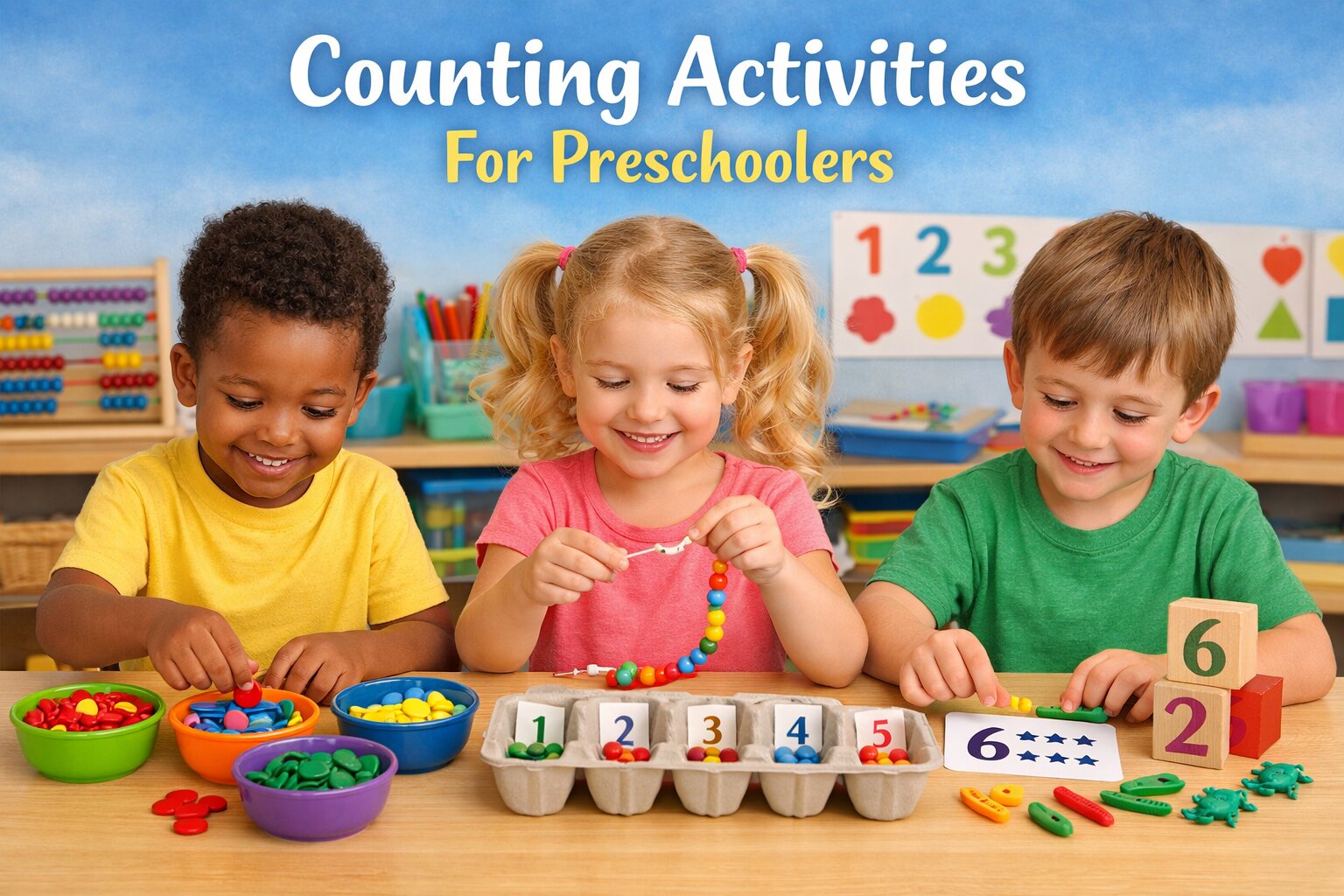
Math counting activities for preschoolers are key to building early numerical skills and laying the groundwork for future math success. Preschoolers learn best through play, and counting games for preschoolers help them grasp important concepts like one-to-one correspondence and number recognition. Simple tasks such as sorting various objects or counting aloud make learning both effective and enjoyable for young children.
Thank you for reading this post, don't forget to subscribe!
As children enter kindergarten, focusing on counting numbers for kindergarten supports their ongoing progress in maths and strengthens their confidence with numbers. These hands-on activities also improve fine motor skills, language, and social abilities, making learning more holistic. Children can count beads, clap out rhythms, or match items in fun and engaging ways that encourage participation.
This article presents 20 practical math counting activities for preschoolers, suitable for use at home or in the classroom environment. Try these activities to help young learners build a strong foundation in maths and foster a lifelong interest in numbers and counting.
What is A Counting Activity?
A counting activity is a hands-on exercise that teaches young children to recognise, sequence, and quantify numbers through play. It involves using everyday objects, such as toys, fruits, or blocks, to practise skills such as matching quantities to numerals and understanding order. For instance, a counting activity for 3-year-olds might include lining up cars and saying “one, two, three” aloud. These activities build number sense, which is vital for preschool maths. They encourage observation, fine motor control, and verbal skills while keeping children engaged without pressure.
Importance of Counting Activities for Preschoolers
Counting activities are essential for preschoolers as they build core maths foundations, such as number sense and logical thinking. Engaging in counting games and activities in kindergarten early supports smooth transitions to formal learning and fosters key skills outlined below.
1. Builds Number Recognition
Children learn to identify numbers visually and verbally through matching games. This strengthens memory and prepares them for reading numerals confidently.
2. Develops One-To-One Correspondence
Activities like touching objects while counting teach that each number represents one item. It prevents common errors and builds accurate counting habits.
3. Enhances Sequencing Skills
Ordering beads or steps in a song helps grasp number order. This skill supports pattern recognition, which is essential for advanced maths.
4. Boosts Fine Motor Control
Manipulating counters or drawing numbers improves hand-eye coordination. It aids writing readiness and daily tasks, such as buttoning clothes.
5. Improves Concentration And Focus
Sustained counting games train attention spans. Preschoolers stay engaged longer, benefiting classroom learning.
6. Encourages Language Development
Verbalising counts expands vocabulary and pronunciation. It links numbers to words, aiding communication.
7. Fosters Problem-Solving Abilities
Challenges like “how many more?” spark logical thinking. Children learn to compare and estimate quantities.
8. Promotes Social Interaction
Group counting turns play into teamwork. It teaches sharing and turn-taking alongside maths concepts.
Fun & Engaging Counting Activities for Preschoolers
Keep kids excited about numbers with these playful counting math activities for preschoolers that turn learning into an adventure. From everyday objects to simple games, the ideas below are easy to set up at home or in class.
1. Button Sorting Count
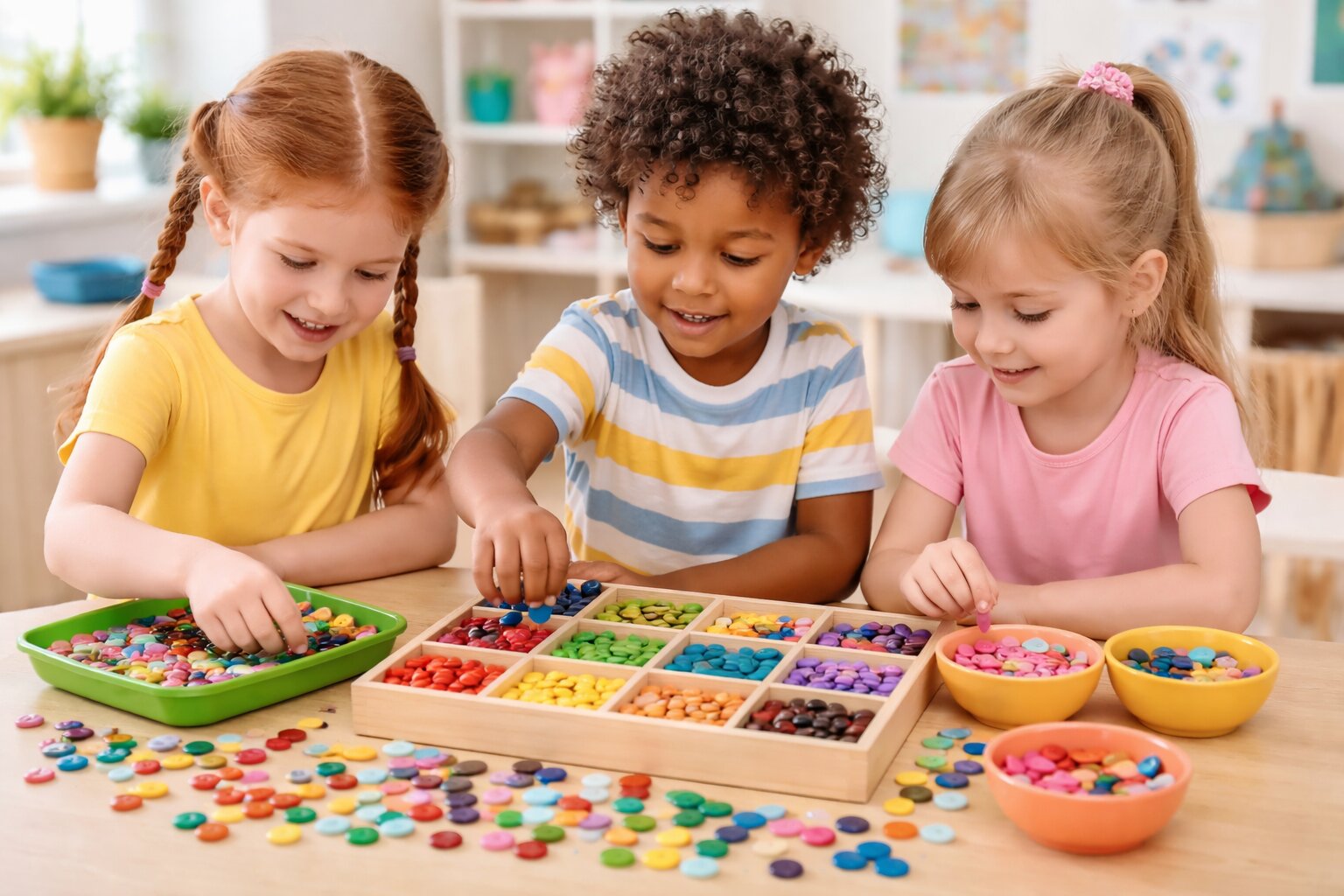
Collect 20-30 buttons in various colours and place them in a bowl. Have children sort into piles by colour, then count each pile aloud while pointing to each button (e.g., “one red, two red”). This builds confidence in one-to-one correspondence, colour sorting, and verbal counting.
2. Sock Pair Match
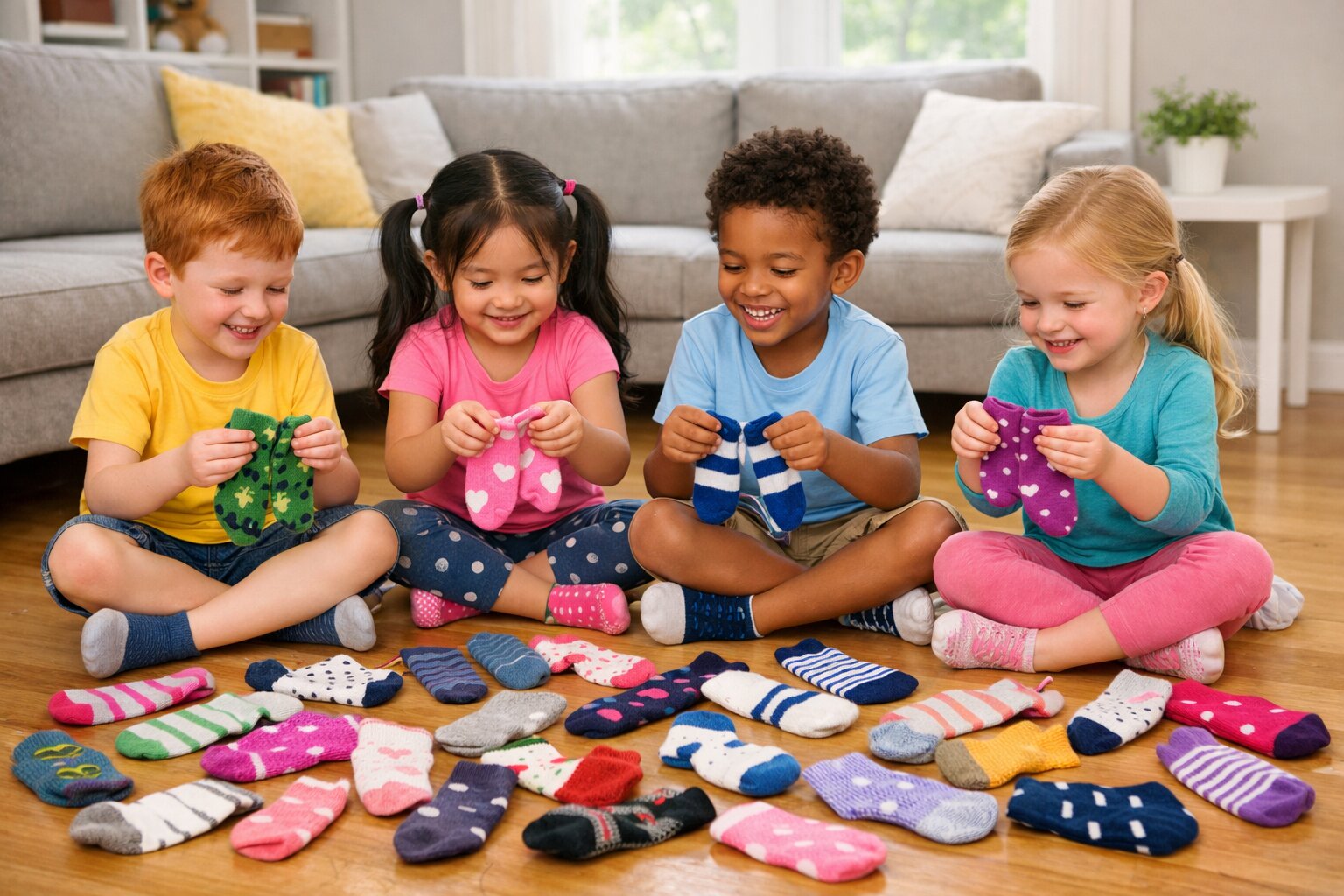
Gather 10 mismatched socks and scatter them on the floor. Children pair them up and count each pair formed (e.g., “one pair, two pairs”). Discuss the odd ones left over. Improves matching skills, introduces even/odd numbers, and encourages perseverance.
3. Spice Jar Shake
Fill clear jars halfway with lentils or rice, seal tightly, and label with numbers 1-5. Children shake each jar the labelled number of times while counting aloud, then compare which feels fullest. Enhances auditory counting, sensory exploration, and basic estimation.
4. Leaf Fall Count
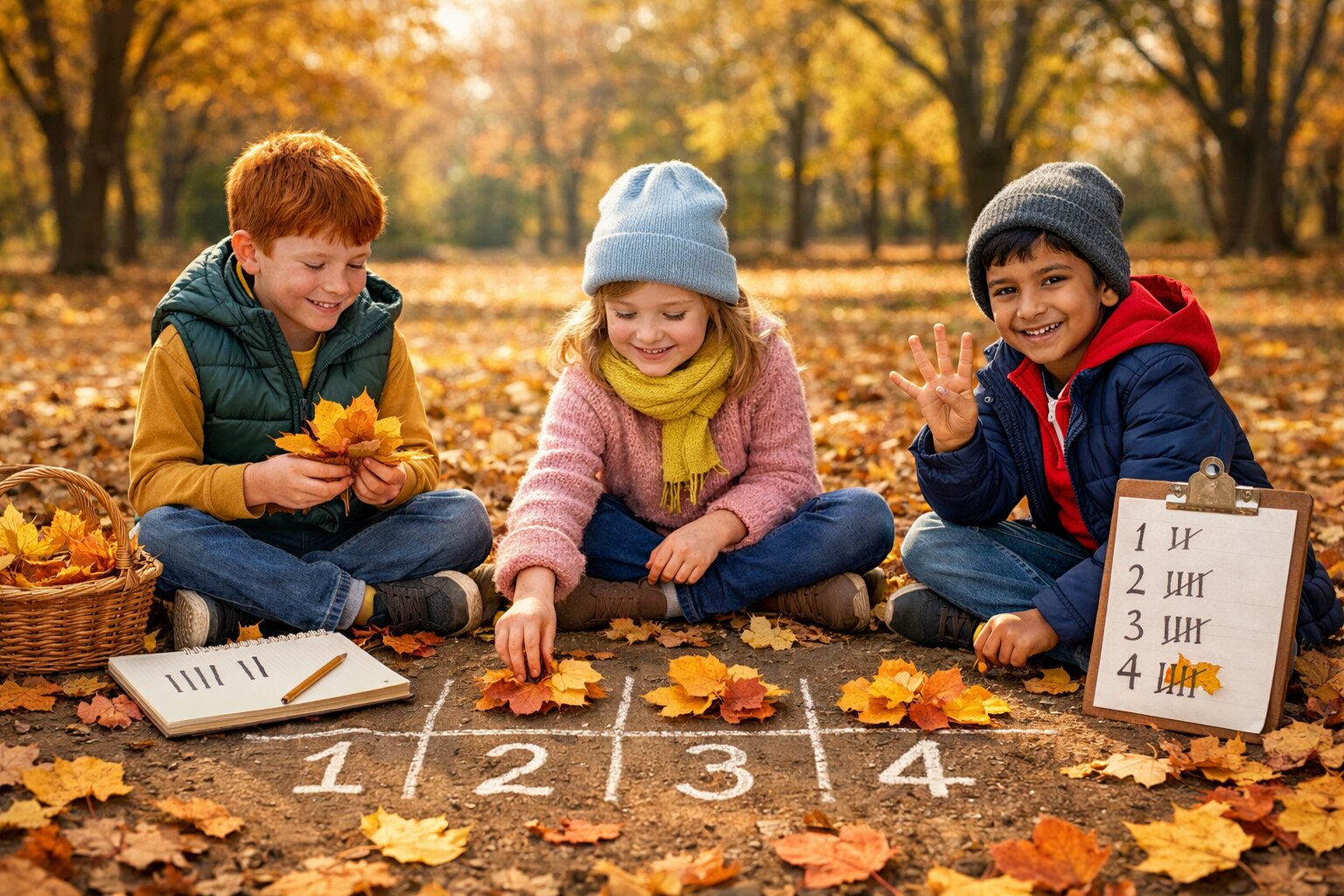
Go outside to collect 20 leaves, then drop them, one by one, into the numbered piles on a tray. Count totals and draw pile representations. Connects nature to maths, fostering observation, addition basics, and creative expression.
5. Pasta Necklace Thread
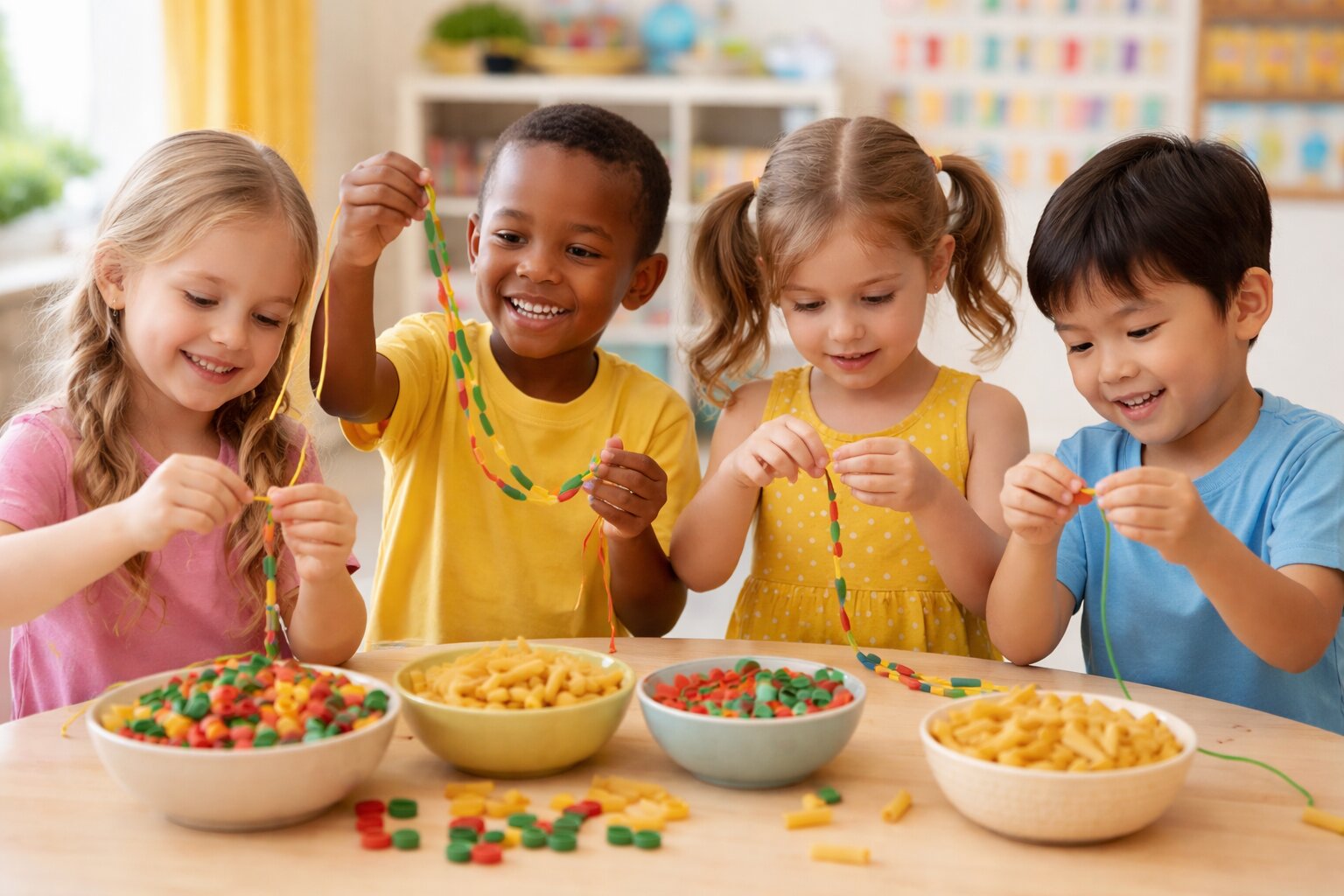
Provide dry pasta, yarn, and tape (to stiffen yarn ends). Children thread pasta while counting up to 20, creating colour patterns. Wear it as a necklace to recount. Strengthens fine motor skills, promotes sequencing, and makes counting wearable fun.
6. Shadow Puppet Numbers
In a dim room, use a torch to cast shadows of hands or toys forming numbers 1-10 on a wall. Count elements in each shadow (e.g., fingers for five). Tell a simple number story. Sparks creativity, teaches number formation, and builds spatial awareness.
7. Coin Flip Tower
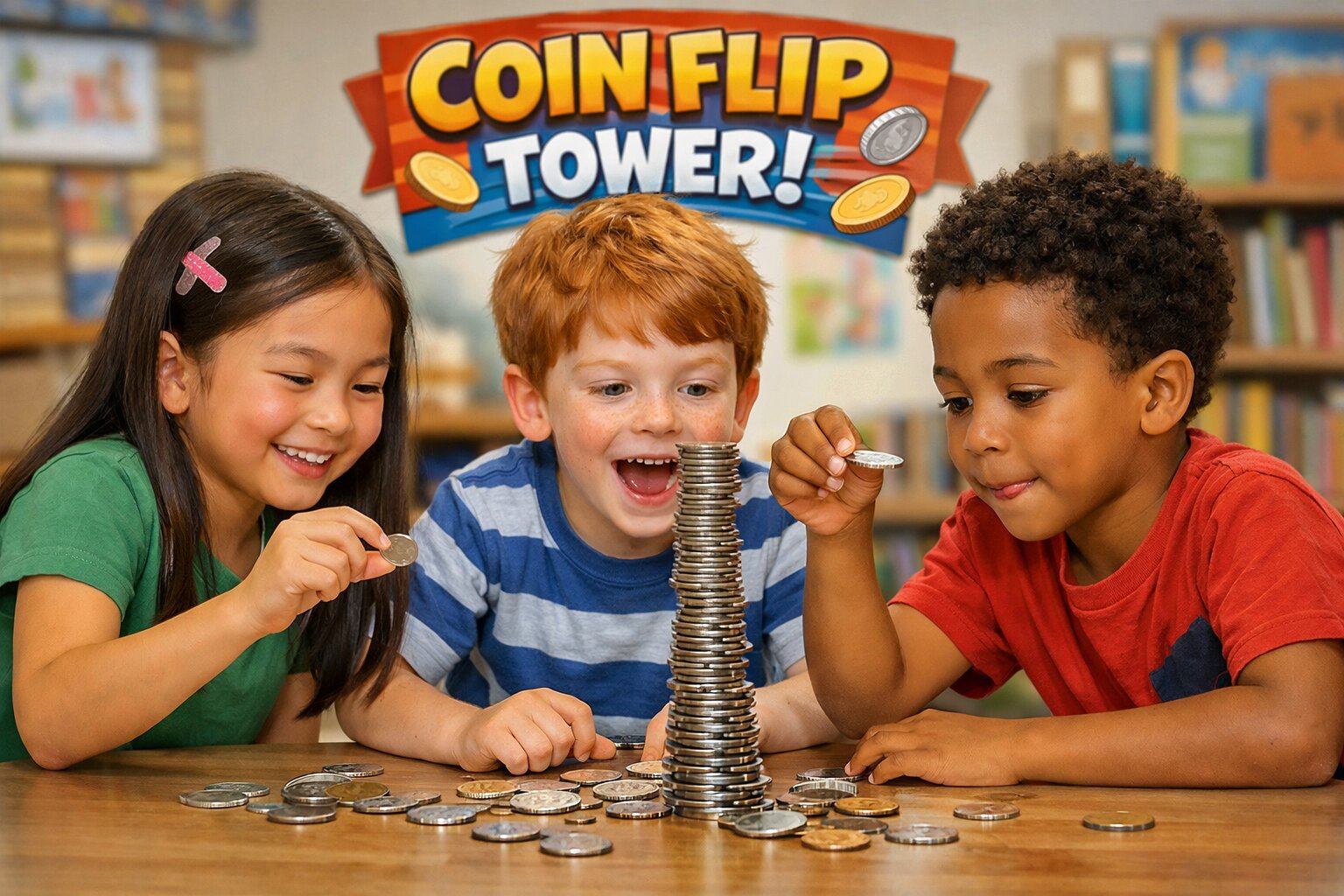
Use play coins or real ones safely; flip to decide the block count (heads = add 2, tails = add 1), then stack and measure the tower height by counting blocks. Compete for the tallest stable tower. Introduces simple probability, measurement, and structural thinking.
8. Bubble Wrap Pop
Tape bubble wrap sheets in rows of 5-10 bubbles. Children pop one row at a time, counting each pop aloud, then compare row totals. Time for speed. Boosts focus and large-motor release, and reinforces sequential counting.
9. Book Page Fingers
Choose a picture book; on each page, children point to and count words or pictures (e.g., “five animals”). Tally pages at the end. Links literacy to maths, improving rhythm, vocabulary, and comprehension of quantities in stories.
10. Ice Cube Melt Race
Freeze water in trays with numbers drawn on (1-6 cubes per section). Place in bowls; children count as cubes, melt and measure water levels with marked sticks. Predict winners. Teaches quantity change, time concepts, and scientific observation.
11. Magnet Letter Hunt
Hide magnetic numbers 1-10 around the fridge or metal board. Children hunt for, find, and place objects in order while counting their finds. Sequence into a line. It aids memory recall, spatial sequencing, and interactive play.
12. Feather Balance Scale
Create a scale using a hanger, string, and cups; add feathers to each side while counting to balance (e.g., three on the left, three on the right). Predict and adjust. Develops comparison, symmetry, and early weighing skills.
13. Ruler Body Measure
Use a flexible ruler or string to measure fingers, toes, or arms in non-standard units (e.g., hand spans). Record counts on a body chart. Introduces measurement variety, body awareness, and data recording.
14. Cereal Box Jump
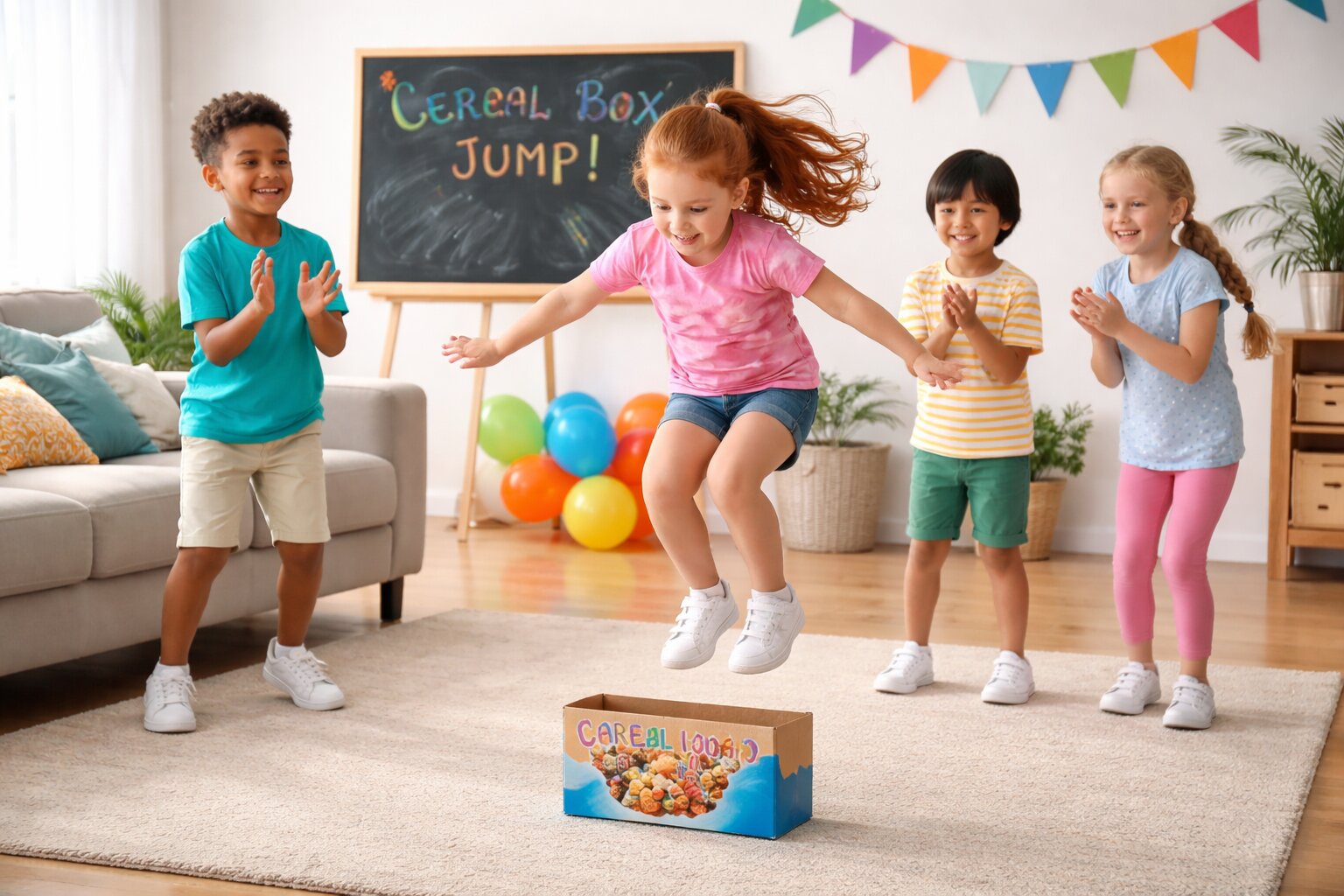
Line up 5-10 empty cereal boxes in a row. Children jump over each other, calling their number (first, second), then stack and recount heights. Builds physical fitness, ordinal numbers, and spatial navigation.
15. Pom-Pom Pipe Drop
Tape straws into tunnel paths; drop pom-poms through, counting how many land in numbered cups below. Adjust paths for challenge. Improves hand-eye coordination, trajectory understanding, and counting accuracy.
16. Clock Hand Point
Draw or print a large paper clock. Spin hands to numbers; children point and count hours clockwise (one o’clock, two). Mimic daily routines. Prepares for time-telling, directionality, and routine-based counting.
17. Bottle Cap Lid Sort
Collect 20 bottle caps in three sizes; sort into stacks, then build towers, counting layers (small = 5 high, large = 3). Test stability. Enhances size classification, stability engineering, and proportional counting.
18. String Bead Abacus
Stretch strings between chairs; thread beads in groups of five, sliding them along while counting (five, ten). Recount by sliding back. Reinforces grouping, place value introduction, and manipulative practice.
19. Mirror Number Trace
Dip finger in water and write numbers 1-10 on a mirror; trace strokes while counting aloud, then wipe and repeat with eyes closed. Promotes sensory feedback, writing muscle memory, and number fluency.
20. Ball Bounce Echo
Bounce a soft ball on the floor, counting each bounce aloud (one bounce, two); pass to a partner to continue the count. Vary bounce heights. Builds rhythm, social turn-taking, and auditory memory for sequences.
Tips To Teach Counting To Preschoolers
Make counting exercises effective and enjoyable with these simple strategies tailored for young learners. Follow the tips below to integrate counting into daily routines at home or school.
1. Use Everyday Objects
Count items like spoons during meals or steps on stairs. This makes counting relatable, embedding it into routines for natural repetition and real-world application.
2. Incorporate Songs And Rhymes
Sing number songs like “One, Two, Buckle My Shoe” with claps or actions. Music aids memory retention, rhythm improves sequencing, and fun keeps children engaged.
3. Model Slow, Clear Counting
Demonstrate by deliberately touching each item while saying the numbers aloud. It accurately teaches one-to-one correspondence, reducing rushing errors and building confidence.
4. Add Movement And Play
Jump or hop for each number counted in games. Physical activity boosts energy, enhances focus, and links body movement to abstract numbers.
5. Repeat With Variety
Reuse activities but change objects (e.g., count blocks, then cars). Variation prevents boredom, reinforces skills through familiarity, and adapts to short attention spans.
6. Praise Effort, Not Perfection
Celebrate attempts like “Great job counting to five!” Positive feedback motivates persistence, reduces anxiety, and encourages repeated practice.
7. Create Visual Aids
Use number lines or charts with stickers for tracking counts. Visuals support visual learners, make progress tangible, and aid independent practice.
8. Keep Sessions Short
Limit to 5-10 minutes, multiple times a day. Brief bursts match preschoolers’ attention spans, prevent frustration, and provide frequent opportunities for skill-building.
Common Mistakes To Avoid While Teaching Counting To Preschoolers And Kindergartners
Steer clear of pitfalls that hinder young children’s progress in counting with these insights. The points below highlight errors to avoid for more effective learning.
1. Rushing The Count
Saying numbers too quickly without touching each item skips one-to-one correspondence. It confuses children, leading to rote memorisation without understanding.
2. Skipping Repetition
Changing activities too often prevents mastery of the basics. Young learners need frequent practice to solidify skills like sequencing.
3. Correcting Harshly
Pointing out errors sternly causes frustration and reluctance. Positive guidance keeps motivation high and builds resilience.
4. Overloading With Numbers
Jumping to teens before mastering 1-10 overwhelms short attention spans. Start small to build confidence and a solid foundation.
5. Ignoring Individual Pace
Pushing all children at the same pace ignores varied readiness levels. Tailoring prevents gaps and fosters inclusive learning.
6. Forgetting Fun Elements
Using only worksheets without play makes counting dull. Engagement drops without games, leading to reduced retention and enthusiasm.
FAQs
1. What If Counting Feels Hard?
It’s okay if numbers mix up sometimes—everyone starts slow! Practice with fun things like your fingers or pets’ paws and ask a grown-up to count with you slowly; you’ll get super-fast soon.
2. How Do I Count Backwards?
Start at 5 and say “five, four, three” while jumping down stairs or eating crackers one by one. It’s like a rocket launch and helps with rocket countdowns or giving back change.
3. What About Counting On A Computer?
Use free kid apps with number pop-ups or counting songs on a tablet. Touch the screen to count fruits it’s like magic and helps if you like screens more than paper.
4. When Will Counting Get Easier?
After 10-20 fun days of short plays, numbers stick like glue! Track with a star chart—soon you’ll count to 20 without thinking, ready for bigger maths adventures.
Counting opens doors to maths mastery for preschoolers, turning everyday moments into skill-building fun. With these 20 simple activities, watch your child gain confidence in numbers while playing. Start today – consistency sparks joy and lasting progress!
Also Read:
Skip Counting For Kids
Ways to Teach your Child Counting
Teaching Backward Counting to Preschoolers