



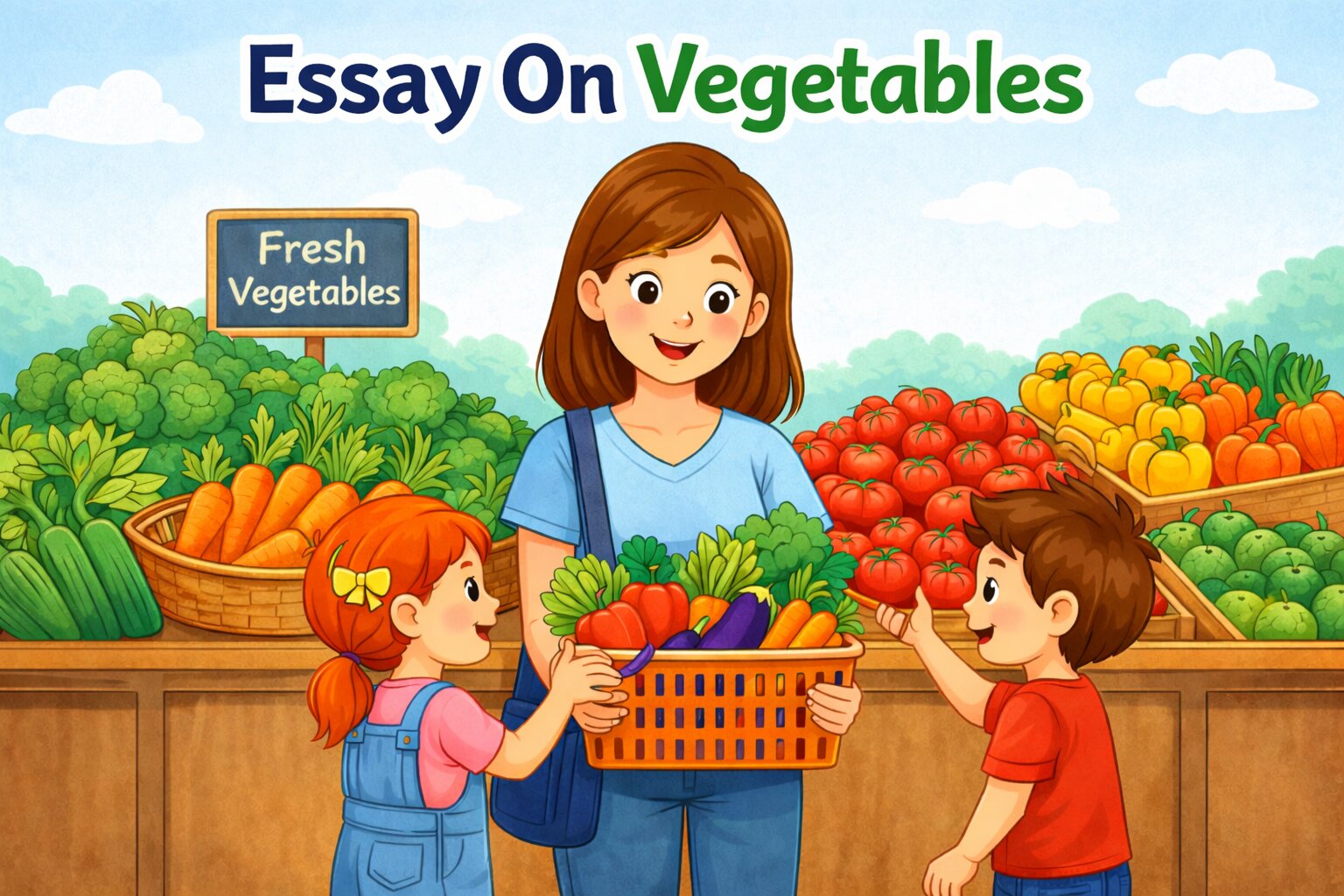
Vegetables are the vibrant heroes of a healthy diet, packed with essential nutrients that fuel our bodies and minds. In this comprehensive guide to essays on vegetables, we explore their importance through engaging formats perfect for schoolchildren. Whether you’re seeking a simple essay on vegetables in English in 10 lines, a crisp short essay, or a detailed long essay, these resources make learning fun and informative.
Thank you for reading this post, don't forget to subscribe!
From the crunchy carrots rich in vitamin A to the leafy spinach brimming with iron, vegetables offer endless variety and benefits. They boost immunity, aid digestion, and add colour to every meal. Writing essays on vegetables helps children appreciate nature’s bounty, understand balanced nutrition, and practise expressive language skills. Ideal for primary students, these essays encourage creativity while instilling healthy eating habits.
Key Points To Remember When Writing An Essay On Vegetables
Writing an effective essay on vegetables demands attention to structure, relevance, and engagement. This section outlines the key points to remember, helping young writers create clear, informative, and captivating pieces.
- Start with a strong introduction: Define vegetables (e.g., carrots, spinach), add a fun fact on nutrients, and state the essay’s purpose.
- Organise with a clear structure: Use an intro, body (types, nutrition, recipes), and a conclusion, with smooth transitions like “furthermore.”
- Include facts and examples: Mention specifics like broccoli’s vitamin C or potatoes in Indian meals, plus school garden ties.
- Use simple, descriptive language: Choose words like “crunchy” or “juicy” and add sensory details to engage young readers.
- Highlight benefits: Cover health perks (immunity, fitness), environmental gains, and sustainable practices like home gardening.
- End with a powerful conclusion: Summarise benefits, call to action (e.g., try a new recipe), and motivate readers.
- Review and edit thoroughly: Read aloud for flow, fix errors, and get feedback to refine your essay.
5 Lines On Vegetables
Here are five lines on vegetables in English for classes 1 and 2. These simple sentences help children build vocabulary and learn about healthy foods.
- Vegetables are healthy plant foods we eat daily.
- They provide vitamins to help us grow strong.
- Vegetables come in many colours and tastes.
- Eating them keeps us fit and well.
- Vegetables are good for our bodies and the environment.
10 Lines On Vegetables
These 10 lines provide an ideal format for a short essay for budding writers. Perfect as an essay for classes 1, 2, and 3, it introduces the role of vegetables in health and daily life with simple, engaging language.
- Vegetables are nutritious plants eaten raw or cooked for energy and growth.
- They appear in vibrant colours such as red, green, orange, and yellow.
- Common types include leafy greens, roots such as carrots, and fruits such as tomatoes.
- Packed with vitamins and minerals, vegetables boost immunity and strengthen bones.
- Eating them daily in salads, soups, or curries supports overall health.
- A diverse diet with vegetables helps prevent disease and aids digestion.
- Home gardening teaches care while providing fresh, organic produce.
- Vegetables enhance meals and add essential fibre to the diet.
- Choosing seasonal vegetables ensures freshness and lowers environmental impact.
- Including vegetables builds healthy habits for a longer, happier life.
Paragraph on Vegetables
This short vegetable paragraph serves as an accessible entry point for essay writing. It highlights the essentials of vegetables’ nutrition, varieties, and importance in a cohesive, single-paragraph format.
Vegetables are superfoods that keep us healthy and strong every day. They provide essential vitamins, minerals, and fibre to help us grow, stay active, and play. Crunchy carrots have vitamin A for good eyesight, green spinach gives iron for strong blood, and red tomatoes are packed with vitamin C to fight off germs. We can enjoy vegetables in many ways, such as fresh salads, tasty curries, or warm soups. Eating them helps prevent illness, supports digestion, and provides energy for all our activities. Try growing vegetables at home—it’s fun and gives you fresh, delicious choices to pick. Loving vegetables makes us happy, healthy kids who care for the Earth and our bodies.
Short Essay on Vegetables
This short essay on vegetables introduces key facts in a compact, reader-friendly format. Ideal for students seeking a quick yet informative overview of their nutritional value and role in daily life.
Vegetables are wonderful gifts from nature that keep us healthy and happy. They are parts of plants we eat, like roots, leaves, stems, and fruits. Carrots, with their bright orange colour, give us vitamin A for good eyesight. Green spinach is rich in iron, which helps make our blood strong. Juicy tomatoes provide vitamin C to fight colds and germs.
We find vegetables in every market, fresh and colourful. Eating them daily helps our tummy digest food well and gives us energy to run and play. They are used in salads, soups, curries, and stir-fries, making meals tastier and more fun. In India, we love potatoes in sabzi and bhaji with palak.
Growing vegetables in a home garden teaches us patience and care. We water seeds, watch them sprout, and pick ripe ones—nothing tastes better! Vegetables also help our planet by using less water than meat and keeping soil healthy.
Trying new vegetables can be exciting. Each season brings different choices—like soft peas in spring or juicy pumpkins in autumn. Tasting a variety helps us discover new favourites and makes our diet healthier.
Let us eat more vegetables to grow tall, stay fit, and smile big. They are simple superfoods for a bright future!
Long Essay on Vegetables
This essay on vegetables explores their types, nutritional value, cultivation, and cultural significance. It provides students with a useful resource for exams or projects, featuring clear facts, examples, and helpful tips.
Vegetables are precious gifts from nature. They are plant parts we can eat, such as roots (carrots), leaves (spinach), and even fruits (tomatoes). Vegetables are rich in essential nutrients that help our bodies grow strong and stay healthy. In busy Indian markets, we see a wide variety of vegetables, from brown potatoes to green bhindi. They make our meals colourful and tasty, and help us stay active and sharp in school. Vegetables are not just for eating—they inspire us to try gardening at home and care for the Earth. In this essay, I will share why vegetables are important, talk about my favourites, and explain why we should eat them every day.
Importance Of Vegetables
Vegetables help us stay healthy and happy. They give us energy, protect us from falling sick, and help us grow strong in body and mind.
There are many reasons why vegetables are good for us:
- Nutrient powerhouses: Vegetables offer a wide range of vitamins and minerals. For example, Vitamin A supports healthy vision, Vitamin C helps us recover from illness and keeps our skin healthy, and iron keeps us energised.
- Immunity and digestion champions: The fibre in vegetables keeps our digestion smooth and regular, while antioxidants protect our bodies from infections and help us recover faster when we fall sick.
- Fitness and heart guardians: Vegetables are naturally low in fat and rich in potassium, which helps control blood pressure and supports an active lifestyle without extra weight.
- Brain boosters: B vitamins found in vegetables help our brains stay alert and focused, improve memory, and support learning and creativity in school and at home.
- Eco-warriors: Choosing organic and local vegetables helps protect the environment by maintaining soil fertility and reducing pollution from long-distance transport.
- Culinary stars: Vegetables add colour, taste, and variety to our meals.
My Favourite Vegetables
Some of my favourite vegetables are carrots, spinach, tomatoes, and brinjal. I love eating orange carrots because they are crunchy and sweet, whether I eat them raw, in tasty halwa, or even in salads with a sprinkle of lemon.
Carrots help my eyes stay strong, especially when I read storybooks at night.
Spinach is soft and yummy when cooked in saag, rolled into stuffed parathas, or mixed into a cheesy sandwich.
Spinach has iron, which gives me lots of energy—just like Popeye! Tomatoes are red and juicy, and I enjoy them in curries, tangy chutneys, or even sliced with a bit of salt. They have Vitamin C, which helps me avoid colds, especially during the rainy season.
Brinjal is purple and long, and when it is fried as bhaja, grilled, or used in baingan bharta, it soaks up all the tasty spices. Brinjal also has fibre, which helps me digest my food well. Whenever my mother cooks these vegetables, the kitchen smells wonderful, and I feel excited to eat my meals. Trying these vegetables in different ways makes eating healthy even more fun!
Ultimately, vegetables empower vibrant lives through nutrition, joy, and sustainability. Cherishing favourites like carrots and spinach, while cultivating more, promises healthier tomorrows—let’s fill plates with plant magic today!
What Will Your Child Learn From This Essay?
This essay about vegetables will help your child understand how healthy they are, from vitamins that support the immune system to fibre that helps with digestion. They will also learn about different vegetables, such as carrots and spinach. Along the way, your child will practice organising essays, using descriptive language, and highlighting the benefits of vegetables. These skills can encourage healthy eating, teach about gardening and the environment, and help your child feel more confident when sharing ideas for school projects.
FAQs
1. What Makes My Essay Stand Out?
Add your own stories, like “I grew tomatoes last summer,” use exciting words like “zesty” or “crisp,” and end with why everyone should eat veggies.
2. How Do I Start Practising Vegetable Essay?
Pick a vegetable you like, draw it first, then write 3 easy sentences about its colour and taste—do this every morning before school!
3. What Activity Helps Me Practise Daily?
Do “Veggie Journal”: each night, draw and write 3 lines about one vegetable you ate—over a week, you’ll have a full essay book!
4. What Home Activity Builds Better Essay?
Help mum chop veggies, note smells and colours, then write “My kitchen essay” with 5 senses—what you see, touch, taste, hear, smell.
In conclusion, these essays on vegetables help children discover nutrition, creativity, and healthy habits through engaging writing. Whether starting with short 5-10 line pieces or progressing to longer essays, children can enjoy learning while building a love for veggie-rich diets. Regular practice with the included tips and FAQs will not only strengthen their writing skills but also inspire them to make vegetables a part of their healthy, happy lives.
Also Read:
Essay on Food for Kids
Essay on My Favourite Fruit
Yellow Fruit Names for Kids