


Last Updated on February 23, 2026
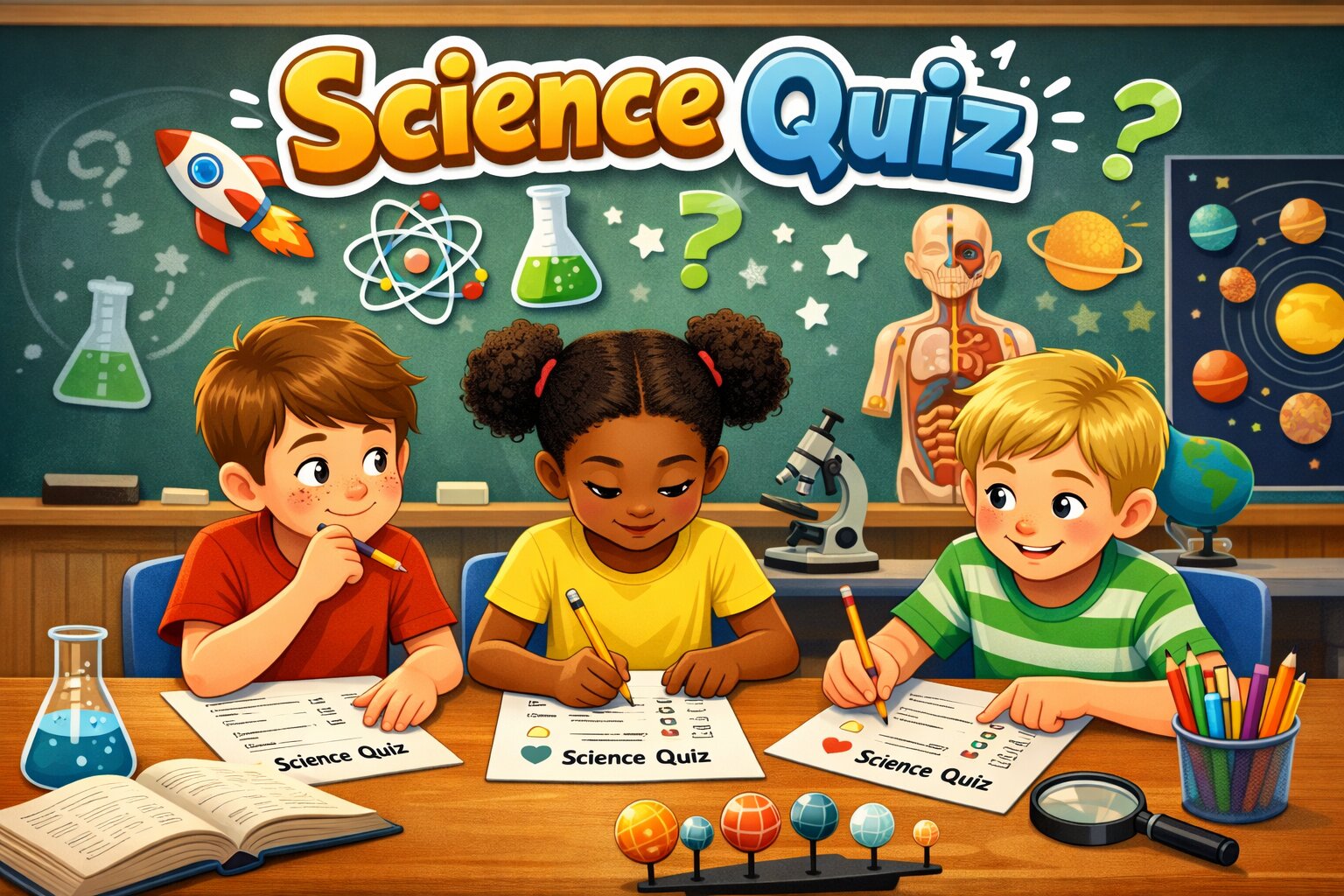
Science is full of wonders, surprises, and fun discoveries, and learning it can be exciting for every child. This science quiz is designed to make learning simple, playful, and full of curiosity. From planets and plants to animals and everyday inventions, kids will enjoy exploring interesting facts while testing what they already know. A science quiz for kids is a great way to celebrate learning, spark curiosity, and build confidence in young minds.
Thank you for reading this post, don't forget to subscribe!
With easy and engaging science quiz questions and answers, children can think, guess, and learn without feeling pressure. Ready to challenge your brain and have some fun at the same time? Put on your thinking cap, get curious, and jump into a world where learning science feels like a game. Let the quiz fun begin!
Science Quiz for Grade 1
Learning science can be fun and exciting, especially for young learners. This science quiz for class 1 is designed to help children learn basic science concepts in a playful and easy way.
Q1. Which of these is a living thing?
a) Chair
b) Stone
c) Dog
d) Book
Answer: Dog
Q2. What do plants need to make food?
a) Moonlight
b) Sunlight
c) Darkness
d) Wind
Answer: Sunlight
Q3. Which part of the body helps us see?
a) Nose
b) Eyes
c) Ears
d) Hands
Answer: Eyes
Q4. Which planet is known as the Red Planet?
a) Earth
b) Mars
c) Jupiter
d) Mercury
Answer: Mars
Q5. What color is the sky on a clear day?
a) Red
b) Blue
c) Green
d) Yellow
Answer: Blue
Q6. What do we apply when we push or pull an object?
a) Acceleration
b) Force
c) Mass
d) Compression
Answer: Force
Q7. Which animal can fly?
a) Cow
b) Dog
c) Bird
d) Horse
Answer: Bird
Q8. What color is the sun?
a) Blue
b) Green
c) Yellow
d) Black
Answer: Yellow
Q9. At what temperature does water start boiling?
a) 25°C
b) 50°C
c) 75°C
d) 100°C
Answer: 100°C
Q10. What do bees collect from flowers to make honey?
a) Water
b) Nectar
c) Leaves
d) Bark
Answer: Nectar
Q11. How many legs does a spider have?
a) 6
b) 8
c) 10
d) 4
Answer: 8
Q12. Which animal can live both on land and in water?
a) Dog
b) Frog
c) Elephant
d) Lion
Answer: Frog
Q13. A female horse is called what?
a) Stallion
b) Foal
c) Mare
d) Pony
Answer: Mare
Q14. All living things need food, air, and what to live?
a) Home
b) Water
c) Toys
d) Clothes
Answer: Water
Q15. Which animal has feathers on its body?
a) Hen
b) Crocodile
c) Tortoise
d) Cat
Answer: Hen
Q16. What is a male cow called?
a) Ox
b) Dog
c) Goat
d) Horse
Answer: Ox
Q17. Which part of the plant holds it firmly in the soil?
a) Branches
b) Roots
c) Leaves
d) Flowers
Answer: Roots
Q18. Which body part helps us breathe?
a) Heart
b) Lungs
c) Brain
d) Muscles
Answer: Lungs
Q19. What do we call the skin that covers and protects our eyes?
a) Eyelids
b) Ears
c) Hair
d) Nails
Answer: Eyelids
Q20. Which part of the body helps us walk and run?
a) Hands
b) Legs
c) Eyes
d) Ears
Answer: Legs
Science Quiz for Grade 2 & 3
This science quiz for Grade 2 and 3 helps young students learn basic science concepts in a fun and easy way. It encourages curiosity, thinking, and learning through simple questions.
Q1. Which part of a plant makes food?
a) Root
b) Stem
c) Leaf
d) Flower
Answer: Leaf
Q2. Which of these is a herbivore?
a) Lion
b) Tiger
c) Cow
d) Cat
Answer: Cow
Q3. What gas do plants release during the day?
a) Oxygen
b) Carbon dioxide
c) Nitrogen
d) Smoke
Answer: Oxygen
Q4. Which sense organ helps us taste food?
a) Eyes
b) Nose
c) Tongue
d) Ears
Answer: Tongue
Q5. Which of these is a source of light?
a) Moon
b) Mirror
c) Bulb
d) Table
Answer: Bulb
Q6. What happens to water when it is heated?
a) It freezes
b) It turns into ice
c) It becomes steam
d) It disappears
Answer: It becomes steam
Q7. Which animal is known for its long neck?
a) Elephant
b) Zebra
c) Giraffe
d) Horse
Answer: Giraffe
Q8. Which of these is a man-made object?
a) Tree
b) River
c) Mountain
d) Car
Answer: Car
Q9. How many planets are there in the solar system?
a) 7
b) 8
c) 9
d) 10
Answer: 8
Q10. Which material is used to make glass?
a) Wood
b) Sand
c) Plastic
d) Paper
Answer: Sand
Q11. Which organ pumps blood in our body?
a) Brain
b) Lungs
c) Heart
d) Stomach
Answer: Heart
Q12. Which weather is caused by heavy clouds and rain?
a) Sunny
b) Windy
c) Stormy
d) Snowy
Answer: Stormy
Q13. Which part of the plant carries water to all other parts?
a) Root
b) Leaf
c) Flower
d) Stem
Answer: Stem
Q14. Which of these animals eats both plants and meat?
a) Cow
b) Goat
c) Lion
d) Bear
Answer: Bear
Q15. Which gas do humans breathe in to stay alive?
a) Carbon dioxide
b) Oxygen
c) Nitrogen
d) Smoke
Answer: Oxygen
Q16. Which part of the body helps us taste food?
a) Eyes
b) Tongue
c) Nose
d) Skin
Answer: Tongue
Q17. Which of these is a natural source of water?
a) Tap
b) Bottle
c) River
d) Bucket
Answer: River
Q18. What happens to ice when it is kept in a warm place?
a) It freezes
b) It melts
c) It becomes steam
d) It breaks
Answer: It melts
Q19. Which body part protects the brain?
a) Skull
b) Heart
c) Lungs
d) Stomach
Answer: Skull
Q20. Which of these is a renewable source of energy?
a) Coal
b) Petrol
c) Sun
d) Diesel
Answer: Sun
Easy Science Quiz
This easy science quiz for kids is a fun way to learn simple science facts while playing and thinking at the same time.
Q1. Which part of the body helps us chew food?
a) Teeth
b) Eyes
c) Nose
d) Ears
Answer: Teeth
Q2. Which of these floats on water?
a) Stone
b) Coin
c) Leaf
d) Nail
Answer: Leaf
Q3. What do we call baby plants growing from seeds?
a) Roots
b) Leaves
c) Sprouts
d) Flowers
Answer: Sprouts
Q4. Which animal has a shell on its back?
a) Dog
b) Turtle
c) Cow
d) Horse
Answer: Turtle
Q5. What shape is the Earth?
a) Square
b) Triangle
c) Round
d) Flat
Answer: Round
Q6. Which of these helps us see at night?
a) Sun
b) Bulb
c) Moon
d) Cloud
Answer: Moon
Q7. What do magnets attract?
a) Wood
b) Plastic
c) Iron
d) Paper
Answer: Iron
Q8. Which part of the body helps us bend our arms and legs?
a) Skin
b) Bones
c) Hair
d) Nails
Answer: Bones
Q9. What is formed when an object blocks light?
a) Reflection
b) Shadow
c) Rainbow
d) Heat
Answer: Shadow
Q10. Which animal sleeps during the day and stays awake at night?
a) Cow
b) Bat
c) Dog
d) Goat
Answer: Bat
Q11. Which of these is needed to make a rainbow?
a) Dust
b) Smoke
c) Sunlight and rain
d) Wind
Answer: Sunlight and rain
Q12. What do we call the air around the Earth?
a) Soil
b) Water
c) Atmosphere
d) Cloud
Answer: Atmosphere
Q13. Which part of the body helps us hear sounds?
a) Eyes
b) Nose
c) Ears
d) Mouth
Answer: Ears
Q14. Which of these grows into a big plant?
a) Stone
b) Seed
c) Plastic
d) Glass
Answer: Seed
Q15. Which animal lives in water?
a) Horse
b) Tiger
c) Fish
d) Elephant
Answer: Fish
Q16. Which part of a plant grows under the soil?
a) Leaf
b) Flower
c) Root
d) Fruit
Answer: Root
Q17. Which of these is a source of heat and light?
a) Moon
b) Star
c) Sun
d) Cloud
Answer: Sun
Q18. What do we use to smell things?
a) Eyes
b) Ears
c) Nose
d) Tongue
Answer: Nose
Q19. Which animal has feathers?
a) Dog
b) Cat
c) Bird
d) Cow
Answer: Bird
Q20. Which season is very cold?
a) Summer
b) Rainy
c) Winter
d) Spring
Answer: Winter
General Science Quiz
This basic science quiz for kids helps young learners understand simple science concepts in a fun and easy way.
Q1. Which part of the plant absorbs water from the soil?
a) Leaf
b) Flower
c) Root
d) Seed
Answer: Root
Q2. Which of these is a non-living thing?
a) Tree
b) Bird
c) Rock
d) Fish
Answer: Rock
Q3. What do we call animals that eat only plants?
a) Carnivores
b) Omnivores
c) Herbivores
d) Insectivores
Answer: Herbivores
Q4. Which body part helps us smell?
a) Eyes
b) Nose
c) Ears
d) Tongue
Answer: Nose
Q5. Which planet do we live on?
a) Mars
b) Venus
c) Earth
d) Jupiter
Answer: Earth
Q6. What is the main source of energy for the Earth?
a) Moon
b) Stars
c) Sun
d) Wind
Answer: Sun
Q7. Which animal is known for building dams in rivers?
a) Beaver
b) Tiger
c) Camel
d) Goat
Answer: Beaver
Q8. What do we call the change of water into ice?
a) Melting
b) Heating
c) Freezing
d) Boiling
Answer: Freezing
Q9. Which part of the body helps us think?
a) Heart
b) Brain
c) Lungs
d) Stomach
Answer: Brain
Q10. Which gas is important for breathing?
a) Carbon dioxide
b) Oxygen
c) Nitrogen
d) Smoke
Answer: Oxygen
Q11. Which of these is a natural object?
a) Chair
b) Table
c) River
d) Bottle
Answer: River
Q12. What do birds use to make their nests?
a) Plastic
b) Stones
c) Twigs and grass
d) Metal
Answer: Twigs and grass
Q13. Which part of the plant holds it upright?
a) Root
b) Stem
c) Leaf
d) Flower
Answer: Stem
Q14. Which of these animals is a mammal?
a) Frog
b) Snake
c) Whale
d) Lizard
Answer: Whale
Q15. Which part of the body helps us balance while standing and walking?
a) Brain
b) Ears
c) Muscles
d) Bones
Answer: Ears
Q16. Which of these materials is waterproof?
a) Paper
b) Sponge
c) Plastic
d) Cloth
Answer: Plastic
Q17. What do we call animals that eat both plants and animals?
a) Herbivores
b) Carnivores
c) Omnivores
d) Insectivores
Answer: Omnivores
Q18. Which planet is known as the Morning Star or Evening Star?
a) Mars
b) Venus
c) Jupiter
d) Saturn
Answer: Venus
Q19. Which body part pumps blood throughout our body?
a) Brain
b) Lungs
c) Heart
d) Stomach
Answer: Heart
Q20. What do we call the hard outer covering of the Earth?
a) Core
b) Mantle
c) Crust
d) Soil
Answer: Crust
Difficult Science Quiz
This difficult science quiz for kids is perfect for curious minds who love to think deeper and learn new science facts.
Q1. Which system in the human body carries blood to all parts of the body?
a) Digestive system
b) Respiratory system
c) Circulatory system
d) Nervous system
Answer: Circulatory system
Q2. What type of animal is a whale?
a) Fish
b) Reptile
c) Mammal
d) Amphibian
Answer: Mammal
Q3. Which part of a plant protects the seeds?
a) Root
b) Fruit
c) Leaf
d) Stem
Answer: Fruit
Q4. Which gas is most abundant in the air around us?
a) Oxygen
b) Carbon dioxide
c) Nitrogen
d) Hydrogen
Answer: Nitrogen
Q5. Which planet has the largest number of moons?
a) Earth
b) Mars
c) Jupiter
d) Mercury
Answer: Jupiter
Q6. What force pulls objects toward the Earth?
a) Friction
b) Magnetism
c) Gravity
d) Energy
Answer: Gravity
Q7. Which of these materials conducts electricity?
a) Plastic
b) Wood
c) Rubber
d) Copper
Answer: Copper
Q8. Which blood cells help fight diseases?
a) Red blood cells
b) White blood cells
c) Platelets
d) Plasma
Answer: White blood cells
Q9. What change happens when ice turns into water?
a) Freezing
b) Melting
c) Condensation
d) Evaporation
Answer: Melting
Q10. Which organ helps in digesting food by breaking it down with acids?
a) Liver
b) Stomach
c) Kidneys
d) Brain
Answer: Stomach
Q11. Which layer of the Earth is the hottest?
a) Crust
b) Mantle
c) Core
d) Surface
Answer: Core
Q12. Which natural process helps plants make food?
a) Digestion
b) Respiration
c) Photosynthesis
d) Germination
Answer: Photosynthesis
Q13. Which part of the human body filters waste from the blood?
a) Lungs
b) Kidneys
c) Heart
d) Liver
Answer: Kidneys
Q14. What do we call the process by which plants lose water through leaves?
a) Photosynthesis
b) Transpiration
c) Respiration
d) Germination
Answer: Transpiration
Q15. Which planet is known for its rings?
a) Mars
b) Venus
c) Saturn
d) Mercury
Answer: Saturn
Q16. Which vitamin is produced in our body when exposed to sunlight?
a) Vitamin A
b) Vitamin B
c) Vitamin C
d) Vitamin D
Answer: Vitamin D
Q17. What type of energy is stored in food?
a) Heat energy
b) Light energy
c) Chemical energy
d) Sound energy
Answer: Chemical energy
Q18. Which organ in plants is responsible for reproduction?
a) Root
b) Stem
c) Leaf
d) Flower
Answer: Flower
Q19. Which metal is liquid at room temperature?
a) Iron
b) Gold
c) Mercury
d) Aluminium
Answer: Mercury
Q20. What is the movement of the Earth around the Sun called?
a) Rotation
b) Revolution
c) Orbit
d) Motion
Answer: Revolution
Space Science Quiz
This space science quiz helps kids learn exciting facts about space, stars, and planets in a fun and easy way.
Q1. What do we call a person who travels to space?
a) Scientist
b) Astronaut
c) Pilot
d) Engineer
Answer: Astronaut
Q2. What is a group of stars called?
a) Planet
b) Galaxy
c) Cloud
d) Rock
Answer: Galaxy
Q3. Which tool is used to see faraway objects in space?
a) Microscope
b) Periscope
c) Telescope
d) Binoculars
Answer: Telescope
Q4. What moves around the Earth in space?
a) Star
b) Sun
c) Moon
d) Cloud
Answer: Moon
Q5. What causes day and night on Earth?
a) Earth’s rotation
b) Earth’s shape
c) Wind
d) Rain
Answer: Earth’s rotation
Q6. What do rockets use to move into space?
a) Water
b) Fuel
c) Air
d) Fire
Answer: Fuel
Q7. What are shooting stars actually called?
a) Comets
b) Meteors
c) Asteroids
d) Satellites
Answer: Meteors
Q8. Which space object has a bright tail?
a) Planet
b) Moon
c) Comet
d) Star
Answer: Comet
Q9. What is the path followed by a planet around a star called?
a) Line
b) Circle
c) Orbit
d) Ring
Answer: Orbit
Q10. Where do astronauts live while in space for many days?
a) Space lab
b) Space station
c) Rocket room
d) Control tower
Answer: Space station
Q11. Which part of space lies between Mars and Jupiter and has many rocks?
a) Star belt
b) Moon belt
c) Asteroid belt
d) Planet belt
Answer: Asteroid belt
Q12. Which gas helps rockets burn fuel in space?
a) Oxygen
b) Nitrogen
c) Carbon dioxide
d) Helium
Answer: Oxygen
Q13. Which planet is closest to the Sun?
a) Earth
b) Venus
c) Mercury
d) Mars
Answer: Mercury
Q14. What do we call the natural satellite of the Earth?
a) Star
b) Planet
c) Moon
d) Comet
Answer: Moon
Q15. Which planet is known as the Blue Planet?
a) Mars
b) Earth
c) Neptune
d) Uranus
Answer: Earth
Q16. What protects astronauts from harmful rays in space?
a) Space suit
b) Oxygen mask
c) Helmet
d) Gloves
Answer: Space suit
Q17. Which force keeps planets in their orbits?
a) Magnetism
b) Gravity
c) Energy
d) Pressure
Answer: Gravity
Q18. What do we call a large rock floating in space?
a) Meteor
b) Asteroid
c) Satellite
d) Star
Answer: Asteroid
Q19. Which planet has rings around it?
a) Mars
b) Venus
c) Saturn
d) Mercury
Answer: Saturn
Q20. Which planet is famous for its Great Red Spot?
a) Mars
b) Jupiter
c) Venus
d) Mercury
Answer: Jupiter
FAQs
1. What is a science quiz for kids?
A science quiz for kids is a fun activity that includes easy science questions to help children learn basic concepts through play.
2. Why are science quizzes important for children?
Science quizzes improve thinking skills, boost curiosity, and help kids understand science topics in an enjoyable way.
3. Can science quizzes help in school learning?
Yes, science quizzes support classroom learning by helping children revise lessons and remember concepts better.
4. How often should kids practice science quiz questions?
Kids can practice science quiz questions regularly, such as once or twice a week, to build confidence and interest in science.
Science quizzes are a fun and easy way for children to learn, think, and grow their curiosity about the world around them. By practicing science quiz questions and answers, kids can understand basic concepts better while enjoying the learning process. These science quiz questions help improve memory, boost 🌟🧠 confidence, and encourage children to ask more “why” and “how” questions. Whether used at home, in the classroom, or during quiz activities, science quizzes make learning exciting and meaningful. Keep exploring, keep questioning, and remember—learning science is always more fun when it feels like a game.
Also Read:
Essay on CV Raman
Essay on Wonders of Science
Essay on Science and Technology