



Last Updated on March 26, 2026
Punctuation marks act as essential guides in writing, much like traffic signals directing the flow of words. Mastering punctuation for Class 2 students is crucial to building clear, confident expression in young writers.
Thank you for reading this post, don't forget to subscribe!
This article contains everything you need to teach punctuation to class 2 students. It introduces the key types — full stops to end statements, question marks for enquiries, exclamation marks for excitement, commas for lists, and apostrophes for possession. Simple examples, such as “Stop!” or “Is it raining, Mum?”, help clarify each punctuation mark.
Also included are punctuation worksheets for class 2 that offer engaging activities. These exercises make learning enjoyable and help reinforce the rules of punctuation for class 2 students. With regular practice, students can confidently craft sentences that shine. Explore our resources to master these punctuation essentials!
Types Of Punctuation For Class 2 With Examples
This section introduces punctuation for grade 2, highlighting essential marks that bring clarity and excitement to sentences. Discover full stops, question marks, exclamation marks, commas, and apostrophes through simple examples below.
1. Full Stop (.)
A full stop shows the end of a complete thought or sentence. It tells readers to pause and prepare for what comes next.
Example: Birds chirp in the morning sky.
Without full stops, your words blend together, confusing the reader.
2. Question Mark (?)
A question mark ends a sentence that asks something. It signals curiosity or a need for an answer.
Example: Where is the playground?
Skipping it turns questions into flat statements.
3. Exclamation Mark (!)
An exclamation mark adds surprise, joy, or strong feeling. It grabs attention with energy and emphasis.
Example: What a tasty cake!
It makes writing lively without one, it feels dull.
4. Comma (,)
A comma separates items in a list or pauses within a sentence. It helps organise thoughts for smoother reading.
Example: I like apples, bananas, and grapes.
Omit it, and lists become jumbled.
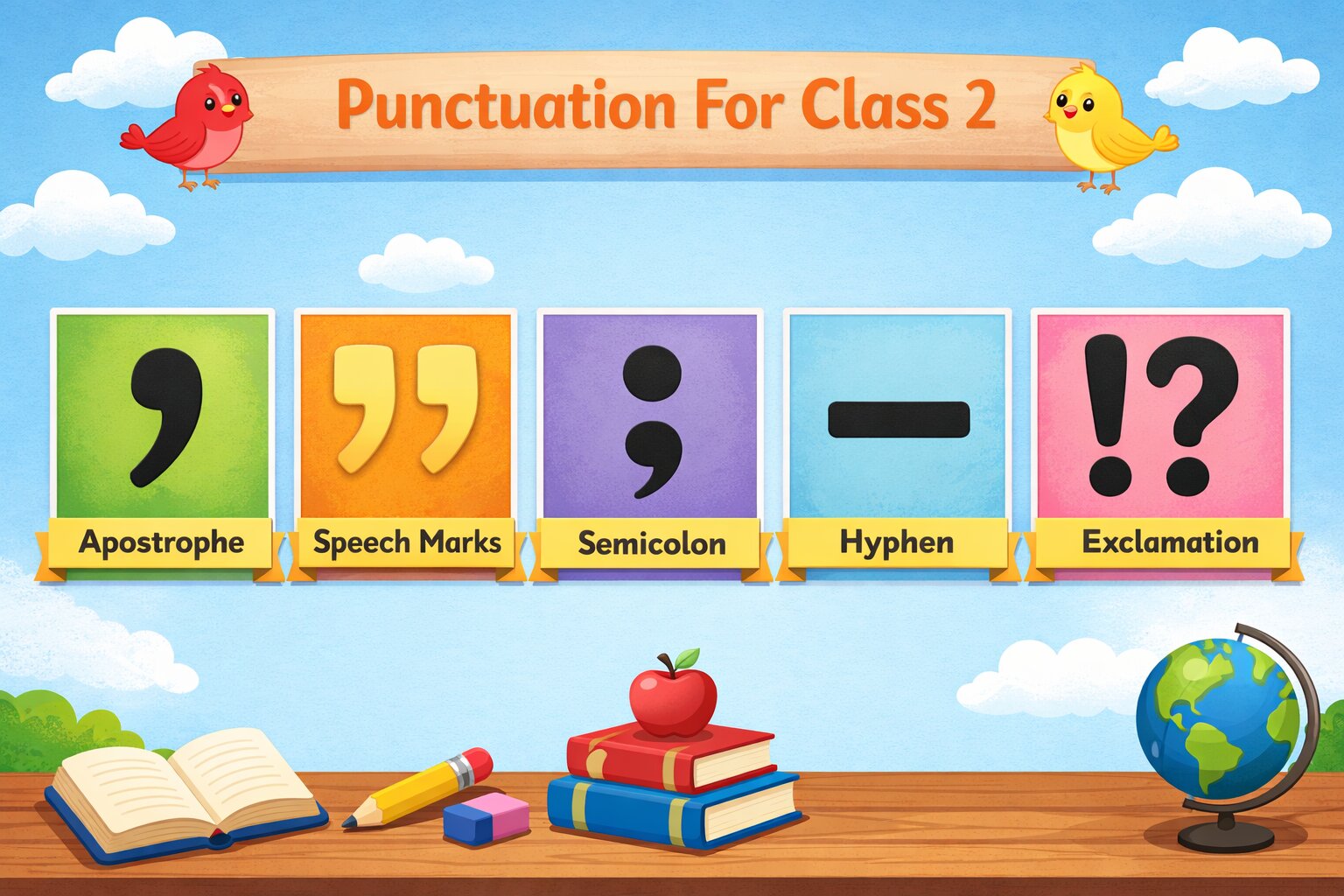
5. Apostrophe (’ )
An apostrophe shows ownership or shortens words. It clarifies who owns what or joins contractions.
Example: The dog’s tail wags happily.
Missing it leads to meaning mix-ups.
6. Speech Marks (” “)
Speech marks enclose what characters say. They separate spoken words from the rest of the story.
Example: “Let’s play outside,” said Mum.
Without them, dialogue blends into the narrative.
7. Semicolon (;)
A semicolon links two related ideas in one sentence. It provides a stronger pause than a comma but less final than a full stop.
Example: I love reading; it sparks my imagination.
It connects thoughts smoothly without splitting sentences.
8. Hyphen (-)
A hyphen joins words to form compound descriptions. It creates new meanings for adjectives.
Example: Well-known story.
It prevents awkward splits in combined words.
Punctuation Sentences For Class 2
Practice punctuation for Class 2 with these ready-to-use sentences that highlight everyday marks in action. Children can read, identify, and rewrite them to build confidence in their writing.
- Full Stop: The little bird flies high in the clear blue sky every morning.
- Question Mark: Can you tell me where the colourful playground is located today?
- Exclamation Mark: What a beautiful rainbow after the heavy rain shower!
- Comma: On picnic day, we enjoyed sandwiches, fresh fruits, juice, and biscuits.
- Apostrophe: Sarah’s red kite soars above the green park on windy afternoons.
- Speech Marks: “Please pass the ball,” shouted the children during the game.
- Semicolon: I finished my homework; now I can play with my toys.
- Hyphen: The well-behaved puppy sat quietly beside its happy owner.
- Apostrophe + Exclamation Mark: It’s the best day ever for outdoor adventures!
- Comma + Semicolon: Gather your books, pencils; class starts in five minutes.
Ways To Teach Punctuation To Grade 2
These strategies feature engaging punctuation exercises tailored for Grade 2 learners to master marks through play. Simple games, visuals, and stories make grammar rules easy and fun to grasp.
1. Punctuation Games
Play simple board games with picture cards; little ones roll a die, pick a sentence like “Do you see the dog ” – and stick on the question mark to learn happily.
2. Story Writing Fun
Help kids draw and write a tiny tale about their pet or toy, then add the missing full stops, commas, speech marks, and other punctuation before showing it to friends.
3. Visual Punctuation Hunt
Use big colourful posters of fun sentences; children hunt with crayons to circle happy exclamation marks or list commas, turning spotting into a treasure game.
4. Daily Sentence Practice
Begin class with easy punctuation exercises: show three short sentences on the board without marks, say them aloud, and let pupils fill them in their drawing books.
5. Song And Rhyme Time
Sing cheerful rhymes like “Wheels on the Bus,” clapping for commas and pausing for full stops; kids join in, feeling the beats to remember each mark.
6. Partner Pair Work
Sit in pairs to swap picture stories; each friend adds apostrophes or hyphens gently, like “Mum’s cake”, then shares why with smiles and high-fives.
Punctuation Practice Worksheet For Class 2
This class 2 punctuation worksheet with answers offers hands-on practice to reinforce key punctuation marks through fun tasks. Children complete exercises such as adding full stops and commas, and then check their work easily.
FAQs
1. Why Do We Need Punctuation?
Punctuation makes your writing easy to read, like road signs guide cars, so friends understand your stories quickly.
2. What Happens Without Punctuation?
Sentences run together like a big muddle, confusing everyone, just as no spaces make words hard “tosee”.
3. How Can I Remember All Marks?
Draw funny faces for each—like a sad full stop or surprised question mark—and practise one new mark daily with drawings.
4. Is Punctuation Only For Sentences?
No, use it in lists, dialogues, and notes too, to make shopping lists or birthday cards neat and clear.
Punctuation helps make writing clear for Class 2 students. Practice these types, examples, and worksheets regularly to improve your skills.
You’ve learned about full stops, questions, exclamations, and more through different sentences and activities. Continue practicing punctuation exercises to strengthen your writing. With regular practice, your writing will become clearer and easier to read.