


Last Updated on August 31, 2026
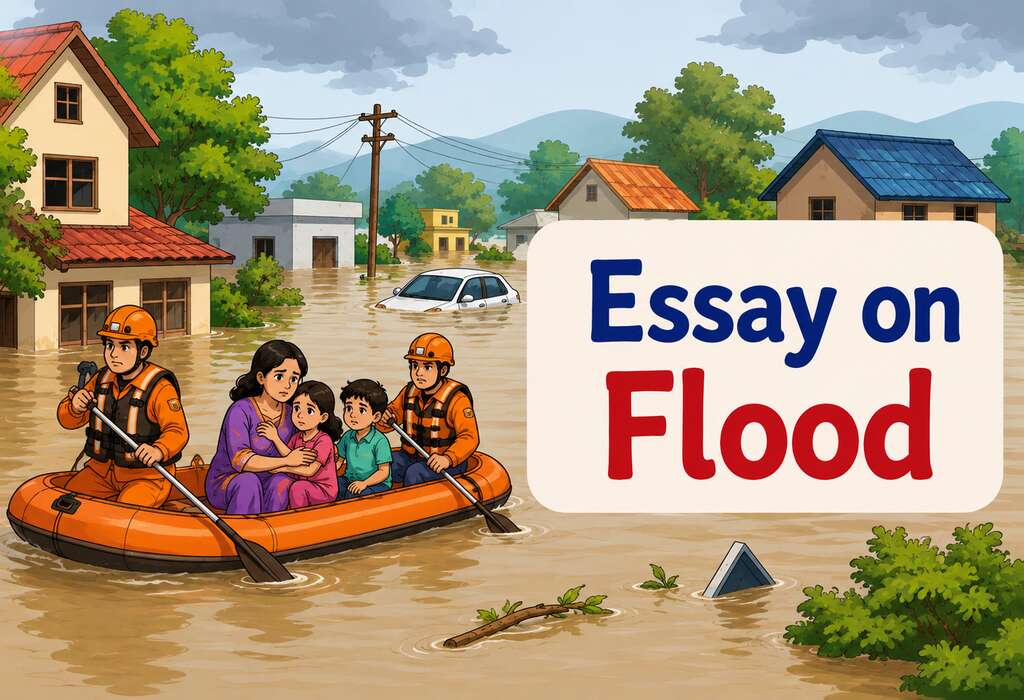
Flooding occurs when water from water bodies like rivers, lakes and ponds builds up and overflows due to significant rainfall. It causes severe challenges for residents in affected areas, significantly disrupts daily life, and destroys agricultural produce, impacting farmers and local economies alike.
Thank you for reading this post, don't forget to subscribe!
Encouraging children to write flood essays in English helps build greater awareness among young minds, teaching them to be mindful of preventive measures while also equipping them with practical strategies to stay safe during an actual flood. To support this, here are a few ideas for writing an essay on floods, along with essays on floods for classes 1, 2, and 3, covering different formats and levels of detail.
Key Points To Remember When Writing An Essay On A Flood
There are some basic pointers to keep in mind when writing an essay on floods. Here are a few tips that can guide your child through the process:
- Know Your Audience — Essay writing is a delicate art, and each age group of students is expected to cover different points depending on their grade level.
- Start With The Basics — Write an introductory paragraph explaining what floods are and how they occur.
- Explore The Causes — Extend this into the various reasons that cause floods, such as heavy rainfall or overflowing rivers.
- Talk About Prevention — Speak about the steps one can take to prevent or reduce the impact of floods.
- Mention The Effects — Briefly touch on how floods affect people, homes, and the environment, to give the essay more depth.
- End With Impact — Conclude the essay with a strong, thoughtful paragraph that leaves a lasting impression.
- Review And Proofread — Read through the essay once after writing to check for spelling and grammar mistakes and ensure the ideas flow well.
10 Lines On Flood In English
Essays in the form of a few lines on floods are suitable for small kids. Here are 10 lines on floods for kids:
- A flood occurs when a place is overrun with a great volume of water, causing destruction.
- Floods not only cause extensive property damage and destruction but also claim many lives.
- Each year, floods strike several regions of the world and cause numerous fatalities.
- Floods are caused by excessive rainfall and an area’s poor drainage system.
- Sometimes, a bad storm in a place is followed by floods, which leads to double damage.
- Farmers are severely impacted by flooding because it ruins their crops and land fertility.
- Accumulated flood water in one location can make people sick with many ailments.
- When there is a severe flood, the availability of essential supplies gets impacted.
- The government must build an effective drainage system to lessen the effects of floods.
- Before floods begin, early warning systems should be implemented, and people should be sent to safe locations.
Paragraph On Flood
Short paragraphs are easy for small kids who can quickly understand the subject. Here is a short paragraph about floods:
A flood is a natural occurrence in which a normally dry area or piece of land is suddenly covered in water. Because of excessive rainfall in many different ways, rivers, lakes, and oceans overflow. People lose their lives, and there is devastation and significant property damage when heavy rain occurs. Flooding has the power to damage properties, automobiles, homes, and even bridges. Floods can harm trees, crops, and other crucial land resources. These floods can vary in size, duration, and region; some take days or even months to develop and dissipate. The majority of floods occur in waves. Rain, runoff, waterfalls, and hurricanes are a few factors contributing to flooding in various locations.
Essay On Flood In 200 Words
Here is a short essay on flood . Kids can use this essay for their assignments:
Places with excessive rainfall and inadequate drainage systems are especially prone to flooding. Other causes include water overflowing from rivers and oceans due to dam failures, large volumes of water moving across plains, and rising water levels from sudden glacier melting. In coastal areas, flooding is often triggered by hurricanes and tsunamis. Alongside other natural disasters, floods can cause extensive and long-lasting damage to communities.
Around the world, numerous towns and cities experience severe flooding, which harms both people and animals while damaging land and vegetation. Farmers are especially affected, as floodwaters can destroy crops and disrupt entire harvest seasons. When flood conditions become severe, schools and offices are often forced to shut down, disrupting daily life for families and communities alike. Areas that face extreme flooding can take months to return to normal, with homes, roads, and livelihoods taking a long time to recover.
Interestingly, while governments are often aware of areas that flood frequently, appropriate action is not always taken to address the problem in time. Building proper drainage systems and water storage infrastructure could go a long way in preventing repeated damage. With better planning and timely action, the impact of floods on people, animals, and the environment can be significantly reduced.
Long Essay On Flood
Older children are required to write long essays covering many different points. To help with this, here is an essay for class 3 children on floods:
What Is A Flood?
One of the most frequent natural disasters is flooding, which results from copious rain and the buildup of surplus water in all populated areas. A flood is when water seeps through cracks and covers the dry ground, and it happens when water sources flow outside their normal range. Floods can occur when reservoirs overflow or pour down rain for days in areas where the drainage systems are not adequately maintained. Floods may occur naturally or be aided by environmental conditions disrupting the flow of water. Intense climate changes, including strong storms, snowfall, and rising sea levels, are associated with global warming, and such alterations in the atmosphere cause flooding.
Different Types of Floods
There are different types of floods that can occur. Understanding the different types of floods is important to maintain accurate preventive measures. Listed below are the various types:
1. Fluvial Floods
A river flood is another name for a fluvial flood. They occur when water from rivers, lakes, and streams rushes onto surrounding shorelines and land areas. Fluvial floods can occur due to increased snowfall, ice melting, and significant rainfall. Fluvial floods can inflict extensive damage by destroying dams and dikes and flooding the surrounding communities.
2. Floods Caused By Surges
Coastal floods are another name for surge floods. Floods that arise in the coastal areas because of storm surges and tidal changes are called surge floods. Surges are produced when strong winds from a windstorm, tsunami, or hurricane push water toward low-lying shorelines. Surge floods are at their most destructive during high tides.
3. Pluvial Floods
Floods caused by heavy rain are also known as pluvial floods. However, they can occur even in locations far from the overflowing water bodies and are independent of those bodies of water. Surface water floods and flash floods are the two types of pluvial floods.
What Are The Causes & Effects Of A Flood?
Causes Of A Flood
- Natural Causes: Heavy rains, earthquakes, and tsunamis are examples of natural causes of floods. Intense rainstorms are brought on by climate change. Floods can occur when there is more rain than usual. Due to the heavy rain, the water levels in the rivers and oceans rise.
- Global Warming: One of the unnatural causes of floods is global warming. It raises the planet’s average temperature, which significantly impacts the climate. Mountain top ice melts, causing glacier sheets to fall. This further increases the amount of seawater and causes flooding.
Effects Of A Flood
- Mass Destruction: Following the floods, widespread loss of human life, property, infrastructure, and vegetation is not uncommon. The majority of survivors suffer injuries. Animals perish, and the soil quality of the drowned region declines.
- Power Cuts: Floods lead to extended power cuts due to the destruction.
- Shortage in Food Supply: Food supply and necessities are scarce.
- Diseases: Flood aftereffects include spreading water-borne illnesses like dengue, malaria, etc.
What Are The Ways To Prevent A Flood?
1. Build Structures Above Flood Levels
In order to protect both the residents and the property, buildings in flood-prone areas must be built on higher ground than the flood level.
2. Systems for Flood Warning
Better flood warning systems must be installed immediately to provide people ample time to prepare themselves and their belongings for the impending disaster.
3. Erect Flood Barriers
Flood barriers should be implemented in locations prone to flooding. When the water has subsided, these can be taken out.
4. Water Storage System Introduction
The government must establish water storage infrastructure to store and reuse rainwater. Instead of allowing it to overflow on the plains and causing flooding, this will allow the extra water to be used.
5. Consolidate the Drainage System
The inadequate drainage system is one of the primary causes of floods. Building effective drainage systems is crucial to preventing waterlogging, which causes flooding.
Floods are among the most destructive natural disasters, capable of disrupting entire communities, damaging property, and putting lives at risk. Understanding the different types of floods, along with their causes and effects, can help children grasp why prevention measures like better drainage, flood barriers, and early warning systems matter. With the right awareness and timely action, the impact of floods can be reduced significantly.
Interesting Facts About Flood
Floods can be fascinating once you look beyond the destruction they cause, revealing surprising details about how they form and behave. Here are 10 interesting facts about floods that kids will enjoy learning:
- Floods are one of the most common natural disasters, occurring on every continent except Antarctica.
- Flash floods can happen within minutes of heavy rainfall, giving people very little time to prepare.
- Just six inches of fast-moving floodwater can knock an adult off their feet.
- Some floods are actually helpful, as they deposit nutrient-rich silt onto farmland, making the soil more fertile.
- The ancient Egyptians relied on the annual flooding of the River Nile to grow their crops successfully.
- A flood does not always need heavy rain nearby; water can travel from storms happening far away.
- Coastal floods can be made worse by a full moon, as it causes higher-than-usual tides.
- Floodwater can carry unexpected debris, including cars, trees, and even entire houses, in extreme cases.
- Bangladesh is one of the most flood-prone countries in the world due to its low-lying geography and numerous rivers.
- Scientists use satellites and sensors to track rainfall and river levels, helping predict floods before they happen.
What Will Your Child Learn From This Essay?
This essay helps children understand what floods are, why they happen, and the different types of floods that can occur, from river floods to coastal surges. Kids will also learn about the causes and effects of flooding, along with practical ways communities can prevent or reduce its impact, such as better drainage systems and early warning measures. By the end, they’ll have a clearer picture of how natural disasters like floods affect people, animals, and the environment, along with the steps we can take to stay prepared.
FAQs
1. Can Floods Happen In Places That Do Not Get Much Rain?
Yes, floods can occur even in dry areas if water travels from heavy rain or melting snow happening elsewhere, such as in nearby hills or mountains.
2. How Long Does It Usually Take For Floodwater To Go Down?
It depends on the severity of the flood, but water can take anywhere from a few hours to several weeks to fully recede in badly affected areas.
3. Are Floods More Common During A Particular Season?
Yes, floods are more common during monsoon or rainy seasons, and in some regions, during periods when snow and ice begin to melt.
4. Can Animals Sense Floods Before They Happen?
Some animals may sense changes in weather patterns or rising water levels earlier than humans, which is why unusual animal behaviour is sometimes seen as a warning sign.
Learning about floods helps children understand not just how these natural disasters occur, but also the importance of preparedness and prevention. Whether through a short 10-line answer or a longer essay, exploring this topic gives kids a clearer sense of how floods affect people and the environment, along with the steps communities can take to stay safe.
Also Read:
Tsunami Essay for Kids
Essay on Earthquake in English for Children
How to Write An Essay on Volcano for Kids