

- Key Points to Remember when Writing an Essay on Discipline
- 5 Lines on Discipline
- 10 Lines on Discipline
- Paragraph on Discipline
- Essay on Discipline in 150 Words
- Discipline Essay in 200 Words
- Long Essay on Discipline
- Discipline Quotes and Slogans
- What Will your Child Learn from the Essay on Discipline?
- FAQs
Adopting discipline in your life is relatively easy if it starts from childhood. Childhood is the stage of life when kids can quickly adopt habits, making it the ideal time to build values that last a lifetime. Therefore, to help them learn discipline, you can have them write an essay on discipline for classes 1, 2, and 3.
Thank you for reading this post, don't forget to subscribe!
Moreover, if you are a teacher, you must help children understand the importance of discipline in their daily lives. To do so, you can give them a discipline essay in English as a simple yet effective classroom exercise. This way, they will know the benefits of living a disciplined life from an early age. Only discipline can make everyone focus on their goals and give them the determination to achieve them.
Read on to find out how to write your own essay on discipline in English and improve your writing skills along the way. This article covers discipline essays in various formats, along with tips, quotes, slogans, and FAQs.
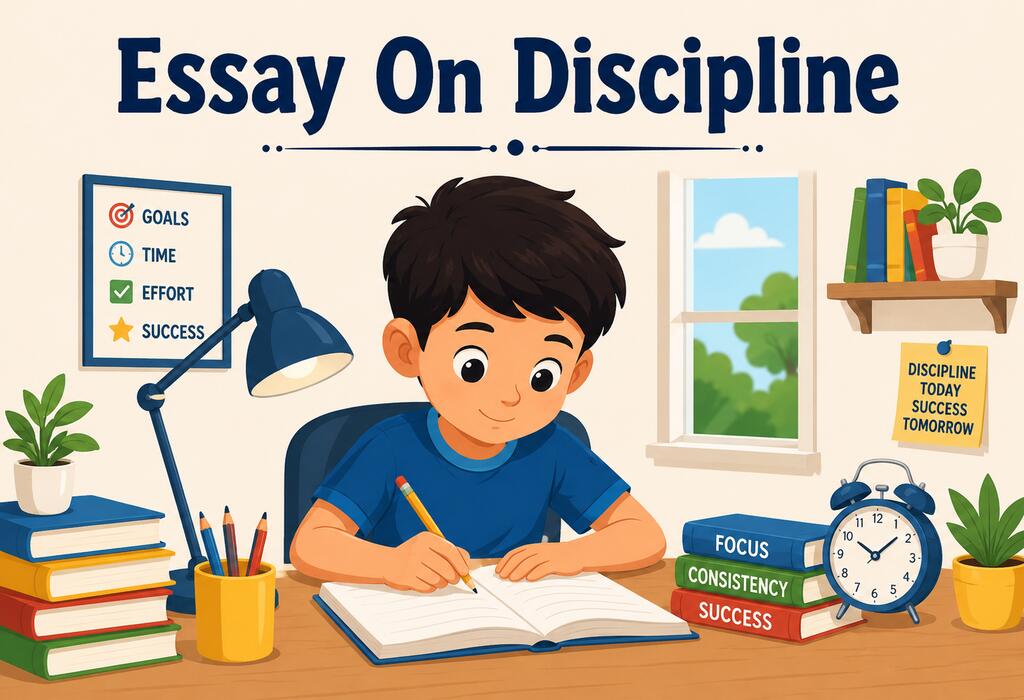
Key Points to Remember when Writing an Essay on Discipline
Discipline motivates people to move forward in life and fosters positivity and punctuality in their day-to-day lives. When writing an essay on discipline, the words are never limited. However, if the essay is to be written by children in primary classes, they must know specific tips for writing an essay on discipline. So, here are some key points:
- One must start an essay with a simple introductory note that captures the reader’s attention.
- You must keep the central idea of an essay to the point and move forward with it in the entire essay.
- The structure of the essay is the most crucial part and should therefore be properly synchronised.
- The essay must contain facts and not information that you made up.
- When writing about discipline, mention its importance, types, benefits, and habits.
- An essay on self-discipline should also include real-life examples, such as sticking to a study routine or completing homework on time, to make the content relatable.
- Using simple language and short sentences makes the essay easier for young readers to understand and follow.
5 Lines on Discipline
These few lines on discipline are easy for young children to read and remember. They help children grasp the basics before moving on to longer essays.
- Discipline means following rules and doing things in the right order.
- It helps us complete our work on time without delay.
- Disciplined children do their homework and chores regularly.
- Discipline teaches us to respect others and follow good habits.
- A disciplined life leads to success and happiness.
10 Lines on Discipline
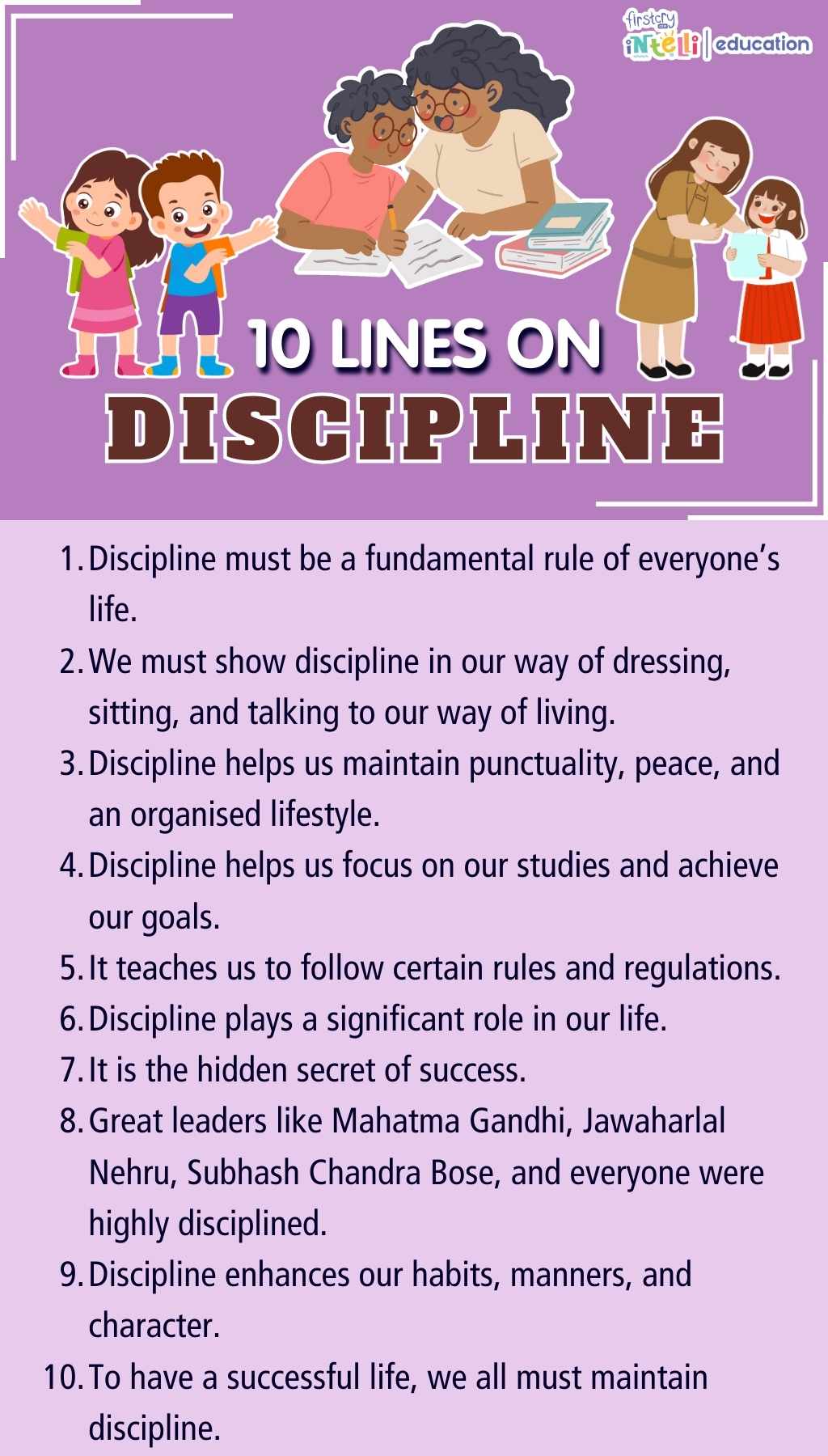
Now that you have understood what is necessary for writing an essay, it’s time for you to write a Discipline essay. We all know the importance of discipline, so we must instil this significant knowledge in kids. Writing a few lines on discipline is one such way. So, here is a 10-line essay on discipline for Class 2 kids.
- Discipline must be a fundamental rule of everyone’s life.
- We must show discipline in how we dress, sit, talk, and live.
- Discipline helps us maintain punctuality, peace, and an organised lifestyle.
- Discipline helps us focus on our studies and achieve our goals.
- It teaches us to follow certain rules and regulations.
- Discipline plays a significant role in our lives.
- It is the hidden secret of success.
- Great leaders like Mahatma Gandhi, Jawaharlal Nehru, Subhash Chandra Bose, and others were highly disciplined.
- Discipline enhances our habits, manners, and character.
- To have a successful life, we all must maintain discipline.
Paragraph on Discipline
Teachers ask primary school students to write discipline essays in 100 words. To aid the, we have included a short paragraph on discipline:
Without discipline, no one can achieve anything substantial in their lives. It teaches us to make the right decisions and respect others. It helps us create a focused, happy life, guides our inner self to follow a good path, and enhances self-control. Due to these benefits, discipline becomes essential to everyone’s life. There are many rules and regulations in our daily lives, and by following them, we adopt discipline in our activities. Some ways to maintain discipline include waking early, walking or sitting properly, speaking politely, and being punctual. Therefore, we must always be disciplined and lead a happy life.
Essay on Discipline in 150 Words
Discipline is for everyone, whether humans, animals, or non-living things. Sunrises in the east every morning and sets in the west every evening is also a form of discipline. To help you understand this concept, here is a short essay on discipline:
Discipline is a vital part of our lives. If it is correctly implemented in our lives, there will be no obstacle on our path to success that we cannot overcome. Therefore, it is necessary to enforce discipline in our lives from childhood. At school, home, tuition, office, playground, and everywhere, we must follow the right path, i.e., discipline. When you live a disciplined life, you gain many growth opportunities.
Discipline shows us the right path towards success and helps us focus on our aims. We also learn to respect others and how to behave in public when we have discipline in our lives. Manners, rules, and regulations are essential aspects of living, and all of these can be cultivated by maintaining discipline. To enjoy an organised life, it is paramount to do all activities in a disciplined way, such as waking up early and having breakfast, lunch, and dinner on time.
Discipline Essay in 200 Words
An essay on self-discipline in 200 words allows children to explore the topic with a bit more depth. Here’s an example to help them structure their own piece of writing.
Discipline is the ability to control our actions, thoughts, and habits in order to achieve a goal. It plays an important role in shaping a person’s character and helps in building a successful and balanced life. Without discipline, even the most talented people often fail to reach their full potential, as they lack the consistency needed to grow.
Self-discipline begins with small habits practised every day, such as waking up on time, completing homework regularly, and following a proper routine. These small steps, when followed consistently, build a strong foundation for bigger achievements in life. Discipline also teaches us to manage our time well, avoid distractions, and stay focused on our responsibilities.
In school, discipline helps students follow rules, respect teachers, and complete their tasks on time. At home, it teaches children to listen to their parents and manage their daily activities responsibly. Discipline is equally important in sports, where regular practice and following instructions lead to better performance and results.
In conclusion, discipline is a valuable habit that benefits people in every stage of life. It builds confidence, improves focus, and helps individuals stay committed to their goals, ultimately leading to success and personal growth.
Long Essay on Discipline
We know what discipline is, but do we know its actual meaning? Discipline is not only obeying elders; it is much more than that. To learn all about it, go through this essay for class 3. If you want your kids to be disciplined, read this essay on the need for discipline. Here is a long essay in 200 words or more. This essay on discipline for class 3 will help them form ideas on how to craft their essay on the subject:
Discipline is an essential aspect of life that permeates various environments, including schools, homes, places of worship, playgrounds, and even the digital realm. It serves as a crucial key to achieving success. To thrive in life, one must cultivate self-confidence and maintain a high level of focus, both of which are attainable through discipline. This quality instigates significant changes in our lives, with punctuality often regarded as the first sign of discipline.
Moreover, discipline fosters a sense of perfection in our endeavours. It trains the mind and body to adhere to established rules, shaping individuals into respectful members of society. If everyone embraced discipline, the nation would become more reputable and valuable. The positive impact of discipline extends beyond the individual, influencing those around us.
Discipline is a guiding force that promotes a healthy, fit, and balanced lifestyle. It encourages habits such as rising early and engaging in regular physical activity while training the mind to resist unhealthy food choices. Thus, from every perspective, discipline is pivotal in paving the way for a successful future.
What is Discipline?
Discipline can be defined as the practice of training oneself to adhere to a set of rules or standards. It often involves self-control and the ability to resist immediate temptations in favour of long-term goals. Discipline encompasses behaviours and attitudes that contribute to personal growth and success. Discipline is not merely about restriction; it is about creating a structure that enables individuals to flourish and reach their full potential.
Type of Discipline
Discipline is not the same everywhere, as it changes depending on where it is practised. This table breaks down its main types with simple examples for each.
| TYPE | MEANING | EXAMPLE |
| Self-Discipline | Control of your own behaviour without external pressure | Studying daily without being told |
| Home Discipline | Rules and routines followed at home to build good behaviour | Completing chores and respecting family members |
| School Discipline | Following school rules, timetables and respect for teachers | Wearing a uniform, finishing assignments on time |
| Positive Discipline | Teaching good behaviour through praise, empathy and encouragement | Rewarding a child for finishing homework |
| Gentle Discipline | Guiding with empathy, respect and no harsh punishment | Using humour to redirect unwanted behaviour |
| Boundary-Based Discipline | Setting clear rules with thoughtful consequences | Explaining the consequences of breaking a rule |
Benefits of Discipline
- Enhanced Focus: Discipline helps individuals concentrate on their goals, minimise distractions, and channel their energy effectively.
- Improved Time Management: Discipline helps manage time efficiently by instilling punctuality and prioritisation, allowing individuals to accomplish more in less time.
- Increased Self-Control: Discipline fosters the ability to resist temptations and make choices that align with long-term objectives, leading to healthier habits and better decision-making.
- Greater Resilience: A disciplined individual is better equipped to face challenges and setbacks, having developed the mental fortitude to persevere.
- Boosted Confidence: Achieving goals through disciplined action enhances self-esteem and confidence, creating a positive feedback loop that encourages further success.
- Stronger Relationships: Discipline fosters respect and responsibility, leading to healthier, more fulfilling relationships with others.
Ways to Stay Disciplined
- Set Clear Goals: Establish specific, measurable, achievable, relevant, and time-bound (SMART) goals to provide direction and motivation.
- Create a Routine: Develop a daily schedule that incorporates time for work, exercise, and relaxation. This will help establish a sense of order.
- Limit Distractions: Identify and minimise distractions in your environment, whether they are digital devices or social obligations, to maintain focus on your tasks.
- Practice Self-Reflection: Regularly assess your progress and behaviours. This will allow you to identify areas for improvement and reinforce positive habits.
- Seek Accountability: Share your goals with a friend or mentor who can support and hold you accountable for your actions.
- Reward Yourself: Celebrate small achievements to reinforce your disciplined behaviour and maintain motivation.
Discipline is a fundamental quality that can significantly enhance various aspects of life. By understanding its importance, recognising its benefits, and implementing effective strategies to stay disciplined, individuals can pave the way for a successful and fulfilling future.
Discipline Quotes and Slogans
Quotes and slogans can make the idea of discipline easier to remember. They give children short, powerful lines to keep in mind as they grow.
Quotes on Discipline
- “We must all suffer from one of two pains: the pain of discipline or the pain of regret.” — Jim Rohn
- “Discipline is the bridge between goals and accomplishment.” — Jim Rohn
- “Through discipline comes freedom.” — Aristotle
- “It is easier to prevent bad habits than to break them.” — Benjamin Franklin
- “Discipline is the soul of an army.” — George Washington
Slogans on Discipline
- Discipline is the quiet voice that says, “Do it anyway.”
- No shortcuts, just discipline.
- Discipline writes the story that willpower only talks about.
- Where motivation fades, discipline carries on.
- Discipline is the bridge you build before you need to cross it.
What Will your Child Learn from the Essay on Discipline?
By reading the composition on discipline, children learn a lot. Here are a few things that children learn from the essay on discipline.
- Discipline is the primary key to success.
- It involves certain rules and regulations.
- Self-discipline is the best way to have control over yourself.
- We must follow discipline everywhere, whether at home, at school, at the playground, on the battlefield, in online classes, or at tuition.
- Disciplined people are always respected in society.
- Discipline helps us obey our elders and teaches us good manners.
- It makes us realise the importance of time.
- It is also significant for the nation’s development and our career building.
FAQs
1. What Are The Three Types Of Discipline That Children Should Know About?
The three types of discipline that children should know about are as follows:
- Preventive Discipline: The idea is to take proactive measures against potential disruptive behaviours by outlining expectations and consequences.
- Corrective Discipline: Application of consequences following an infraction. The kid’s age and level should be taken into account before implementing corrective discipline.
- Supportive Discipline: Providing kids with suggestions and options to correct their behaviour and avoid consequences comes under supportive discipline.
2. How Can You Show Discipline?
To lead a happy life, you must maintain discipline. You can easily differentiate between a disciplined person and an undisciplined person. To show discipline, you must first align your behaviour with the rules of discipline. You must build self-discipline and know your strengths. Also, set a goal and follow it strictly. Be healthy, and avoid any bad habits. It will be best to embrace a healthy routine in your life to set an example for others. Your focus, actions, hard work and results will do the talking.
3. How Does Discipline Impact Academic Performance?
A disciplined approach leads to better academic outcomes. Students who are accountable for their actions tend to perform better on tests and stay focused during lessons, thereby minimising distractions and enhancing learning.
4. How Does Being Disciplined Contribute To Happiness?
Disciplined individuals have clearer goals and are better equipped to handle challenges. This structured approach leads to smoother paths to success, fostering a sense of achievement and inner happiness, as they are less likely to miss opportunities due to poor punctuality.
5. What Are The Types Of Discipline Relevant For Children?
The three main types of discipline are:
- Preventive Discipline: Setting clear expectations to prevent misbehaviour.
- Corrective Discipline: Applying consequences after rule violations.
- Supportive Discipline: Offering guidance to help children correct their behaviour.
In mastering the art of essay writing on discipline, students and children enhance their writing skills and cultivate a deeper understanding of self-control and responsibility. Embrace this journey as a stepping stone toward personal growth and academic success!
Discipline is not only for students. It is valuable for adults too. Being a disciplined person means following a certain set of rules in life. A disciplined person is always respected in society and is known as the secret to success. So, once you allow discipline to rule your life, you will find valuable changes in your lifestyle.
Also Read:
Essay on Honesty for Children
Essay on Good Manners for Kids
Essay on the Importance of Education for Kids