



Last Updated on August 27, 2026
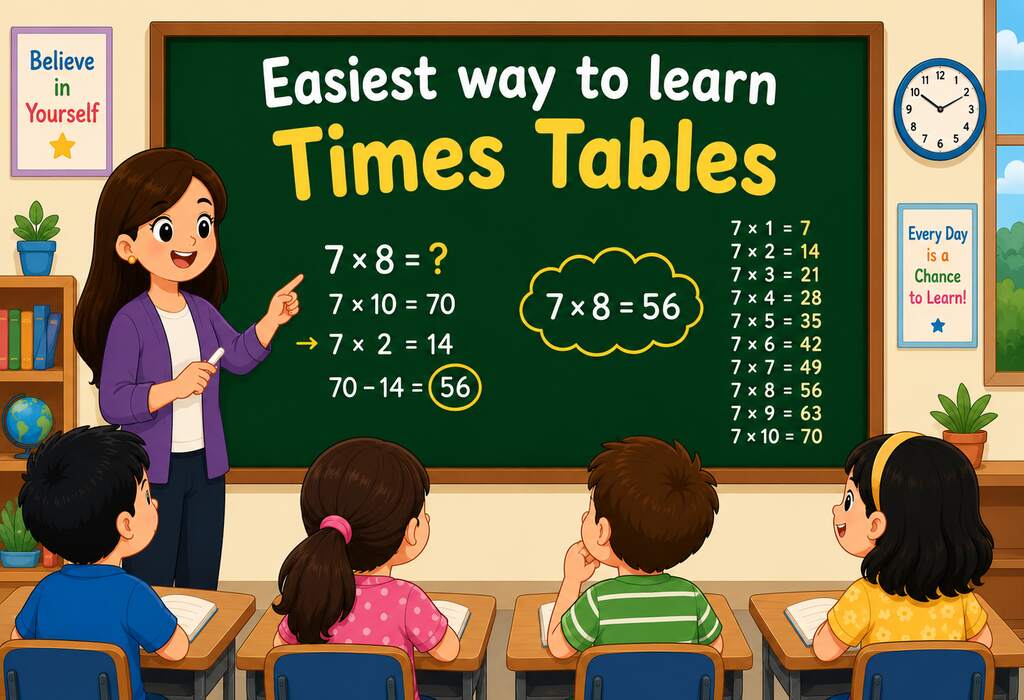
Learning multiplication tables is often seen as one of the more challenging milestones in a child’s early maths journey, but it doesn’t have to be a source of stress for either children or parents. Finding the easiest way to learn times tables can make all the difference, turning what feels like rote memorisation into an engaging, confidence-building activity. With the right approach, children can move beyond simply memorising numbers and start genuinely understanding the patterns and logic behind multiplication.
Thank you for reading this post, don't forget to subscribe!
Teaching times tables effectively involves more than repetition; it requires patience, creativity and techniques suited to how children naturally learn best. Whether your child is a visual learner, enjoys hands-on activities, or responds well to songs and rhythm, there’s an easy method of learning multiplication tables that can work for them. In this article, we explore practical, tried-and-tested strategies to help your child learn their times tables with greater ease, confidence and even a bit of fun along the way.
When Do Children Learn Times Tables?
Most children begin learning times tables around the age of 7 or 8, typically in Year 3 or Class 2, starting with simpler tables like 2, 5 and 10 before gradually progressing to more challenging ones. By the time they reach Year 4 or Class 3, children are generally expected to know their tables up to 12, as this forms a key foundation for more advanced mathematical concepts like division, fractions and algebra. However, the exact timeline can vary depending on the school curriculum and each child’s individual pace of learning.
Finding the easiest way to memorise times tables early on can make this transition much smoother, helping children build confidence in maths rather than feeling overwhelmed by numbers. Since multiplication skills are cumulative, a strong grasp of times tables at this stage often makes future maths topics significantly easier to understand and apply.
Why Is Learning Times Tables Important for Children?
Times tables are more than just a school requirement; they form a core building block for a child’s overall mathematical confidence. Here’s a closer look at why mastering them matters so much.
Learning times tables helps children solve problems faster and more accurately, both in class and in everyday situations like shopping. It also lays the groundwork for topics like division, fractions and algebra, which build directly on multiplication facts. Beyond academics, knowing times tables well boosts confidence and reduces maths anxiety, making numbers feel far less intimidating overall.
Mistakes You Should Avoid While Teaching Times Tables
Even with good intentions, a few common missteps can make teaching multiplication tables harder than it needs to be. Here’s what to watch out for while helping your child learn.
1. Rushing the Learning Process
Trying to teach too many tables at once can overwhelm a child, making it harder for them to retain what they’ve learned. Progressing gradually, one table at a time, tends to work far better.
2. Relying Only on Rote Memorisation
Asking children to simply repeat and memorise numbers, without understanding the logic behind multiplication, often leads to confusion and makes the facts harder to recall later.
3. Skipping Real-Life Context
Teaching times tables in isolation, without connecting them to everyday situations, can make the concept feel abstract and less meaningful to a child.
4. Ignoring Individual Learning Styles
Assuming every child learns the same way can slow progress; some children benefit from visuals, others from songs, and some from hands-on practice.
5. Not Practising Regularly
Teaching a table once and moving on too quickly can cause children to forget it over time, as regular revision is key to long-term retention.
6. Creating a Stressful Learning Environment
Reacting negatively to mistakes or applying too much pressure can make children anxious about maths, which often hinders learning rather than helping it.
7. Focusing Only on Speed
Prioritising fast recall over genuine understanding can leave gaps in a child’s knowledge, especially when they’re asked to apply multiplication in different contexts.
8. Neglecting to Revisit Earlier Tables
Moving on to new tables without occasionally revisiting earlier ones can cause children to forget previously learned facts, weakening their overall foundation.
Right Language To Use While Teaching Times Tables
The words you choose while teaching multiplication tables can shape how confident a child feels about learning them. Here are some simple language tips to keep in mind.
- Use Positive, Encouraging Phrases – Instead of saying “this is easy,” try “let’s figure this out together,” which feels more supportive and less pressuring for a child who is struggling.
- Frame Mistakes as Part of Learning – Phrases like “that’s a great try, let’s look at it again” help children feel safe making errors, rather than fearing them.
- Use Simple, Consistent Terms – Stick to clear, repeatable language, such as “groups of” or “times,” so children build a consistent understanding of what multiplication means.
- Avoid Comparing Progress to Others – Refrain from phrases like “your friend already knows this,” as comparisons can create unnecessary pressure and anxiety around learning.
- Celebrate Small Wins Verbally – Simple affirmations like “you got that one right” or “you’re getting faster” help reinforce progress and keep motivation high.
How To Teach Times Tables?
Looking for fun ways to learn times tables that actually stick? Here are ten practical methods to help your child master multiplication with confidence.
1. Start With Skip Counting
Before diving into full tables, teach your child to skip count, such as counting in 2s, 5s or 10s. This builds the foundational number sense that multiplication is based on.
2. Use Visual Aids and Charts
Multiplication charts or grids help children see patterns visually, making it easier to spot relationships between numbers rather than memorising them in isolation.
3. Incorporate Songs and Rhymes
Turning times tables into catchy songs or rhymes is one of the most fun ways to learn times tables, as rhythm and repetition naturally aid memory.
4. Practise With Everyday Objects
Using items like buttons, blocks or fruit to physically group numbers helps children understand multiplication as repeated addition in a tangible way.
5. Play Multiplication Games
Board games, card games or simple dice games involving multiplication make practice feel like play rather than a chore.
6. Use Flashcards for Quick Recall
Flashcards help reinforce quick recall of multiplication facts, especially when used in short, regular practice sessions rather than long, tiring ones.
7. Relate Tables to Real-Life Situations
Connecting multiplication to everyday scenarios, like calculating the total cost of items or dividing snacks among friends, helps children see its practical value.
8. Teach Patterns Within Tables
Highlighting patterns, such as how the 9 times table’s digits always add up to 9, can make tables feel less random and more logical.
9. Practise a Little Every Day
Short, consistent daily practice tends to be far more effective than occasional long study sessions, helping information move into long-term memory.
10. Use Times Table Apps or Online Tools
Interactive apps and online games offer another one of the fun ways to learn times tables, combining practice with instant feedback in an engaging format.
FAQs
1. Why Do Some Times Tables Feel Harder Than Others?
Tables like 7 and 8 often feel harder because they don’t follow as many obvious patterns compared to tables like 2, 5 or 10, making them trickier to memorise through pattern recognition alone.
2. Is It Necessary to Learn Times Tables in Order, Starting From 1?
No, many educators recommend starting with easier tables like 2, 5 and 10 first, since they build confidence quickly, before moving on to trickier ones like 6, 7 and 8.
3. Can Learning Times Tables Help With Subjects Other Than Maths?
Yes, strong multiplication skills can support subjects like science and even music, where concepts like ratios, measurements and rhythm often rely on quick numerical thinking.
4. How Can I Tell if My Child Has Truly Understood Multiplication, Not Just Memorised It?
Learning times tables doesn’t have to feel like a daunting task for either children or parents. With patience, the right techniques and a bit of everyday practice, multiplication can shift from something to memorise under pressure to a skill your child genuinely understands and feels confident using, both in the classroom and beyond.
Also Read:
Skip Counting for Kids
Teach your Kids Basic Counting
Number Sentence to Preschoolers and Kids