

- What Are Endangered Animals?
- Importance of Learning About Endangered Animals
- What Are the Main Reasons for Animals Becoming Endangered?
- List of Endangered Animals for Kids
- Endangered Animals in India
- Easy Ways to Save Endangered Animals
- Activities that Can Help Your Child Learn about Endangered Animals
- Interesting Facts and Information about Endangered Animals for Children
- FAQs
Earth is home to many wild species of animals, some of which are endangered species. These critically endangered species are on the verge of extinction or are near threatened. In this article, we have covered the names of animals that are endangered for preschoolers, which will help them learn the names of endangered animals, the reasons why they are endangered, and some interesting facts about these animals.
Thank you for reading this post, don't forget to subscribe!
Many children often wonder what animals are in danger of extinction and why they need our protection. Let’s take a look at some of these fascinating creatures and how we can help protect them.
What Are Endangered Animals?
Endangered animals are species that are at risk of disappearing from the planet altogether. This means that in the near future, if left unprotected, these animals may no longer be found in the wild. It indicates that only a small number of these animals remain alive today, making their survival increasingly uncertain. Some examples of endangered animals include the Javan Rhino, Orangutan, and Amur Leopard.
| SPECIES | REGION | THREATS |
| Tiger | South and Southeast Asia | Habitat loss, poaching for body parts, decline in prey species, and conflict with local communities. |
| Orangutan | Borneo and Sumatra | Forest clearing, palm oil expansion, fragmentation of habitat, and illegal capture. |
| African forest elephant | Central and West Africa | Ivory poaching, shrinking forests, and disruption of migration routes. |
| Amur leopard | Far eastern Russia and northeastern China | Poaching, loss of forest cover, low prey numbers, and habitat isolation. |
| Mountain gorilla | Mountain forests of Central Africa | Human encroachment, disease transmission, habitat pressure, and limited living space. |
| Red panda | Eastern Himalayas | Deforestation, road construction, habitat fragmentation, and occasional poaching. |
| Blue whale | Oceans worldwide | Ship collisions, entanglement in fishing gear, underwater noise, and historic whaling. |
| Hawksbill turtle | Tropical seas and nesting beaches | Illegal shell trade, loss of nesting sites, fishing nets, and marine pollution. |
| Vaquita | Northern Gulf of California | Accidental capture in fishing nets and the extremely small size of the remaining population. |
| Ganges river dolphin | River systems of South Asia | Water pollution, dams, sand mining, and entanglement in fishing equipment. |
| Snow leopard | High mountains of Central and South Asia | Poaching, prey loss, livestock conflict, and shrinking alpine habitat. |
| Giant panda | Mountain bamboo forests in China | Habitat fragmentation, limited bamboo availability, and land-use change. |
| Sumatran rhinoceros | Sumatra and nearby Southeast Asian forests | Poaching, habitat loss, and the danger of having very few surviving individuals. |
| Asian elephant | South and Southeast Asia | Habitat loss, human-elephant conflict, and poaching in some regions. |
| Gorilla | Central and West Africa | Habitat destruction, hunting, disease, and pressure from expanding human settlements. |
| Cheetah | Parts of Africa and a small area of Iran | Habitat loss, conflict with livestock owners, and reduced prey availability. |
| Pangolin | Africa and Asia | Illegal wildlife trade, habitat loss, and hunting for scales and meat. |
| Koala | Australia | Bushfires, habitat clearing, drought, disease, and climate stress. |
Importance of Learning About Endangered Animals
Understanding why the most endangered animals need our attention is an important lesson for young children. Here’s a look at why this topic matters and how it shapes a child’s awareness of the world.
- Builds Awareness of Nature – Learning about endangered animals helps children understand that the natural world is delicate and needs to be looked after.
- Encourages Empathy – Understanding the struggles these animals face helps children develop kindness and concern for other living beings.
- Teaches Responsibility – Children learn that human actions, such as pollution and deforestation, can affect animals, encouraging them to be more mindful of their own habits.
- Introduces the Concept of Conservation – This topic gives children an early understanding of conservation efforts and why protecting habitats is important.
- Builds Interest in Wildlife – Learning about unique and rare animals often excites children and encourages them to explore more about the natural world.
- Encourages Positive Action – Even simple habits, such as saving water or avoiding littering, are lessons children can pick up early after learning why animals become endangered.
What Are the Main Reasons for Animals Becoming Endangered?
There are various reasons why animals become endangered. Some of the most common factors include:
- Pollution – Pollution is one of the major factors that lead to various animals being on the verge of extinction, as it contaminates the air, water and soil that animals depend on to survive.
- Diseases – Diseases can affect humans and animals alike. Sometimes, animals catch diseases that spread quickly within a population, leading to the mass decline of certain species.
- Low Birth Rate – The reproduction rates of some animals are naturally low, while others do not reproduce very often, making it harder for their populations to recover once numbers begin to fall.
- Habitat Loss – Deforestation, urbanisation and land clearing destroy the natural homes of many animals, leaving them without shelter, food or safe breeding grounds.
- Climate Change – Rising temperatures and changing weather patterns affect the habitats and food sources of many species, making survival increasingly difficult for animals that cannot adapt quickly enough.
- Poaching and Illegal Hunting – Animals are sometimes hunted illegally for their fur, tusks, horns or other body parts, which has led to a sharp decline in the population of several species.
- Invasive Species – When new species are introduced into an ecosystem, they can compete with native animals for food and resources, sometimes pushing them towards extinction.
List of Endangered Animals for Kids
There are some of the most endangered animals in the world that are on the verge of extinction. Let’s take a look at the names of these endangered animals.
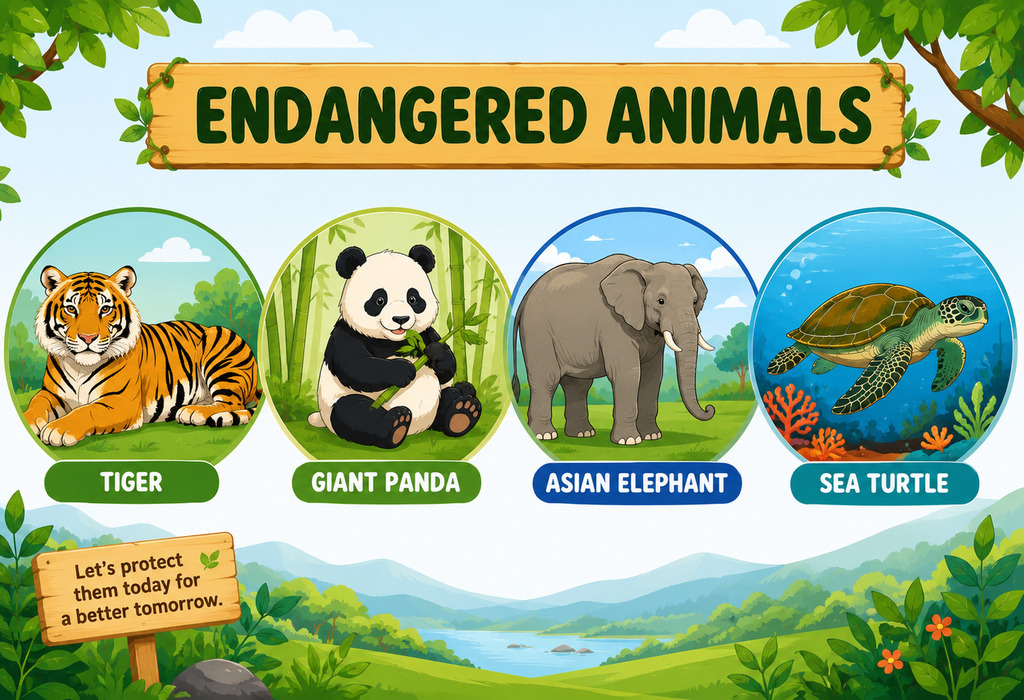
- Bengal Tiger – Due to poaching and habitat loss, the number of Bengal Tigers has been reducing dramatically over the years, making conservation efforts crucial for their survival.
- Gorillas – The number of Gorillas has declined mostly due to habitat loss, poaching, disease and human conflict, with some subspecies, like the Cross River Gorilla, having fewer than 300 individuals left in the wild.
- Rhinos – Sadly, this animal is poached for its distinctive horn. Three out of five species of Rhinos, including the Black, Javan and Sumatran Rhino, are among the most critically endangered species in the world.
- Sea Turtles – Two species of this animal are critically endangered. Hunting is one of the biggest threats to Sea Turtles, with poachers targeting the animal’s eggs, shells, meat and skin.
- Saola – Known as the “Asian Unicorn,” the Saola is considered critically endangered and is one of the rarest large terrestrial mammals on Earth, found only in the forests of Vietnam and Laos.
- Gharial – There has been a steady decline in the number of Gharials since the 1930s, and they are now close to extinction. Habitat loss and pollution are some of the biggest reasons that led them to the endangered species list.
- Vaquita – Considered the smallest and most endangered marine mammal in the world, the Vaquita has fewer than 10 individuals remaining, largely due to illegal fishing practices in Mexico’s Gulf of California.
- Orangutan – This orange-haired primate is counted among endangered species due to illegal hunting and habitat destruction caused by logging and agricultural expansion.
- Amur Leopard – Amur Leopards face multiple threats to their survival, including habitat loss and fragmentation, prey scarcity, and transportation infrastructure like roads, with only around 100 individuals left in the wild.
- African Forest Elephant – The reasons behind the decline of these animals include poaching, habitat loss and land-use change for agriculture, with some estimates suggesting an 80% decline in the last century.
Endangered Animals in India
Learning about India’s wildlife helps children understand the country’s rich biodiversity and the urgent need to protect it. Here is a list of endangered mammals in India that every child should know about.
- Asiatic Lion
- Snow Leopard
- Indian Rhinoceros
- Red Panda
- The Nilgiri Tahr
- Kashmir Red Stag
- Lion-Tailed Macaque
- Indian Bison
Easy Ways to Save Endangered Animals
Wondering how to save endangered animals? Even small, everyday actions can make a real difference to their survival. Here are some simple ideas your child can start practising right away.
- Read and Learn – Reading about endangered animals in your country and around the world helps build awareness and encourages a lifelong interest in protecting wildlife.
- Minimise Chemical Use – Reducing the use of herbicides and pesticides at home helps protect wildlife, as these hazardous pollutants can affect animals at many levels of the food chain.
- Save Water – Reducing unnecessary water usage gives a better chance of survival to animals that live in or near water sources, especially during dry seasons.
- Recycle and Choose Sustainable Products – Recycling and buying sustainable products helps protect rainforests, which are home to many endangered species.
- Support Wildlife Conservation Efforts – Supporting local zoos, wildlife sanctuaries or conservation organisations, even in small ways, helps fund the protection of endangered species.
- Avoid Products Made from Endangered Animals – Steering clear of products made from ivory, fur or animal skin helps reduce the demand that drives poaching and illegal hunting.
Activities that Can Help Your Child Learn about Endangered Animals
Learning about endangered animals doesn’t have to be limited to reading alone. Here are some fun, hands-on activities that make the topic more engaging and memorable for your child.
- Book Reading – Introduce your child to age-appropriate books about endangered species. This helps them learn the names of animals on the verge of extinction while building a habit of reading.
- Collect the Trash – Pollution greatly affects wildlife and their habitats. Encouraging your child to collect trash around the neighbourhood is a simple, hands-on way to teach them about protecting animals.
- Craft Time – If your little one enjoys art and craft projects, help them make animal masks or models of endangered species. This is a fun, creative way to help them remember these animals and their features.
- Watch a Documentary – Watching movies, shows and documentaries about endangered species with your child helps them understand the reasons behind their declining numbers in an engaging, visual format.
- Solve a Puzzle – Get your child an endangered animals jigsaw puzzle, which is widely available in stores or online. Solving it together makes learning animal names a fun, hands-on activity.
- Colour the Endangered Animals – Print outlines of endangered animals and ask your child to colour them in. This simple activity helps them learn the names and features of these animals while enjoying a creative task.
- Visit a Zoo or Wildlife Sanctuary – Take your child to a local zoo or sanctuary to see endangered animals up close. Seeing these animals in person often leaves a lasting impression and sparks curiosity.
- Plant a Tree – Planting a tree together teaches children that protecting habitats is just as important as protecting the animals themselves, since many endangered species depend on trees for shelter and food.
- Play Animal Matching Games – Create simple flashcards or matching games featuring endangered animals and their names or habitats, turning learning into playtime.
- Write a Short Story – Encourage your child to write a short story or draw a comic strip about an endangered animal, helping them express what they’ve learned creatively and memorably.
Interesting Facts and Information about Endangered Animals for Children
It’s time to read some interesting facts about endangered species of animals, many of which highlight how close some creatures have come to disappearing forever.
- Black rhino populations dropped by a staggering 96% between 1970 and 1995, falling from around 70,000 to just over 2,400 individuals due to poaching.
- There are only around 34 to 47 Sumatran rhinos left in the wild today, making them one of the rarest large mammals on Earth.
- A rhino’s horn is made of keratin, the same protein found in human hair and fingernails, yet it remains one of the most poached parts of any animal.
- Pollution caused by humans, including plastic waste and chemical runoff, is one of the biggest reasons animals are becoming endangered.
- The Northern White Rhino has only two individuals left in the world, both female, after the last male passed away in 2018.
- Some endangered species, like the greater one-horned rhino, have made a remarkable recovery through conservation efforts, growing from around 200 individuals a century ago to nearly 4,000 today.
- Endangered animals are not always large mammals; many endangered species are insects, amphibians and fish that are just as important to their ecosystems.
- Habitat corridors, which connect fragmented forests and grasslands, are being created in several countries to help endangered animals travel safely and breed.
Here’s a handy chart that brings together all the endangered animals covered in this article in one place. It makes for a quick and easy reference for your child.
FAQs
1. What Is the Difference Between “Endangered” and “Extinct”?
An endangered animal is one that still exists but is at risk of disappearing, while an extinct animal is one that no longer exists anywhere in the world.
2. Can an Endangered Animal Become Safe Again?
Yes, with the help of conservation efforts, protection laws and habitat restoration, some endangered animals have seen their numbers grow and their status improve over time.
3. Who Decides Which Animals Are Endangered?
Organisations like the International Union for Conservation of Nature (IUCN) study animal populations and assign them a conservation status based on how much they are at risk.
4. What Can Schools Do to Help Protect Endangered Animals?
Schools can organise awareness programmes, tree planting drives or fundraisers for wildlife organisations, helping children actively contribute to conservation efforts from a young age.
Teaching children about endangered animals goes beyond building general knowledge and vocabulary; it nurtures empathy and a lasting respect for the natural world. We hope the facts, activities and lists in this article make it easier for you to introduce your child to this important topic and inspire them to become thoughtful stewards of the planet.
Also Read:
Types Of Sea Animals for Children
Animal Names for Children in English
Names of Animals Beginning with H for Kids