



Last Updated on September 5, 2026
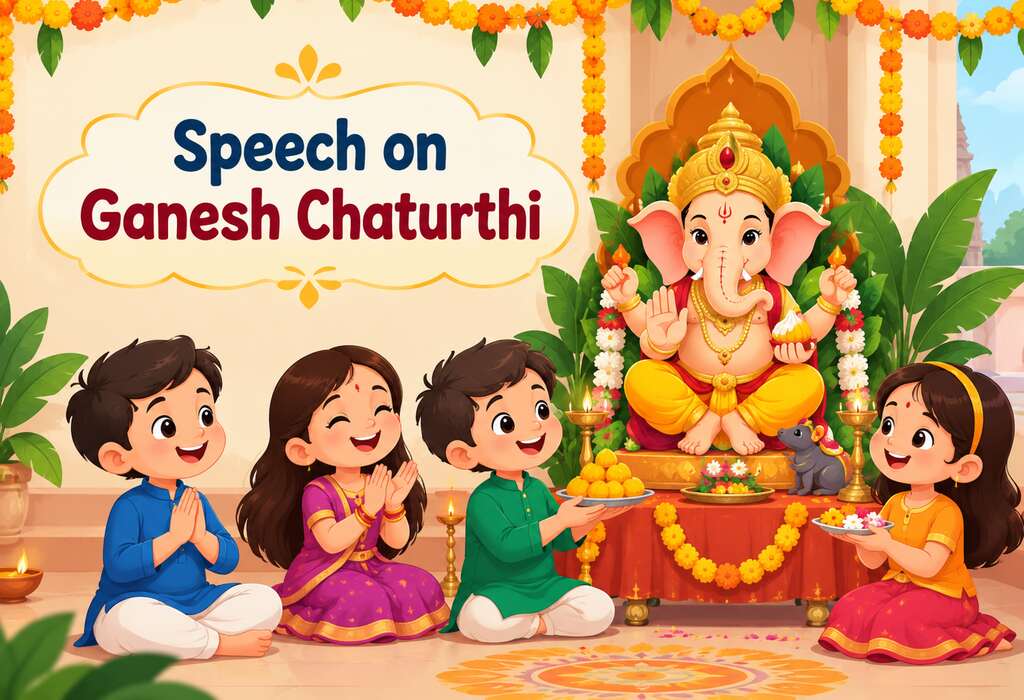
Ganesh Chaturthi is one of India’s most joyous festivals, marking the birth of Lord Ganesha, the elephant-headed god known for removing obstacles and bringing good fortune. Schools and cultural events often ask children to deliver a Ganesh Chaturthi speech in English, giving them a chance to reflect on the festival’s meaning while building their public speaking skills.
Thank you for reading this post, don't forget to subscribe!
This article brings together a Ganesh Chaturthi speech for students and children in various lengths, from short, simple lines to longer, more detailed versions. Each speech touches on the festival’s origins, traditions, and the values it represents, making it easier for children to speak confidently about Ganesh Chaturthi. Whether your child needs a quick 10-line speech or a more elaborate one, these examples offer a helpful starting point.
Points To Remember While Preparing A Speech On Ganesh Chaturthi
Preparing a speech on Ganesh Chaturthi in English for classes 1, 2, and 3 is easier when children follow a clear structure. Here are some key points to keep in mind while writing one.
- Start With A Greeting — Begin the speech with a warm greeting to the audience before introducing the topic.
- Explain the Festival Briefly — Include a short explanation of what Ganesh Chaturthi is and why it is celebrated.
- Mention Lord Ganesha’s Significance — Talk about who Lord Ganesha is and what he represents, such as wisdom and the removal of obstacles.
- Describe Key Traditions — Include a few common traditions, like bringing home an idol, offering modaks, and performing aarti.
- Keep Language Simple — Use short, clear sentences that are easy for young children to say and for the audience to follow.
- Review and Proofread — Read through the speech once after writing to check for mistakes and ensure it flows smoothly.
- Conclude With A Positive Note — End the speech with a message about togetherness, gratitude, or the joy the festival brings.
10 Line Speech On Ganesh Chaturthi
A short, simple speech for classes 1 & 2 helps young children speak confidently without feeling overwhelmed. Here is a 10-line speech to guide them.
- Good morning, respected teachers and dear friends.
- Today, I would like to say a few words about Ganesh Chaturthi.
- Ganesh Chaturthi is a festival that celebrates the birth of Lord Ganesha.
- Lord Ganesha has the head of an elephant and is loved by everyone.
- He is known as the remover of obstacles and the god of wisdom.
- On this day, families bring home an idol of Lord Ganesha.
- We offer prayers, sweets, and flowers to seek his blessings.
- Modak is a sweet that is especially offered to Lord Ganesha.
- The festival ends with immersing the idol in water with a happy heart.
- Thank you, and Ganpati Bappa Morya!
2 Minute Speech On Ganesh Chaturthi
For children who want to highlight sustainability, a speech on an eco-friendly Ganpati for Ganesh Chaturthi is a meaningful way to mark the festival. Here is a 200-word speech built around this theme.
Good morning, respected teachers and dear friends.
Today, I am here to speak about Ganesh Chaturthi and the importance of celebrating it in an eco-friendly way.
Ganesh Chaturthi marks the birth of Lord Ganesha, the elephant-headed god known for removing obstacles and bringing wisdom and good fortune. Families welcome him home with an idol, prayers, and sweets like modak, celebrating for several days with music, dance, and joy.
However, many idols today are made using plaster of Paris and chemical paints, which do not dissolve easily in water and can seriously harm rivers, lakes, and the creatures living in them. This is why more families are now choosing an eco-friendly Ganpati instead, made from natural clay and painted with safe, water-based colours.
An eco-friendly idol dissolves naturally during visarjan, without leaving behind harmful waste that pollutes our water bodies. Some families also choose to immerse their idol in a bucket of water at home instead of a natural lake or river, reducing pollution even further while still honouring the tradition.
Choosing an eco-friendly Ganpati lets us celebrate our beloved traditions while protecting the environment for future generations.
Let us all pledge to make this Ganesh Chaturthi a little greener. Thank you.
Short Speech On Ganesh Chaturthi In English
A slightly longer speech allows children to explore the festival’s traditions and meaning in greater depth. Here is a 400-word speech to guide them.
Respected teachers and dear friends, I stand before you today to speak about a festival that fills our homes with joy, colour, and devotion: Ganesh Chaturthi.
This festival celebrates the birth of Lord Ganesha, the son of Lord Shiva and Goddess Parvati. With the head of an elephant and the body of a human, Lord Ganesha is one of the most beloved deities in Hindu tradition. He is worshipped as the god of wisdom, intellect, and new beginnings, and is known for clearing away obstacles from our path. This is why people pray to him before starting any important task, whether it’s a new business, a wedding, or even the first day of school.
Ganesh Chaturthi usually falls in the months of August or September and is celebrated for ten days, ending with a grand farewell known as Anant Chaturdashi. On the first day, families bring home a beautifully crafted idol of Lord Ganesha and place it in a decorated area of the house or a community pandal. Priests perform a ritual called pranapratishtha, believed to invite the god’s presence into the idol.
Throughout the festival, households and communities come together to sing devotional songs, perform aarti, and offer prayers twice a day. One of the most loved parts of the celebration is preparing modak, a sweet dumpling considered to be Lord Ganesha’s favourite treat. Kitchens fill with the aroma of coconut, jaggery, and rice flour as families prepare these offerings with love and devotion.
Beyond the rituals, Ganesh Chaturthi is also a time for community bonding. Streets come alive with music, dance, and processions, and neighbours often set up shared pandals where everyone contributes to the celebrations. This spirit of togetherness is one of the most beautiful aspects of the festival, bringing people from all walks of life together in shared joy.
On the final day, the idol is taken in a joyous procession and immersed in a river, lake, or the sea, a ritual known as visarjan. This act symbolises the cycle of creation and dissolution, reminding us that everything in life eventually returns to nature. As the idol disappears into the water, people chant “Ganpati Bappa Morya, Pudhchya Varshi Lavkar Ya,” a heartfelt request for Lord Ganesha to return the following year.
Ganesh Chaturthi teaches us patience, devotion, and the importance of community. It reminds us to overcome our own obstacles with wisdom and humility, just as Lord Ganesha does.
On that note, I would like to conclude my speech by wishing everyone a joyful and blessed Ganesh Chaturthi. Thank you.
Long Speech On Ganesh Chaturthi – History, Importance, & Celebration
A detailed, longer speech gives children the opportunity to explore the festival’s background, significance, and traditions in full. Here is a 700-word speech, broken into clear sections for easy reading.
A very good morning to the respected principal, teachers, and my dear friends gathered here today.
I am honoured to stand before you and speak on a festival that holds deep significance in Indian culture, Ganesh Chaturthi. This vibrant celebration marks the birth of Lord Ganesha, one of the most revered deities in Hinduism, and today I will walk you through its history, importance, and the many ways it is celebrated across the country.
History
The origins of Ganesh Chaturthi trace back centuries, rooted in the story of Lord Ganesha’s birth. According to popular legend, Goddess Parvati created Ganesha from turmeric paste and breathed life into him, instructing him to guard the entrance while she bathed. When Lord Shiva returned and was denied entry by the young Ganesha, a fierce battle followed, resulting in Ganesha losing his head. To console a grieving Parvati, Shiva replaced it with the head of an elephant, and Ganesha was brought back to life, becoming one of the most important gods in Hindu mythology.
While the worship of Lord Ganesha has existed for centuries, the festival as we know it today gained widespread popularity in the late 19th century. Indian freedom fighter Bal Gangadhar Tilak transformed Ganesh Chaturthi from a private, family affair into a large public event during British colonial rule. He recognised the festival’s potential to unite people across caste and class, using it as a platform to build community spirit and, subtly, to organise against British rule. This tradition of grand public celebrations continues in full force today.
Importance
Ganesh Chaturthi holds deep religious and cultural importance. Lord Ganesha is worshipped as the god of wisdom, intellect, and prosperity, and is known as “Vighnaharta,” the remover of obstacles. This is why Hindus traditionally invoke his blessings before beginning any new venture, be it a wedding, a business, or an examination, believing that his presence clears the path for success.
Beyond religious devotion, the festival carries significant social importance as well. It brings communities together, encouraging cooperation and shared responsibility as neighbourhoods organise pandals, decorations, and events collectively. It also serves as an occasion for cultural expression, with music, dance, and art playing a central role throughout the celebrations. In more recent years, the festival has increasingly become a platform for raising environmental awareness, encouraging the use of eco-friendly idols and sustainable practices to protect rivers and lakes during the immersion rituals.
Celebration
Ganesh Chaturthi typically falls in August or September and continues for ten days, concluding with the grand farewell on Anant Chaturdashi. The celebrations begin with families and communities bringing home beautifully sculpted idols of Lord Ganesha, often crafted from clay. These idols are placed on decorated platforms, and a ritual called pranapratishtha is performed by priests to invoke the deity’s presence within the idol.
Throughout the ten days, households and public pandals host daily aarti sessions, devotional singing, and prayer offerings. Modak, a sweet dumpling filled with coconut and jaggery, is prepared in almost every home, as it is believed to be Lord Ganesha’s favourite offering. Communities also organise cultural programmes, including dance performances, music concerts, and competitions, turning neighbourhoods into vibrant hubs of festivity.
Public celebrations, particularly in cities like Mumbai and Pune, are especially grand, with massive pandals housing towering idols that draw thousands of visitors each day. These community-led celebrations reflect the inclusive spirit that Tilak envisioned over a century ago.
The festival concludes with visarjan, the ceremonial immersion of the idol in a river, lake, or the sea. This procession is accompanied by energetic dancing, drumming, and chants of “Ganpati Bappa Morya, Pudhchya Varshi Lavkar Ya,” expressing hope for Lord Ganesha’s return the following year. The immersion symbolises the cycle of creation and dissolution, a reminder that all things eventually return to nature.
Ganesh Chaturthi is far more than a religious festival; it is a celebration of wisdom, unity, and cultural pride that has evolved significantly since its early days. It teaches us to face our obstacles with patience and humility, just as Lord Ganesha does, while bringing communities together in shared joy. On this note,
I would like to end my speech by wishing everyone a joyful and meaningful Ganesh Chaturthi. Thank you, and Ganpati Bappa Morya!
FAQs
1. Why Is Lord Ganesha Often Worshipped Before Starting Something New?
Lord Ganesha is believed to clear away obstacles and bring good fortune, which is why people traditionally seek his blessings before beginning important tasks like exams, weddings, or new ventures.
2. Why Do People Say “Ganpati Bappa Morya” During The Festival?
This phrase is a joyful chant used to honour Lord Ganesha and wish him well, often shouted during processions and immersion ceremonies as a way of celebrating his presence.
3. Is Ganesh Chaturthi Celebrated The Same Way Across India?
No, while the core rituals remain similar, the scale and style of celebration can vary widely, with some regions hosting massive public pandals and others keeping the festival as a quieter, family-based occasion.
4. Why Do Some People Choose To Immerse The Idol At Home Instead Of In A River Or Lake?
Immersing the idol at home, often in a bucket or tub, helps reduce pollution in natural water bodies, especially when the idol isn’t made from fully eco-friendly materials.
5. Why Does Ganesh Chaturthi Last For Ten Days?
The ten-day celebration allows time for each stage of the festival, from welcoming the idol home to daily prayers and community festivities, before the final farewell on Anant Chaturdashi.
Writing a speech on Ganesh Chaturthi gives children the chance to reflect on a festival rooted in devotion, wisdom, and community spirit, while also building their confidence in public speaking. Whether it’s a quick 10-line speech or a longer one exploring the festival’s history and traditions, each version helps young speakers share the joy and meaning behind this cherished celebration.
Also Read:
Speech on Janmashtami
Essay on Ganesh Chaturthi
Essay on Krishna Janmashtami