

Last Updated on October 28, 2026
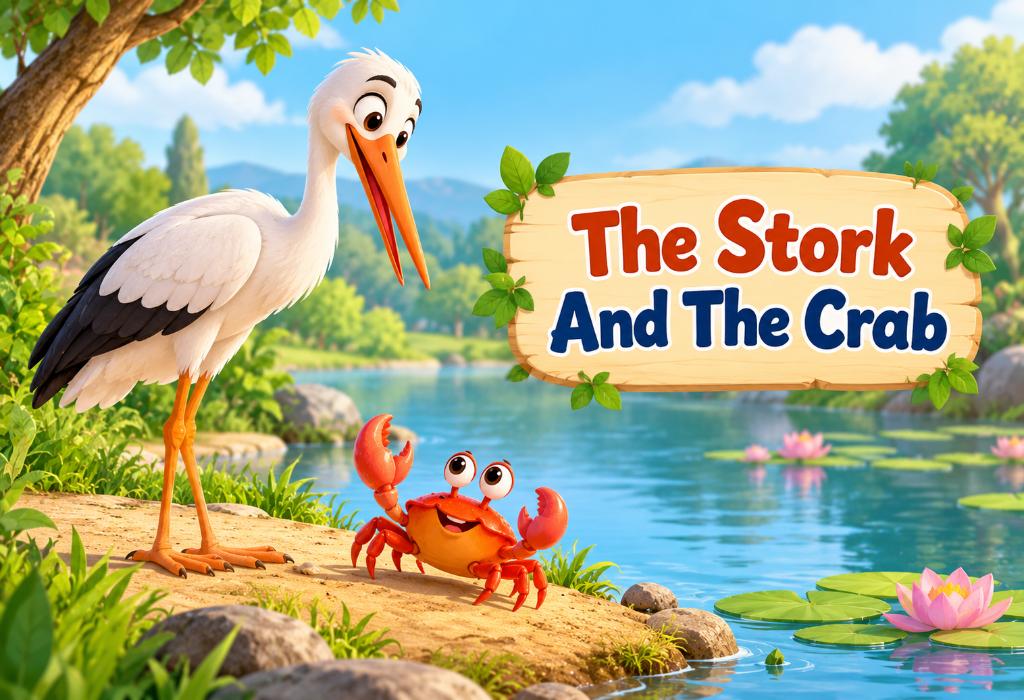
The Stork and Crab full story shows that trickery and greed backfire, and that clever thinking can turn a deadly plan against the schemer. It is a Panchatantra fable, part of an ancient collection of Indian animal tales written in Sanskrit to teach values to young minds. Enjoy the Stork and the Crab story with pictures in English below, and try to guess the moral before you reach the end.
Thank you for reading this post, don't forget to subscribe!
The Stork And The Crab Story For Children
This tale from the Panchatantra shows what happens when a cunning plan meets an even cleverer mind. Read it aloud and let your child guess who will win in the end.
Once upon a time, an old stork lived beside a pond full of fish, frogs and crabs. He had grown too weak to catch his dinner, and he was always hungry.
“If I chase the fish, they will swim away,” he thought. “I must find a trick instead.”
The next morning, the stork stood by the water’s edge and began to cry loudly.
“Uncle Stork, why are you so sad?” asked a little fish.
“Oh, my dear friends,” sighed the stork. “I heard some wise men say that there will be no rain for twelve years. This pond will dry up, and you will all perish.”
“Oh no! What shall we do?” cried the fish in fear.
“Do not worry,” said the stork kindly. “There is a big, beautiful lake nearby that never dries up. I can carry you there, a few at a time.”
The fish believed him and happily agreed. Each day, the stork carried a few fish away in his beak. But he did not take them to any lake. He flew to a flat rock and ate them all. Then he returned to the pond, full and pleased.
One day, a crab who lived in the pond came up to him. “Uncle Stork,” he said, “please take me to the lake today.”
The stork licked his beak. “A crab would make a fine change from fish,” he thought. “Of course, my friend,” he said aloud. “Hold on to my neck.”
The crab climbed onto his neck, and the stork flew high above the trees. Soon, the crab looked down and saw the rock below. It was covered with fish bones.
“Uncle Stork, where is the lake?” he asked.
The stork laughed. “There is no lake, you silly crab. I am going to eat you, just like the fish!”
The crab did not panic. “If I am to die, then you will die with me,” he said, and he gripped the stork’s neck tightly with his strong claws.
“Let go! Let go!” gasped the stork. “You are hurting me!”
“Take me back to the pond first,” said the crab firmly.
The stork had no choice. He flew back and landed beside the water. The crab squeezed one last time, and the wicked stork fell, never to harm anyone again. Then the crab told the other animals the truth, and the pond was safe once more.
Story Summary
An old, weak stork tricks the pond animals into believing the water will soon dry up, and he offers to carry them to a safer lake. Instead, he takes the fish to a rock and eats them. When a crab asks to be carried, he discovers the stork’s plan and grips his neck until the stork lands back at the pond. The stork falls, the crab shares the truth, and the pond is safe again.
Moral Of The Story
The story teaches children that sweet words can hide a cruel plan, so we should never trust anyone blindly. It also shows that staying calm in danger helps us think clearly, as the crab did when he saved himself and the pond. Those who cheat others often face the consequences of their own trick in the end.
FAQs
1. What Is The Origin And History Of The Stork And The Crab?
The story comes from the Panchatantra, an ancient Indian collection of animal fables written in Sanskrit. It was passed on by word of mouth for generations and later retold in many languages, with the stork sometimes appearing as a crane or heron.
2. What Type Of Story Is The Stork And The Crab?
It is a fable, a short story in which animals act and speak like humans to teach a lesson. It is also a cautionary tale, as it warns children about trickery and blind trust.
3. Who Are The Characters In The Stork And The Crab?
The main characters are the cunning old stork and the clever crab. The fish and other pond animals also play a part, as they are the ones the stork tricks.
4. How Can Children Apply The Moral Lesson Of The Story In Their Real Life?
Children can think twice before believing someone who offers a quick or too-good-to-be-true solution, and check with a parent or teacher first. They can also stay calm when they feel scared, as clear thinking helps them find a safe way out, just as the crab did.
5. Why Did The Fish Believe The Stork’s Story?
The fish were frightened by the news of a long drought, and the stork pretended to be a caring friend who wanted to help. The story shows that fear can make us accept an easy answer without asking questions, so it is wise to pause and ask, “How do you know?” before trusting a plan.
The Stork and the Crab reminds children that sweet words can hide a cruel plan, and that staying calm helps us think our way out of danger. With the full story, summary, moral and FAQs above, parents and teachers can turn this Panchatantra fable into a lively chat about trust and smart choices. Ask your child which moment in the tale surprised them most.
Also Read:
Little Red Hen Story with Moral for Children
Goldilocks And The Three Bears Moral Story for Kids
The Elephant And The Ant Story for Kids with Moral