


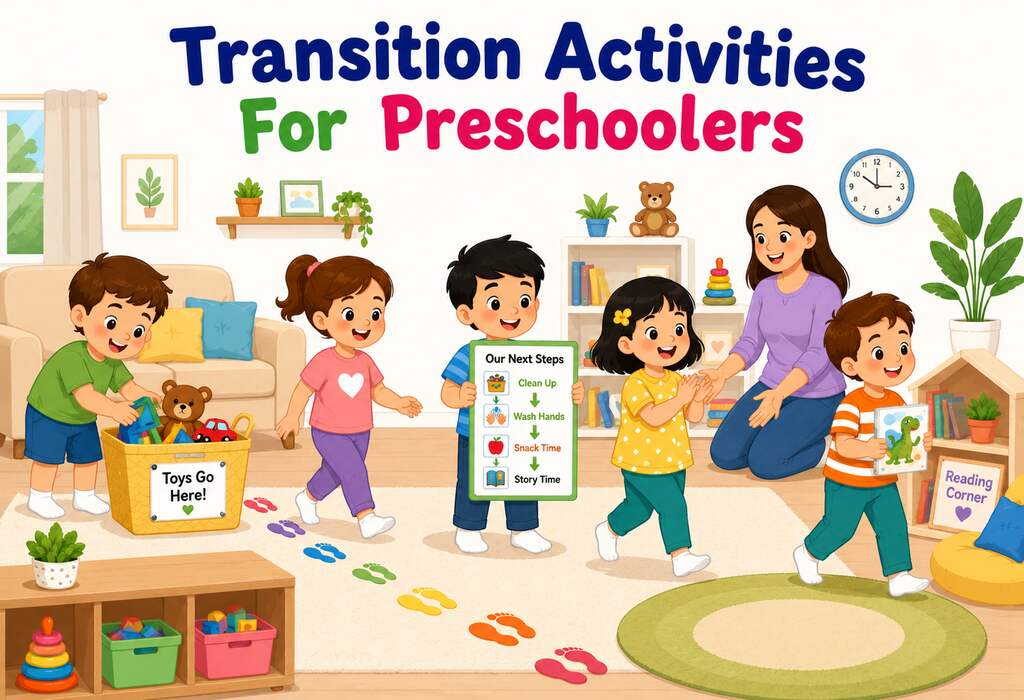
Moving from one activity to another can be one of the trickiest parts of a preschooler’s day, often leading to fussiness, resistance or a loss of focus. This is where thoughtful transition activities for preschoolers can make a real difference, turning potentially chaotic moments into smooth, enjoyable parts of the daily routine. Whether it’s shifting from playtime to snack time or from storytime to nap time, having a few reliable transition ideas for preschoolers on hand can help children feel more secure and prepared for what comes next.
Thank you for reading this post, don't forget to subscribe!
Transitions are just as important in structured learning environments, which is why kindergarten transitions are often carefully planned by teachers to keep young children engaged and calm throughout the day. In this article, we explore a range of fun and exciting ways to make transitions easier for preschoolers, both at home and in the classroom, helping children move through their day with greater confidence, cooperation and joy.
What are Transition Activities?
Before jumping into the fun ideas, it helps to understand what transition activities and transition games actually mean. Here’s a simple breakdown to set the context.
Transition activities are short, structured tasks or signals used to help children move smoothly from one activity to another during their day. They can take many forms, such as songs, movement games, visual cues or simple countdowns, all designed to prepare a child for a change before it happens.
Rather than abruptly stopping one activity and starting another, transition activities give children a gentle heads-up, helping them shift their focus with less resistance and fewer disruptions. This not only keeps the day running smoothly but also helps children build patience and self-regulation over time.
Why are Transition Activities Important?
Transitions can be one of the trickiest parts of a young child’s day if left unstructured. Here’s why building this habit early makes such a difference.
- Create a Sense of Routine – Predictable cues and signals help children feel more secure, as they know what to expect throughout the day.
- Reduce Chaos and Confusion – Clear transitions minimise disruptive behaviour and make shifting between activities feel smoother for both children and caregivers.
- Improve Focus and Attention – A well-planned transition helps refocus a child’s attention, preparing them to engage fully with the next activity.
- Build Patience and Self-Control – Following transition cues teaches children to wait their turn and manage their impulses in a low-pressure way.
- Support Emotional Regulation – Gentle transitions give children time to mentally and emotionally adjust, reducing frustration or resistance to change.
Engaging Transition Activities for Preschoolers
From songs to movement, countless transition games for preschoolers make shifting between activities feel like part of the fun. Here are twelve ideas to try at home or in the classroom.
1. Songs and Rhymes
Singing a simple tune, such as a clean-up song or a line-up song, signals a change in activity without needing constant verbal instructions. Preschoolers respond well to music, and repeating the same tune each time helps them anticipate what comes next.
2. Visual Cues
Picture cards showing different activities, such as a book for storytime or a playground for outdoor play, help children understand the flow of their day. Displaying these on a simple schedule board gives young children a clear, non-verbal way to follow along.
3. Movement Games
Asking children to hop, tiptoe or walk like an animal while moving between activities keeps them engaged and burns off extra energy. This turns a routine shift into a fun, physical moment rather than an abrupt stop.
4. Storytime Wind-Down
Reading a short story or poem is a gentle way to move from a high-energy activity into a calmer one. It helps children settle down while also building their listening and language skills.
5. Countdowns
Giving a simple countdown, such as “five more minutes” or “3-2-1,” prepares children for an upcoming change. This predictability reduces resistance, as children have time to mentally adjust before the shift happens.
6. Musical Instruments
Using a bell, drum, or chime as an auditory cue helps signal transitions quickly and playfully. Children often respond well to these sounds, associating them with a specific next step in their routine.
7. Group Gestures
Simple actions like clapping, stomping or snapping fingers can be used to gather children’s attention before a transition. These gestures are quick, require no extra materials, and help reinforce listening skills.
8. Mindfulness Activities
A short moment of deep breathing or quiet sitting helps children calm down before shifting into a more focused activity. This is especially useful after high-energy sessions like outdoor play.
9. Follow the Leader
One child or the teacher leads the group with a simple movement, such as hopping or walking like a dinosaur, while others follow along to the next activity. This adds an element of play while guiding children through the transition.
10. Interactive Question Prompts
Asking a quick question, such as “What’s your favourite colour?” while lining up gives children something engaging to focus on during the shift. This also encourages participation and language development.
11. Imaginative Play
Encouraging children to pretend they’re animals or vehicles as they move between activities makes the transition feel like part of playtime. This sparks creativity while helping the shift feel less like an interruption.
12. Timer-Based Cleanup
Setting a visual or audible timer for cleanup time gives children a clear, defined window to finish their current activity. This helps them practise time awareness while making the transition feel structured rather than sudden.
Tips for Successful Transitions
Even the best transition activities work better with the right approach behind them. Here are some practical preschool transition ideas to help these activities stick.
- Keep Activities Brief – Preschoolers have limited attention spans, so transition activities should last no more than a minute or two to stay effective.
- Be Consistent with Routines – Using the same songs, signals or gestures every day helps children anticipate what comes next, making them feel more secure.
- Involve Every Child – Make sure all children are actively participating in the transition, rather than a few, to keep the group cohesive and engaged.
- Use Positive Reinforcement – Praising children who follow transition cues smoothly encourages others to do the same and builds a positive routine over time.
- Stay Flexible – Not every activity will work for every group or mood, so be ready to adjust or switch to a calmer or more structured option when needed.
Mistakes to Avoid During Doing Transitions Activities
Even well-planned transitions can fall flat if a few common pitfalls go unnoticed. Here’s what to watch out for while guiding children through their day.
- Rushing the Transition – Moving too quickly from one activity to another without warning can leave children feeling caught off guard and more likely to resist.
- Being Inconsistent – Switching up cues or routines too often makes it harder for children to know what to expect, reducing the sense of security transitions are meant to provide.
- Ignoring Individual Needs – Assuming every child will respond the same way to a transition can overlook those who may need extra time, support or a different type of cue.
- Overloading with Instructions – Giving too many verbal instructions at once during a transition can overwhelm young children; simple, clear cues work far better.
- Skipping the Warning Step – Jumping straight into a transition without a countdown or heads-up often leads to more pushback than a gradual, signalled shift.
How Parents Can Help Kids With Transition Activities?
Transitions aren’t just a classroom challenge; they matter just as much at home. Here’s how parents can support their child through daily shifts and changes.
- Create Predictable Routines – Following a similar sequence for daily activities, such as mealtimes or bedtime, helps children know what to expect and feel more secure.
- Give Advance Warnings – Letting your child know a change is coming, such as “we’re leaving the park in five minutes,” gives them time to mentally prepare.
- Use Familiar Cues at Home – Simple songs, phrases or gestures used consistently can help signal transitions, just as they do in a classroom setting.
- Offer Choices When Possible – Giving your child small choices during a transition, such as which toy to put away first, helps them feel more in control of the change.
- Stay Calm and Patient – Children often pick up on a parent’s tone, so staying calm during a transition, even if there’s resistance, helps ease the shift for both of you.
FAQs
1. How Long Should a Transition Activity Take?
Most transition activities work best when kept short, usually one to two minutes, as preschoolers have limited attention spans and longer transitions can lead to restlessness.
2. Can Transition Activities Be Different at Home and at School?
Yes, transition activities can vary between settings, as long as they remain consistent within each environment, since it’s the predictability within a routine that helps children feel secure.
3. What Should I Do if My Child Resists Every Transition?
If a child consistently struggles with transitions, it may help to acknowledge their feelings first, offer a warning before the change, and consider whether they need extra time or a different type of cue.
4. Do Transition Activities Work for Children with Sensory Sensitivities?
Yes, though it often helps to use visual or gentle auditory cues rather than sudden loud sounds, and to give extra warning time so the child can prepare without feeling overwhelmed.
Transitions may seem like small moments in a preschooler’s day, but they play a big role in how secure, focused and cooperative a child feels. With a few consistent cues, a little patience, and activities that feel more like play than instruction, both parents and teachers can turn these daily shifts into some of the smoothest and even most enjoyable parts of the routine.
Also Read:
Physical Activities for Preschoolers
Counting Activities for Preschoolers
Ways to Teach Preschoolers about Helping Others