


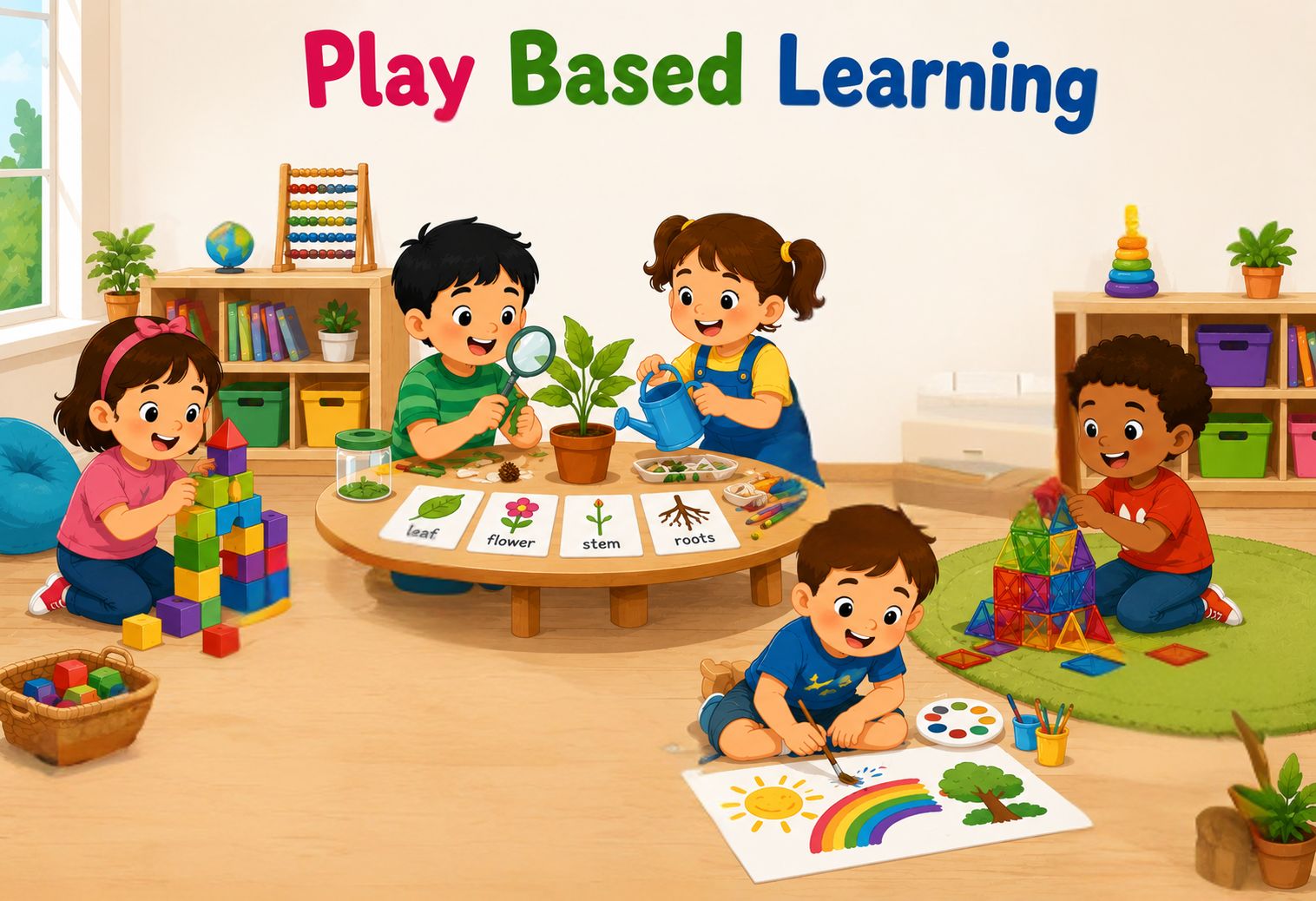
Play is often seen as separate from learning, but for young children, the two are deeply connected. Play-based learning in early childhood recognises that children absorb concepts, build skills and make sense of the world most effectively when engaged in activities that feel natural and enjoyable, rather than through rigid instruction. Whether stacking blocks, pretending to run a shop, or exploring sand and water, children are constantly problem-solving and communicating without even realising they’re learning.
Thank you for reading this post, don't forget to subscribe!
This approach to play through learning has gained growing recognition among educators and parents, particularly as research highlights its impact on cognitive, social and emotional development. Play-based learning in preschool settings lays a strong foundation for later academic success by nurturing curiosity, creativity and confidence from an early age. In this article, we explore the key benefits of this approach, along with practical activities you can try at home or in the classroom.
What Is Play-Based Learning?
Before looking at its benefits and activities, it helps to understand what a play-based approach actually involves. Here’s a simple breakdown of the concept.
Play-based learning is an educational approach where children learn concepts and skills through activities they naturally find engaging and enjoyable, rather than through direct, structured instruction alone. In this approach, adults often set up an environment rich with materials and opportunities, such as building blocks, art supplies or pretend-play props, and allow children to explore, experiment and make choices within it.
Learning happens organically as children count blocks while building a tower, negotiate roles during pretend play, or problem-solve their way through a puzzle. Rather than treating play as a break from learning, this approach sees it as one of the most effective ways young children develop cognitive, social, emotional and physical skills.
Benefits of Play-Based Learning
Understanding the importance of play-based learning helps explain why so many educators are moving away from purely instruction-led methods. Here’s a closer look at the key benefits this approach offers young children.
1. Builds Cognitive Skills
Through play, children naturally engage in problem-solving, counting, sorting and pattern recognition, which strengthens early cognitive development. Activities like building with blocks or sorting shapes help children grasp foundational concepts in a hands-on, memorable way.
2. Encourages Social Development
Pretend play, group games and collaborative activities teach children how to share, take turns, negotiate and cooperate with others. These early social interactions lay the groundwork for healthy relationships and teamwork later in life.
3. Strengthens Emotional Regulation
Play often allows children to express and process emotions in a safe, low-pressure setting, whether through role play, storytelling, or simply working through frustration during a challenging activity. This helps them build resilience and emotional awareness over time.
4. Supports Physical Development
Active play, such as running, climbing or manipulating small objects, helps children develop both gross and fine motor skills. These physical abilities, in turn, support other areas of learning, like handwriting and coordination.
5. Boosts Creativity and Imagination
Open-ended play, like pretend play or art activities, gives children the freedom to experiment with ideas, take on different roles and think beyond fixed answers, nurturing creativity that benefits them across all areas of learning.
6. Forms the Foundation for Formal Learning
Play-based learning in early childhood education plays a crucial role in preparing children for more structured academic settings later on, as it builds the curiosity, focus and problem-solving skills that formal learning environments rely on.
What are the Key Elements of Play-Based Learning?
Looking at real play-based learning examples helps clarify what makes this approach effective. Here are the key elements that come together to support meaningful learning through play.
1. Child-Led Exploration
Children are given the freedom to choose what they want to play with and how, rather than following a fixed set of instructions. This autonomy encourages genuine curiosity and deeper engagement with the activity at hand.
2. A Rich, Stimulating Environment
Play-based learning relies on access to varied materials, such as blocks, art supplies, sand, water or pretend-play props, that invite exploration and experimentation. A well-set-up environment often does much of the teaching on its own.
3. Open-Ended Materials and Activities
Toys and activities that don’t have a single “correct” way to be used, like building blocks or loose parts, allow children to approach them differently each time, encouraging creative thinking and problem-solving.
4. Social Interaction
Play often involves other children or adults, creating natural opportunities for communication, negotiation and cooperation. These interactions help children develop language and social skills alongside whatever concept they’re exploring.
5. Adult Guidance Without Control
While children lead the play, adults play a supportive role, asking open-ended questions, offering new materials, or gently extending an activity, without taking over or dictating how the play should unfold.
6. Reflection and Connection to Learning Goals
Effective play-based learning often includes moments where adults help children reflect on what they did or learned, subtly connecting playful activities to broader developmental or academic goals without disrupting the fun.
Play-Based Learning Vs Academic Learning
While both approaches aim to support a child’s development, they go about it quite differently. Here’s a side-by-side look at how the two compare.
| PARAMETER | PLAY-BASED LEARNING | ACADEMIC LEARNING |
| Approach | Child-led exploration through play and discovery | Structured, teacher-led instruction following a set curriculum |
| Learning Style | Hands-on, experiential and often unstructured | Direct teaching, worksheets and formal exercises |
| Pace | Follows the child’s own interest and readiness | Follows a fixed timeline or syllabus |
| Focus | Holistic development, including social, emotional and physical skills | Primarily cognitive and academic skill-building |
| Environment | Flexible, open-ended, with varied materials | Structured classroom setting with defined tasks |
| Assessment | Informal observation of skills and behaviour | Formal testing, grades and structured evaluation |
| Motivation | Intrinsic, driven by curiosity and enjoyment | Often extrinsic, driven by grades or external expectations |
Parten’s Six Stages of Play
Sociologist Mildred Parten studied how children’s play evolves socially as they grow, identifying six distinct stages. Here’s a look at each stage and what it looks like in a young child’s development.
1. Unoccupied Play
This is the earliest form of play, often seen from birth, where a child makes seemingly random movements without a clear focus or interaction with others. It may look like aimless wandering or simple physical movements, but it lays the groundwork for later exploration.
2. Solitary Play
In this stage, a child plays alone, fully engaged in their own activity, with little interest in or awareness of children playing nearby. This is common in very young children and remains a healthy, normal part of development at any age.
3. Onlooker Play
Here, a child actively watches other children play, sometimes asking questions or talking to them, but doesn’t join in themselves. This stage reflects growing social awareness, even before a child feels ready to participate directly.
4. Parallel Play
A child engages in this stage by playing alongside other children, often using similar toys or materials, but without direct interaction between them. It acts as a bridge between more independent and more social forms of play.
5. Associative Play
In associative play, children begin interacting more, sharing toys or materials and engaging in similar activities, but without a shared goal or organised structure to their play. This stage typically becomes more common as children reach three years of age and older.
6. Cooperative Play
This is the most socially advanced stage, where children play together with a shared purpose, taking on roles, following agreed rules, and working collaboratively toward a common activity or goal. This form of play usually develops from around four years of age onward.
What are the Challenges With Play-Based Learning?
While play-based learning offers many benefits, it isn’t without its share of practical hurdles. Here are some common challenges parents and educators may encounter.
- Difficult to Measure Progress – Since play-based learning relies on informal observation rather than tests or grades, it can be harder to track a child’s academic progress in a clear, structured way.
- Requires More Planning from Adults – Setting up a rich, engaging environment with varied materials takes more time and thought than following a fixed lesson plan or worksheet.
- Can Be Misunderstood as “Just Play” – Some parents or educators may view play-based learning as unstructured or less rigorous, underestimating the developmental value behind seemingly simple activities.
- Needs Skilled Facilitation – Adults must strike a careful balance between guiding play and letting children lead, which requires training and experience to do effectively.
- May Not Suit Every Learning Style – While many children thrive with this approach, some may need more structured guidance to grasp certain concepts, making a blended approach necessary in some cases.
Play-Based Learning Activities
Looking for practical play-based learning ideas to try at home or in the classroom? Here are six activities that make learning feel like play.
1. Building with Blocks
Building blocks or stacking toys encourage children to experiment with balance, size and spatial relationships while developing fine motor skills. As they construct towers or structures, they also practise problem-solving and patience when things don’t quite work the first time.
2. Pretend Play and Role Play
Setting up a pretend kitchen, doctor’s clinic or shop allows children to take on different roles, use their imagination and practise language and social skills through storytelling and conversation with playmates.
3. Sand and Water Play
Simple sensory activities like scooping, pouring and measuring sand or water introduce early concepts of volume and cause and effect, all while keeping children engaged through hands-on exploration.
4. Puzzle Solving
Age-appropriate puzzles help children develop problem-solving skills, hand-eye coordination and patience, as they figure out how different pieces fit together to complete a picture.
5. Nature Walks and Outdoor Exploration
Exploring a garden, park or backyard gives children the chance to observe plants, insects and natural textures, encouraging curiosity and early scientific thinking through direct, real-world experience.
6. Art and Craft Activities
Open-ended art activities, such as painting, drawing or working with playdough, allow children to express themselves creatively while also developing fine motor skills and decision-making as they choose colours, shapes and materials.
FAQs
1. Do Teachers Need Special Training to Implement Play-Based Learning?
Yes, effective play-based learning often requires teachers to be trained in observing children’s play, asking open-ended questions, and knowing when to step in or step back, rather than simply supervising free time.
2. Can Play-Based Learning Be Combined with Traditional Teaching Methods?
Yes, many schools use a blended approach, incorporating play-based activities alongside more structured lessons, allowing children to benefit from both hands-on exploration and direct instruction.
3. How Can Parents Support Play-Based Learning at Home Without Special Toys?
Everyday household items, such as boxes, kitchen utensils or fabric scraps, can be just as effective as store-bought toys, as the focus is on open-ended exploration rather than the materials themselves.
4. Is There Scientific Research Supporting Play-Based Learning?
Yes, numerous studies in child development and early education have shown that play-based learning positively impacts cognitive, social and emotional development in young children.
Play-based learning reminds us that some of the most meaningful lessons happen not through worksheets or instructions, but through building, imagining and exploring. By creating space for children to learn at their own pace and in their own way, parents and educators can nurture curiosity, confidence and skills that go far beyond the classroom.
Also Read:
Free Play for Kids
Paper and Pencil Play for Kids
Physical Activities for Preschoolers