


Last Updated on August 1, 2026
A child’s primary language forms the foundation for how they think, communicate and make sense of the world around them. Whether your primary language is English, the language spoken at home, or one introduced through school, it plays a crucial role in shaping a child’s vocabulary, grammar and confidence in expressing their thoughts. For children growing up in multilingual households, understanding which language holds this “primary” position can also influence how effectively they learn other languages later on.
Thank you for reading this post, don't forget to subscribe!
Strengthening a child’s primary language isn’t just about academic success; it also impacts their ability to think critically, form relationships and understand emotions clearly. In this article, we explore why a strong primary language matters during early childhood, along with practical ways parents and educators can help children build fluency and confidence from a young age.
What is a Primary Language?
Before exploring its importance, it helps to start with a clear primary language meaning. Here’s a simple explanation to set the foundation.
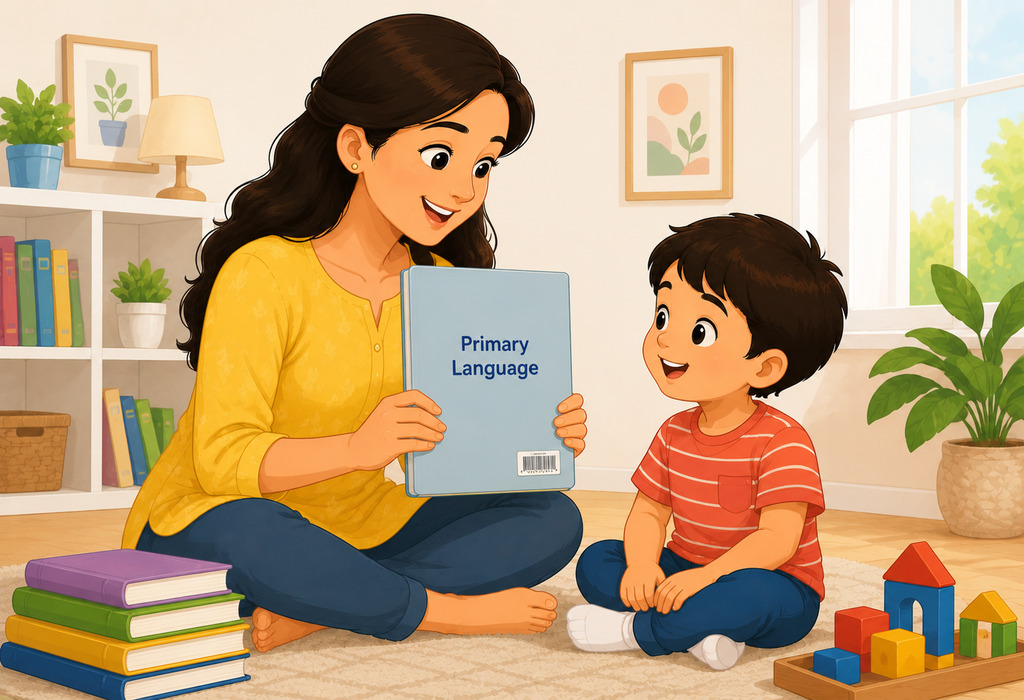
A primary language refers to the language a child uses most naturally, confidently and frequently in their day-to-day life, whether at home, at school or in social settings. It is typically the language a child thinks in, understands best, and reaches for first when expressing their thoughts or emotions. A child’s primary language can shift over time depending on their environment; for instance, a child who grows up speaking one language at home may develop a different primary language once they spend more time in a school setting that uses another.
Why is Primary Language Important?
A strong grasp of a child’s primary language shapes far more than just communication skills. Here’s a look at why it plays such a vital role in early development.
A child’s primary language forms the basis for how they process information, express emotions and build relationships with others. It shapes their earliest understanding of grammar, vocabulary and sentence structure, which later supports their ability to learn additional languages more effectively. This is why the primary language curriculum in many schools places such strong emphasis on developing a child’s first language skills before or alongside introducing new ones, as a solid foundation in one language often makes it easier for children to grasp the structure and logic of another. Beyond academics, a well-developed primary language also helps children think critically, express themselves confidently, and connect more deeply with their family and cultural identity.
Primary Language vs Mother Tongue
These two terms are often used interchangeably, and even linguists don’t draw a strict, universally agreed line between them. Still, in everyday usage, a few subtle distinctions tend to come up.
| PARAMETER | PRIMARY LANGUAGE | MOTHER TONGUE |
| General Usage | Refers to the language a person currently uses most and is most comfortable in | Often used interchangeably with “first language,” typically referring to the language learned from birth |
| Can It Change Over Time? | Yes, it can shift with environment, schooling or where someone lives | Usually considered fixed, since it refers to the earliest language learned |
| Cultural Connotation | Fewer inherent cultural associations; more about current, practical usage | Often tied to family, heritage or cultural and ethnic identity |
| Formal or Everyday Term | More commonly used in academic, educational or administrative contexts | More commonly used in everyday, informal or cultural conversation |
Examples of Primary Languages
Seeing real examples helps make the concept of a primary language easier to understand. Here are a few common scenarios that show how a primary language can look different for different children.
1. A Child Raised in a Single-Language Household
A child whose parents speak only English at home, and who attends an English-medium school, will most likely have English as their primary language, as it is the language they use consistently across all environments.
2. A Child Raised in a Bilingual Household
A child who hears both Hindi and English at home from birth may develop both as primary languages, often becoming equally comfortable switching between the two depending on the situation or person they’re speaking with.
3. A Child Who Speaks One Language at Home and Another at School
A child who speaks Tamil at home but attends an English-medium school may gradually develop English as their primary language over time, especially if they use it more frequently in daily life, even though Tamil remains their mother tongue.
4. A Child of Immigrant Parents
A child born to immigrant parents may initially learn their parents’ native language at home, but as they grow older and spend more time in school and social settings using the local language, that language may become their primary one.
5. A Child in a Multilingual Community
In regions where multiple languages are commonly spoken, such as parts of India or Europe, a child may be exposed to two or three languages simultaneously from an early age, with their primary language shaped largely by which one they use most confidently.
6. A Child Who Shifts Primary Language After Relocation
A child who moves to a new country and is immersed in a different language environment may gradually shift their primary language, as daily use, schooling and social interaction increasingly take place in the new language.
How to Improve Your Child’s Primary Language?
Whether your child is following an English primary language curriculum or building fluency at home, a few simple habits can make a real difference. Here are seven practical ways to strengthen their primary language skills.
1. Read Together Daily
Reading books aloud, even for just ten minutes a day, exposes children to new vocabulary, sentence structures and storytelling patterns, all of which strengthen their primary language naturally over time.
2. Encourage Storytelling
Asking your child to narrate their day or make up a short story helps them practise organising their thoughts and expressing themselves clearly in their primary language.
3. Expand Vocabulary Through Conversation
Introducing new words during everyday conversations and explaining their meaning in context helps children build a richer vocabulary without it feeling like a formal lesson.
4. Play Word Games
Simple games like rhyming, word association or “I Spy” make language learning feel playful while reinforcing vocabulary, pronunciation and sentence-building skills.
5. Encourage Writing Practice
Activities like keeping a simple diary, writing short notes or making lists help children apply their spoken language skills to writing, strengthening grammar and structure.
6. Limit Language Mixing When Possible
While occasional mixing is normal, especially in multilingual households, gently encouraging your child to complete a sentence in one language at a time helps strengthen fluency in their primary language.
7. Model Strong Language Use at Home
Children often mirror the language patterns of those around them, so speaking clearly, using varied vocabulary, and correcting mistakes gently can significantly influence how well they develop their primary language.
FAQs
1. Can a Primary Language Be Lost Over Time?
Yes, if a child stops using a language regularly, especially during a move to a new environment, their fluency in that language can decline over time, a process sometimes called language attrition.
2. Should Parents Worry if Their Child Mixes Two Languages While Speaking?
Not usually, as mixing languages, known as code-switching, is common and normal in bilingual children, and it often decreases naturally as their language skills develop further.
3. Is It Possible for a Child’s Primary Language to Change More Than Once?
Yes, especially for children who relocate multiple times or grow up in dynamic multilingual environments, their primary language can shift more than once as their daily language use changes.
4. Does Watching Shows or Listening to Music in a Language Help Develop It as a Primary Language?
Yes, regular exposure through media can support vocabulary and listening skills, though it works best when combined with active conversation and reading in that language.
A child’s primary language shapes far more than everyday conversation; it influences how they think, learn and connect with the world around them. By understanding what shapes this language and nurturing it through reading, conversation and everyday practice, parents and educators can help children build a strong foundation that supports both their current fluency and their ability to pick up new languages down the line.
Also Read:
Sentences for Class 1
Teaching Primary Colours
Teaching Subitising for Preschoolers