


Last Updated on August 24, 2026
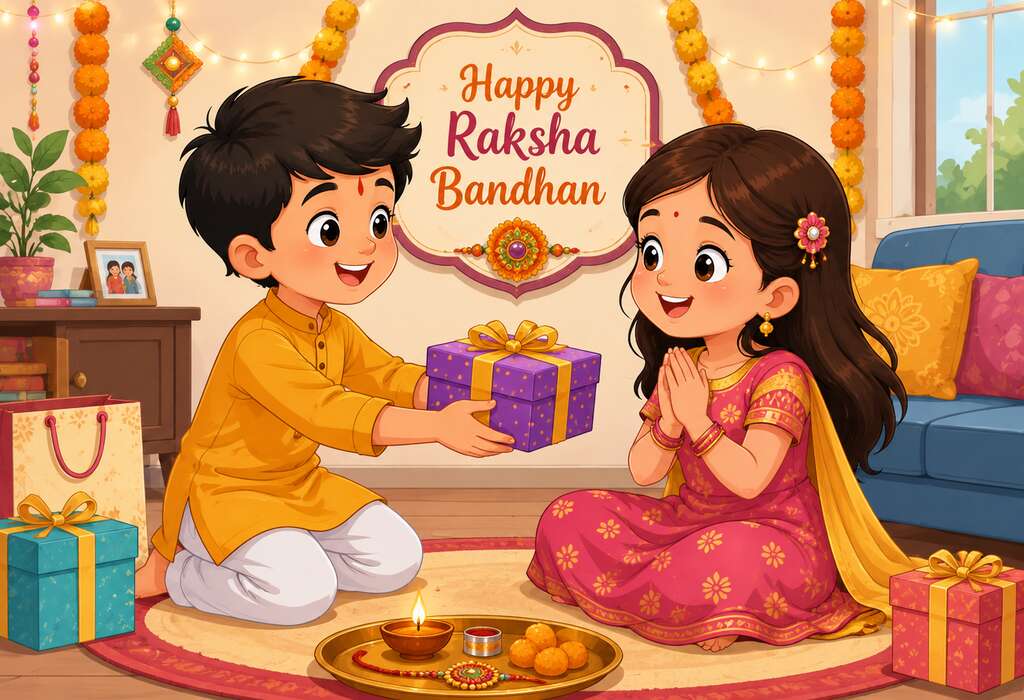
Raksha Bandhan is one of India’s most cherished festivals, celebrating the special bond between brothers and sisters through the simple yet symbolic act of tying a rakhi. The festival falls on the full moon day of the Hindu month of Shravan and is marked by warmth, gratitude and promises of protection. Preparing a speech on Raksha Bandhan in English gives children a meaningful way to reflect on this bond while building their confidence in public speaking, whether for a school assembly, a classroom activity or a family gathering.
Thank you for reading this post, don't forget to subscribe!
Speeches for students and children don’t need to be lengthy to leave an impact; even a short, well-structured piece can capture the warmth behind the festival. In this article, we bring you a range of speeches, from short ten-line versions for younger students to longer ones for older children, to help your child prepare a heartfelt speech for this special day.
Key Points To Include In Your Speech On Raksha Bandhan
Whether your child is preparing speeches for classes 1 and 2 or a higher grade, a few key points can help them structure their thoughts effectively. Here’s what to keep in mind while writing.
- Start with a Respectful Greeting – Begin the speech by addressing the audience, such as the principal, teachers and fellow students, before moving into the topic.
- Explain the Meaning of Raksha Bandhan – Include what the festival signifies and why it holds such an important place in Indian culture.
- Talk About the Rakhi Ritual – Briefly describe the tradition of tying a rakhi and the promises exchanged between siblings.
- Keep the Language Simple – Use age-appropriate words and short sentences so the speech is easy to understand and deliver confidently.
- Include a Personal Touch – Encourage your child to mention their own sibling or a memory related to the festival, if applicable, to make the speech more heartfelt.
- End with a Warm Closing – Conclude with a thoughtful line about the importance of family bonds to leave a lasting impression on the audience.
- Review and Practise – Read through the speech to check for mistakes, then rehearse it a few times aloud to build confidence and improve delivery.
10 Line Speech On Raksha Bandhan
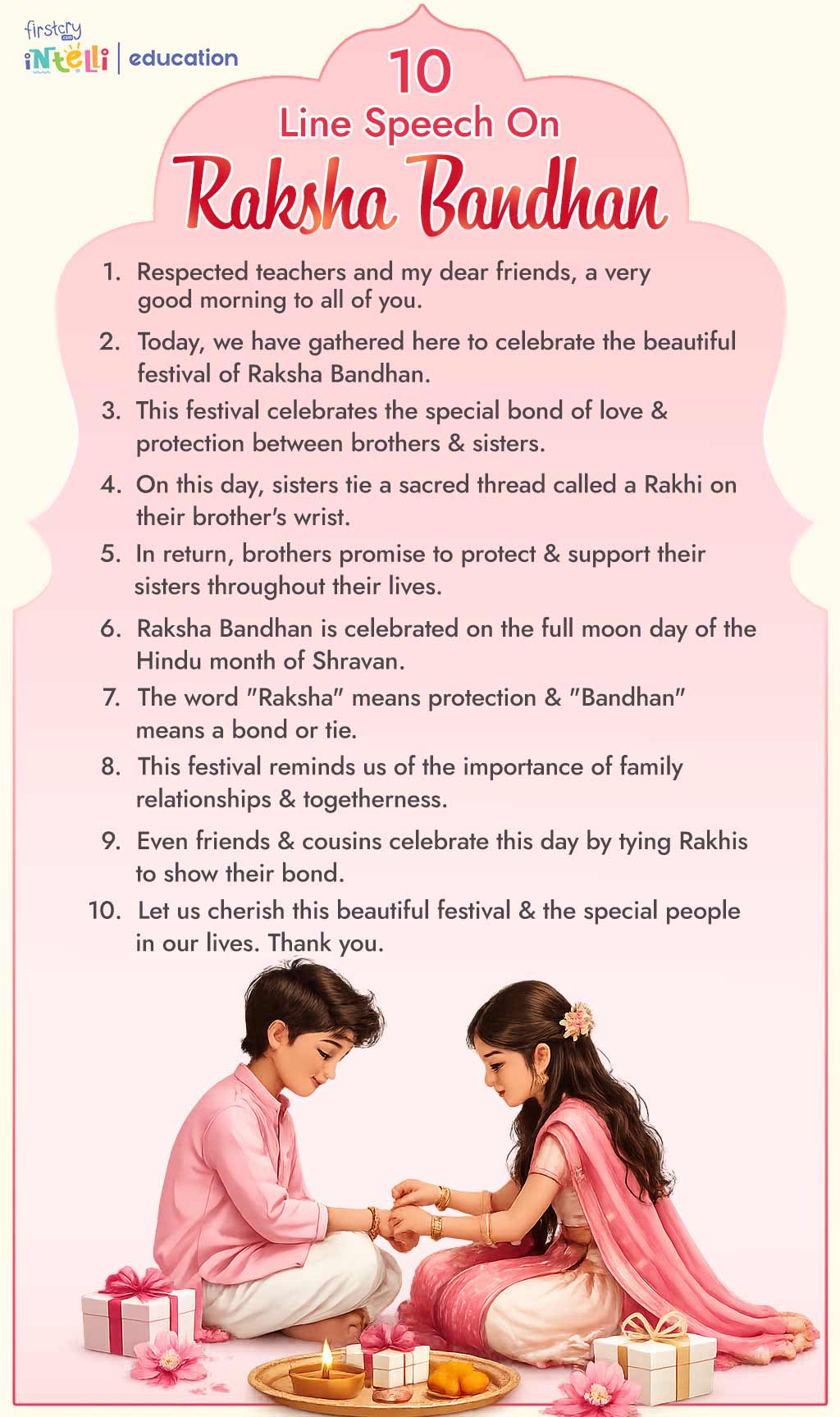
A ten-line speech gives young students just enough room to touch on the meaning of the festival without feeling overwhelmed. Here are ten simple lines your child can use for their speech.
- Respected teachers and my dear friends, a very good morning to all of you.
- Today, we have gathered here to celebrate the beautiful festival of Raksha Bandhan.
- This festival celebrates the special bond of love and protection between brothers and sisters.
- On this day, sisters tie a sacred thread called a Rakhi on their brother’s wrist.
- In return, brothers promise to protect and support their sisters throughout their lives.
- Raksha Bandhan is celebrated on the full moon day of the Hindu month of Shravan.
- The word “Raksha” means protection, and “Bandhan” means a bond or tie.
- This festival reminds us of the importance of family relationships and togetherness.
- Even friends and cousins celebrate this day by tying Rakhis to show their bond.
- Let us cherish this beautiful festival and the special people in our lives. Thank you.
1 Minute Speech On Raksha Bandhan
For quick classroom slots, this Raksha Bandhan speech covers the key points without taking up too much time. It works well when speaking time is limited, but the message still needs to land.
Respected teachers and my dear friends, a very good morning to all of you.
Today, we have gathered here to celebrate Raksha Bandhan, one of the most heartfelt festivals in Indian culture. This festival is celebrated on the full moon day of the Hindu month of Shravan and honours the special bond between brothers and sisters.
The word “Raksha” means protection, while “Bandhan” means a bond, and together they represent a promise of care and protection. On this day, sisters tie a sacred thread called a rakhi around their brother’s wrist, and in return, brothers promise to stand by their sisters through every phase of life. Sweets are exchanged, gifts are shared, and families come together to celebrate this beautiful relationship.
Beyond blood relations, this festival also reminds us that bonds of love and protection can exist between friends and cousins too.
Let us take a moment to appreciate the special people in our lives. Thank you.
2 Minute Speech On Raksha Bandhan
Two minutes gives a little more room to explore the history and meaning behind the festival, beyond just the basics. This speech works well for a slightly longer classroom or assembly slot.
Respected principal, teachers and my dear friends, a very good morning to all of you.
Today, I am here to speak about Raksha Bandhan, a festival that beautifully captures the essence of sibling love and protection.
Raksha Bandhan is celebrated on the full moon day of the Hindu month of Shravan, usually falling in August. The word “Raksha” means protection, and “Bandhan” means a bond, together symbolising a promise of care between brothers and sisters. On this day, sisters tie a sacred thread, known as a rakhi, around their brother’s wrist, and in return, brothers vow to protect and support their sisters throughout their lives.
The origins of this festival are rooted in Indian mythology and history, with several legends associated with it. One popular story tells of Queen Karnavati, who sent a rakhi to Emperor Humayun, seeking his protection, and he responded by coming to her aid. This tale, among others, reflects the deep sense of trust and responsibility that the festival represents, extending beyond just familial ties.
While Raksha Bandhan is traditionally celebrated between brothers and sisters, its spirit has grown to include cousins, friends and even neighbours who share a close, caring bond. In many households, the day is marked with festive meals, sweets and the exchange of thoughtful gifts, bringing families together in celebration.
Beyond the rituals, Raksha Bandhan teaches us something important: the value of standing by the people we care about, through good times and bad. It’s a reminder that relationships built on trust and mutual respect are worth celebrating and nurturing.
As we mark this special occasion today, let us take a moment to appreciate the people who protect, support and care for us in our own lives, whether they are siblings, friends or family.
Thank you, and I wish everyone a very happy Raksha Bandhan.
Short Speech On Raksha Bandhan
Sometimes a shorter speech says just as much as a longer one, without losing the emotional core of the occasion. Here’s a version that stays concise while still doing justice to the festival’s meaning.
Respected principal, teachers and my dear friends, a very good morning to all of you.
Today, I stand before you to speak about a festival that holds a special place in the hearts of millions across India, Raksha Bandhan.
Raksha Bandhan is celebrated on the full moon day of the Hindu month of Shravan, which usually falls in August. The name itself carries deep meaning: “Raksha” translates to protection, and “Bandhan” means a bond or a tie. Together, these words capture the essence of the festival, a promise of care and protection exchanged between brothers and sisters.
The central ritual of the day involves a sister tying a sacred thread, known as a rakhi, around her brother’s wrist. This simple gesture carries a deeper meaning, as it symbolises her wish for his well-being and safety. In return, the brother makes a heartfelt promise to protect and support his sister throughout their lives, no matter what challenges may come their way. This exchange, though simple in action, reflects a much deeper emotional bond built over years of shared memories, care and trust.
The origins of Raksha Bandhan are believed to date back centuries, with several stories from Indian history and mythology associated with the festival. One well-known tale involves Queen Karnavati of Chittor, who is said to have sent a rakhi to the Mughal Emperor Humayun when her kingdom faced a threat, seeking his protection. Though their relationship was not one of blood, Humayun responded to her request, reflecting how the spirit of Raksha Bandhan has always extended beyond just family ties to include trust and mutual respect between individuals.
While the festival traditionally centres around the relationship between brothers and sisters, its meaning has grown over time. Today, many people tie rakhis to cousins, close friends, and even neighbours who they consider family in spirit, if not by blood. This inclusive nature of the festival reminds us that protection and care are not limited to biological relationships alone, but can be found in any bond built on trust and affection.
On this day, households across the country come alive with festive preparations. Sisters often prepare or buy special rakhis, sometimes handmade with great care, while brothers plan thoughtful gifts in return. Families gather together, share festive meals, and take a moment to strengthen bonds that may have grown distant due to busy schedules or physical distance. In many ways, Raksha Bandhan serves as a gentle reminder to pause, reconnect and appreciate the relationships that matter most in our lives.
Beyond the rituals and celebrations, the true spirit of Raksha Bandhan lies in the values it represents: love, responsibility and the promise to stand by one another through both joyful and difficult times. It teaches us that meaningful relationships require ongoing care and commitment, not just grand gestures on a single day of the year.
As we celebrate this beautiful festival today, let us take a moment to appreciate the people in our lives who protect, support and stand by us, whether they are siblings, cousins or close friends. Let us also remember to carry forward this spirit of care and protection, not just today, but throughout the year.
Thank you, and I wish everyone a joyful and meaningful Raksha Bandhan.
Long Speech On Raksha Bandhan
For a speech for class 3 or higher, with more speaking time, this longer version explores the festival’s history and significance in greater depth. It gives students the space to elaborate on both the traditions and emotions behind the day.
Respected principal, teachers and my dear friends, a very good morning to all of you. Today, I have the honour of speaking on an occasion that celebrates one of the most cherished relationships in our lives, the bond between brothers and sisters.
This festival, known as Raksha Bandhan, is more than just a day of rituals; it’s a reminder of love, trust and the promise of protection that ties families together.
Significance of Raksha Bandhan
Raksha Bandhan is celebrated on the full moon day of the Hindu month of Shravan, usually falling in August. The name of the festival carries deep meaning: “Raksha” means protection, and “Bandhan” means a bond or tie. Together, these words capture what the day truly represents: a promise exchanged between siblings to care for and protect one another.
The origins of this festival are woven into Indian history and mythology, with several stories associated with its beginnings. One of the most well-known tales involves Queen Karnavati of Chittor, who, facing a threat to her kingdom, sent a rakhi to the Mughal Emperor Humayun as a plea for protection. Though they shared no blood relation, Humayun responded to her request, reflecting how the spirit of Raksha Bandhan has always extended beyond biological family, symbolising trust and responsibility between individuals who care for one another.
Over the centuries, this festival has held steady as one of India’s most emotionally significant celebrations, cutting across regions, languages and even religions, as many communities have embraced its spirit of familial love and protection in their own way.
How Is Raksha Bandhan Celebrated?
The central ritual of Raksha Bandhan involves a sister tying a sacred thread, known as a rakhi, around her brother’s wrist. This simple act carries significant emotional weight, as it symbolises her wish for his safety and well-being. In response, the brother makes a heartfelt promise to protect and support his sister through every phase of life, whatever challenges may come their way.
Households across the country come alive with festive preparation in the days leading up to Raksha Bandhan. Sisters often choose or even handcraft special rakhis, putting thought and care into the gesture, while brothers plan thoughtful gifts in return, ranging from simple tokens to more elaborate presents. On the day itself, families gather together, share festive meals, and often include traditional sweets as part of the celebration.
While the festival traditionally centres around biological siblings, its meaning has expanded significantly over time. Today, many people tie rakhis to cousins, close friends and even neighbours who they consider family in every sense but blood. Communities and schools often organise Raksha Bandhan events that encourage this same spirit of inclusion, reminding us that protection and care are not limited by bloodlines but can be found in any relationship built on genuine trust.
Values We Learn From Raksha Bandhan
Beyond the rituals and celebrations, Raksha Bandhan carries lessons that extend well beyond the day itself. It teaches us the value of responsibility, as brothers are reminded of their duty to stand by their sisters, not just symbolically, but in real, everyday ways. It teaches sisters the importance of trust, in believing that their loved ones will be there when needed most.
The festival also reinforces the idea that meaningful relationships require ongoing care, not just grand gestures reserved for a single day each year. A rakhi tied once a year is, in many ways, a yearly reminder of a commitment that is meant to be honoured every single day. Additionally, the festival’s growing inclusivity teaches us that love and protection aren’t confined to family defined by blood alone, but can be extended to anyone who holds a meaningful place in our lives.
Perhaps most importantly, Raksha Bandhan reminds us to pause amid our busy lives and reconnect with the people who matter most. In a world where schedules often pull families apart, this festival serves as a gentle nudge to prioritise these relationships, even if just for a day.
As we celebrate Raksha Bandhan today, let us take a moment to genuinely appreciate the people in our lives who protect, support and stand by us, whether they are siblings, cousins or close friends. Let us also carry forward the true spirit of this festival, not just through rituals, but through the way we treat and care for one another throughout the year.
With that thought, I would like to conclude my speech. Thank you, and I wish everyone a joyful and meaningful Raksha Bandhan.
Opening And Closing Lines For A Speech
The way a speech begins and ends often leaves the strongest impression on an audience. Here are some simple opening and closing lines your child can use for their Raksha Bandhan speech.
| OPENING LINES | CLOSING LINES |
| Respected principal, teachers and my dear friends, a very good morning to all of you. | Thank you, and I wish everyone a joyful Raksha Bandhan. |
| Today, I stand before you to speak on a very special occasion, Raksha Bandhan. | With that, I would like to conclude my speech. Thank you. |
| A very warm morning to everyone present here today. | Let us cherish the bonds we share and carry this spirit forward. Thank you. |
| It gives me great joy to speak about the festival of Raksha Bandhan today. | I hope this day brings happiness to all the brothers and sisters here. Thank you. |
| Good morning to one and all gathered here to celebrate this special day. | On that note, I would like to end my speech. Thank you for listening. |
| Respected teachers and my dear friends, today marks a beautiful occasion. | Let us always value and protect the relationships we hold dear. Thank you. |
| I am honoured to speak today about a festival close to every heart, Raksha Bandhan. | With this thought, I conclude my speech. Thank you, everyone. |
| A very good morning to everyone as we gather to celebrate Raksha Bandhan. | I hope we all carry the true spirit of this festival with us. Thank you. |
| Respected guests, teachers and friends, welcome to today’s celebration of Raksha Bandhan. | Let us continue to nurture the bonds that make us who we are. Thank you. |
| Today, I would like to share a few thoughts on the beautiful festival of Raksha Bandhan. | Thank you all for listening, and happy Raksha Bandhan to everyone here. |
FAQs
1. Can I Mention a Personal Story About My Sibling in My Speech?
Yes, sharing a short, genuine memory about your brother or sister can make your speech feel more personal and help the audience connect with your words.
2. What Should I Do if I Don’t Have a Sibling to Talk About?
You can talk about a cousin, close friend or anyone you share a protective, caring bond with, as Raksha Bandhan celebrates relationships built on trust, not just blood ties.
3. How Should I Practise My Tone While Speaking About an Emotional Topic Like This?
Try to speak warmly and sincerely, slowing down slightly during emotional lines, as this helps convey genuine feeling rather than sounding rehearsed or rushed.
4. Can I End My Speech with a Message About Sibling Bonds Instead of a Thank You?
Yes, you can end with a heartfelt line about cherishing sibling bonds, followed by a brief thank you, as this can leave a warm, lasting impression on the audience.
Raksha Bandhan is ultimately a celebration of trust, protection and the bonds that hold families together, and a speech on this occasion gives children a chance to reflect on that meaning in their own words. Whether your child delivers a short ten-line piece or a longer, more detailed speech, what matters most is that it comes from genuine warmth and understanding of what the festival represents.
Also Read:
Essay on Raksha Bandhan
Essay on Navratri In English
Essay on Dussehra In English