


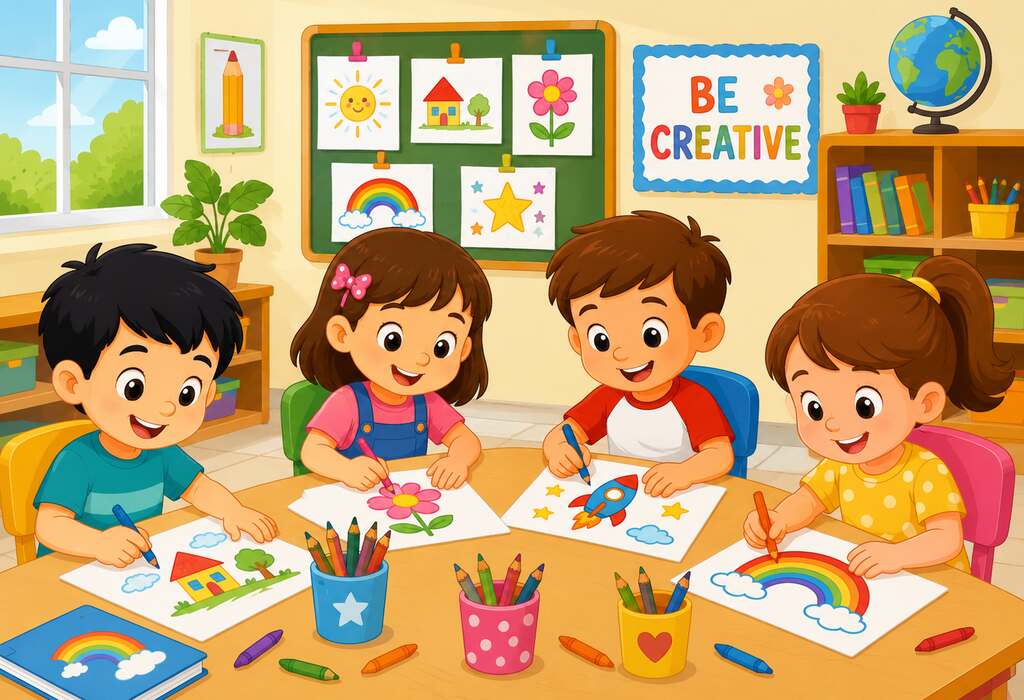
Drawing is one of the easiest ways for a child to express ideas, build fine motor skills, and learn to recognise colours and shapes, which is why a good list of drawing activities for children & students can be so useful for parents and teachers. From a toddler’s first scribbles to a primary schooler’s detailed sketches, children take to drawing naturally as part of everyday play and learning, and having the right activities on hand can make lessons and playtime more engaging and worthwhile.
Thank you for reading this post, don't forget to subscribe!
Whether you need drawing activities for classes 1, 2, and 3 for the classroom or simple ideas to try at home, there is no shortage of options to keep young artists interested. This article gathers a range of drawing activity ideas suited to different age groups and abilities. From themed prompts to hands-on challenges, these activities are meant to be enjoyable and educational, helping children pick up useful skills along the way.
The Benefits of Drawing Activities for Kids
Drawing might seem like simple fun, but it plays a far bigger role in a child’s development than many realise. Here is a closer look at why these activities are worth encouraging.
- Boosts Fine Motor Skills — Holding and controlling a pencil or crayon helps children strengthen the small muscles in their hands and fingers, improving grip and coordination over time.
- Encourages Self-Expression — Drawing gives children a way to express thoughts and feelings they may not yet have the words for, making it a valuable emotional outlet.
- Supports Cognitive Development — Planning what to draw and how to bring it to life helps children build problem-solving skills, focus, and visual-spatial awareness.
- Builds Confidence — Completing a drawing, however simple, gives children a sense of achievement and encourages them to keep creating and trying new ideas.
- Improves Hand-Eye Coordination — Translating what they see or imagine onto paper helps children sharpen the connection between their eyes and hand movements.
Easy Drawing Activities for Preschoolers
Preschoolers are just beginning to explore lines, shapes, and colours, making simple and playful exercises the best starting point. These drawing activities for kindergarten are easy enough for little hands while still keeping them engaged and curious.
1. Sponge Stamp Painting
Cut small shapes out of a kitchen sponge, dip them in paint, and let your child press them onto paper to make patterns or pictures. It is an easy way to keep little hands busy and helps them improve their grip and control of objects, which is useful for handwriting later on.
2. String Pull Art
Dip a piece of string into paint, place it on one half of a folded piece of paper, then close the paper and slowly pull the string out. Children love the surprise of opening the paper to see what design appears, and it is a fun, simple way to show them that actions lead to results.
3. Mirror Drawing
Sit your child in front of a mirror and ask them to draw their own face or an object placed beside them. This helps children look more closely at details and copy what they see, a skill that comes in handy when they start writing letters and numbers accurately.
4. Drawing By Touch
Have your child close their eyes, feel an everyday object such as a spoon, a ball, or a leaf with their hands, and then try to draw what they think it looks like. This builds their ability to connect touch with shape and form, a skill that strengthens their overall observational skills.
5. Surprise Draw
Put a few small items, such as a button, a leaf, or a toy, into a bag and have your child pick one without looking. Ask them to draw something inspired by that object, which is a simple way to get their imagination going and build their confidence in coming up with their own ideas.
6. Drawing With Music
Play a song and ask your child to draw whatever shapes, lines, or colours the music makes them think of, then switch to a different song after a minute or two. This is a relaxed way to help children express feelings through drawing, especially if they are too young to put those feelings into words.
7. Yarn Picture Tracing
Glue short pieces of yarn onto paper in a simple outline, like a flower or a house, and let your child trace over the raised lines with a crayon before colouring it in. The yarn acts like a guide, making it easier for beginners to stay within the lines, an important step before they try drawing freehand.
8. Take-Turns Drawing
Start a simple drawing, such as a tree or a house, and then hand it to your child to add the next part without telling them what it should be. This back-and-forth builds children’s ability to build on others’ ideas, a skill that supports both creativity and collaboration.
9. Texture Rubbing Art
Place a sheet of paper over a textured surface, such as a leaf, a placemat, or a rough wall, and have your child rub a crayon gently over it to reveal the pattern. This is an easy way to show children that the world is full of different textures, while also helping them practise a steady, controlled hand movement.
10. Unusual Tool Drawing
Instead of a pencil or crayon, give your child a cotton bud, a twig, or even a fork dipped in paint to draw with. Trying out different tools helps children notice how each one moves on paper, building their curiosity and flexibility in creating art.
Fun Drawing Activities for Kids
Drawing gets even more fun once kids try activities that mix play with creativity. These activities for nursery classes keep young learners engaged while building useful skills.
1. Blow Painting
Drop a small puddle of watery paint onto paper and have your child blow through a straw to push the paint into branching shapes. It is a playful way to build breath control and lung strength, while the unpredictable patterns keep children excited to try again.
2. Drawing In The Dark
Give your child a torch and let them “draw” shapes in the air in a dimly lit room, or use a glow-in-the-dark crayon on dark paper. This is a fun change from regular drawing and helps children think about shapes and movement in a completely different way.
3. Connect-The-Dots Story
Scatter random dots across a page and ask your child to connect them in any order to create their own picture, rather than following a set pattern. This builds decision-making and flexible thinking, since there is no single right answer.
4. Draw What I Describe
Describe a simple scene out loud, such as “a cat sitting under a rainbow,” without showing any pictures, and have your child draw it purely from listening. This sharpens listening skills and helps children practise turning words into pictures in their own way.
5. Foot And Hand Animal Art
Trace your child’s hand or foot onto paper, then help them turn the outline into an animal, such as a turkey from a hand or a bunny from a foot. Children enjoy seeing their own outline turn into something new, and it is an easy way to introduce basic ideas about shape and transformation.
6. Scratch Art
Colour a sheet of paper heavily with crayon, cover it with a layer of black crayon or paint, then let your child scratch designs into the top layer with a blunt tool to reveal the colours underneath. The hidden colours add an element of surprise, and the scratching motion helps build hand control.
7. Draw To A Timer
Set a timer for one minute and challenge your child to draw as much of a picture as they can before the time runs out, then talk about what they managed to finish. This is a light-hearted way to help children work with time limits without feeling pressured, since the focus stays on fun rather than getting it perfect.
8. Family Portrait Day
Set aside time for everyone at home to draw a portrait of another family member, then swap and compare the results together. This turns drawing into a shared activity and helps children practise observing facial features and expressions.
9. Draw Your Dream
Ask your child to draw a recent dream they remember, however odd or unclear it might be. This gives children a fun and easy way to talk about their dreams while practising translating imagination and memory onto paper.
10. Paper Plate Masks
Draw a face or animal design onto a paper plate, then cut out eye holes and attach a stick or string to wear it as a mask. Beyond the drawing itself, children get to see their artwork become something they can play with and wear, adding an extra layer of fun.
Nature-Inspired Drawing Activities
Nature offers plenty of inspiration for young artists, from leaves to butterflies. These activities help children notice the world around them while turning what they see into art.
1. Leaf Printing
Brush paint onto one side of a leaf, then press it onto paper to leave behind its shape and vein pattern, repeating with different leaves to build a picture or pattern. This helps children notice how leaves differ in shape and texture, while the pressing motion builds hand control.
2. Cloud Watching And Drawing
Lie down outside on a clear day and ask your child to spot shapes in the clouds, then draw what they imagine before the clouds drift apart. This builds imagination and observation skills, while encouraging children to slow down and look closely at the sky.
3. Nature Walk Sketchbook
Take a small notebook on a walk and pause every so often to let your child sketch something that catches their eye, such as a flower, a bird, or a bark pattern. This turns drawing into an outdoor habit and helps children practise quick observation rather than copying from memory.
4. Wilting Flower Diary
Pick a small flower and have your child draw it once a day for three or four days as it slowly wilts, using the same page or a small strip of paper each time. This helps children notice gradual change rather than a single moment, and builds patience as they wait to see what happens next.
5. Stone And Pebble Drawing
Collect a few smooth stones or pebbles from outside and have your child paint a small picture or pattern directly onto them using watercolours or chalk. This introduces drawing on an unusual surface and gives children a small keepsake they can display or use in play afterwards.
Animal Drawing Activities
Drawing animals lets a child step into another creature’s shape, movement, and personality. This section covers activities that blend imagination with observation, from pets at home to creatures seen only in books.
1. Garden Bug Portraits
Watch a garden visitor, such as a butterfly, ant, or ladybird, for a minute or two, then have your child draw it from memory once it has flown or crawled away. This helps children practise holding a picture in their mind and builds patience, since they cannot copy it while it is still in front of them.
2. My Pet’s Favourite Day
Ask your child to draw three or four simple boxes in a row, then fill each one with a picture of what their pet (or a favourite animal) does during the day, such as eating, sleeping, and playing. This introduces the idea of telling a story through pictures, one step at a time.
3. Half-Animal Swap
Draw the front half of an animal, such as an elephant’s head and trunk, and ask your child to finish the drawing with a different back half, like a fish tail or bird legs. Children enjoy the silliness of mixing animals, and it helps them see that drawing does not always have to follow real rules.
4. Design Your Own Magical Pet
Ask your child to imagine a pet that does not exist, such as a flying dog or a cat with butterfly wings, and draw it however they like. This gives children full creative freedom and is an easy way to encourage original ideas rather than copying something they have already seen.
5. Animal From A Shape
Draw a simple shape, such as a circle, triangle, or oval, and ask your child to turn it into an animal by adding ears, legs, or a tail. This is an easy starting point for younger children who may find a blank page overwhelming, and it helps them practise building a full picture from one basic shape.
Tips to Encourage Kids to Draw More
Some children take to drawing right away, while others need a little encouragement to get started. A few simple habits at home or in the classroom can make a big difference.
- Keep Materials Within Reach — Leave crayons, paper, and colours in a spot your child can easily access on their own, so drawing becomes something they can pick up whenever they feel like it, rather than something that needs to be set up each time.
- Praise Effort, Not Just Results — Focus on what your child enjoyed about the process, such as choosing colours or trying something new, rather than how the final drawing looks, so they stay motivated without worrying about getting it “right.”
- Avoid Correcting Too Much — Let your child draw the sun green or give a dog five legs without stepping in to fix it, since over-correcting can make children more hesitant to draw freely.
- Make It A Shared Activity — Sit down and draw alongside your child every so often, even if it is just a quick doodle, since children often feel more encouraged when an adult joins in rather than just watching.
- Display Their Work — Pin a few drawings up at home or in the classroom so your child can see their work valued, which often motivates them to keep creating more.
Alternative Activities that Will Inspire Drawing in Kids
Sometimes the best way to get a child drawing is through an activity that does not feel like drawing at all. This section looks at a few alternatives that can spark the same creativity from a different direction.
1. Building With Blocks Or Lego
Have your child build a small structure or scene using blocks or Lego, then ask them to draw what they made once it is finished. This helps children practise translating something three-dimensional into a flat picture, building observation skills without it feeling like a typical drawing task.
2. Acting OutAStory
Read a short story aloud and have your child act out their favourite part using simple movements or expressions, then ask them to draw that moment afterwards. This connects physical play with drawing and often makes children more excited to capture a scene they have just lived out themselves.
3. Playdough Modelling
Let your child shape a simple figure or object out of playdough, such as an animal or a fruit, then have them draw it once it is complete. Moving from a 3D model to a flat drawing helps children think about shape and form from a new angle, without feeling like a formal drawing exercise.
4. Listening To An Audiobook Or Story
Play a short audiobook, or have your child listen to a story without pictures, then ask them to draw their favourite character or scene afterwards. This builds imagination and listening skills, since children must create their own mental picture before putting it on paper.
5. Puzzle Or Pattern Play
Let your child complete a simple jigsaw puzzle or pattern block set, then ask them to draw a picture inspired by the shapes or colours they just worked with. This connects logical, hands-on play with creative drawing, helping children see a link between problem-solving and imagination.
FAQs
1. How Often Should Kids Practise Drawing?
There is no fixed rule, but drawing for even 10 to 15 minutes a few times a week can help children build skills and confidence over time. The key is regular, relaxed practice rather than long sessions all at once.
2. What Age Should A Child Start Drawing?
Children can start as early as 1 or 2 years old with simple scribbling, an important first step before they move on to shapes and pictures. There is no need to wait for “proper” drawing skills before letting them hold a crayon.
3. Do Kids Need Expensive Art Supplies To Draw Well?
Not at all, since basic supplies like crayons, pencils, and plain paper are more than enough for children to practise and improve. What matters more is giving them regular opportunities to draw rather than the quality of materials used.
4. How Can I Tell If My Child Is Improving At Drawing?
Improvement often shows up as better control over lines, more detail in their drawings, or a growing ability to draw what they intend to, rather than the picture looking more “realistic.” It helps to look back at older drawings occasionally to see how far they have come.
Drawing is far more than a way to fill spare time — it helps children build skills they will carry well beyond the page, from focus and patience to confidence and self-expression. Whether it is a quick sketch at home or a structured activity in the classroom, every drawing session adds something to a child’s growth. With a mix of simple tools and a little encouragement, drawing can easily become a habit kids look forward to rather than one they need reminders about.
Also Read:
Counting Activities for Children
Fun Technology Activities for Kids
Environment-Friendly Craft Activities for Kids