


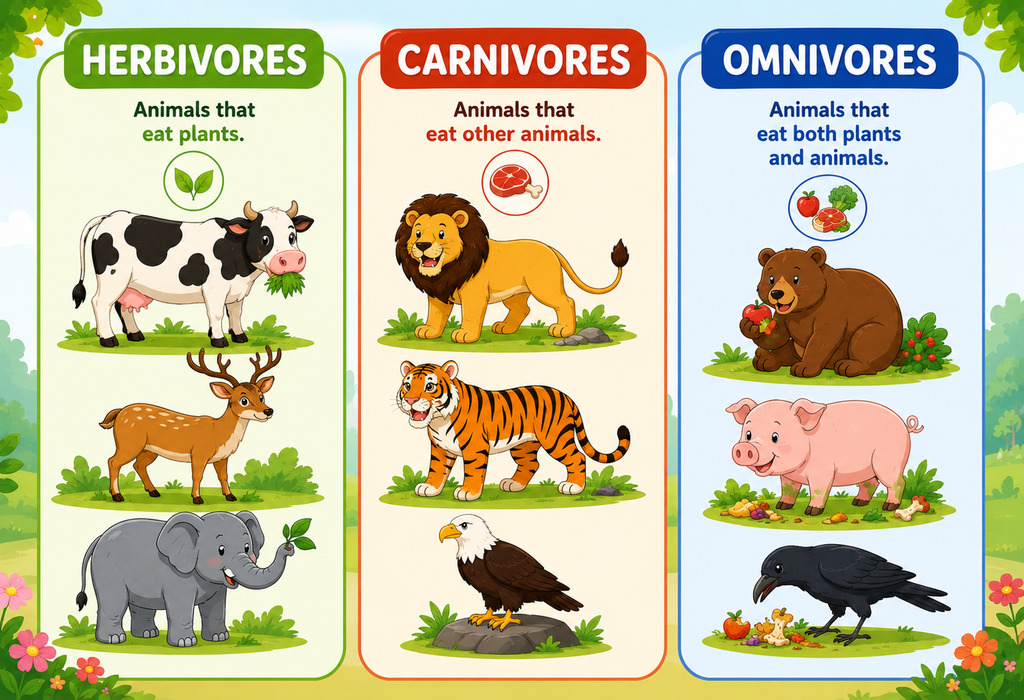
Learning about animals is a great way for kids to explore the natural world and develop an appreciation for the diverse range of creatures that inhabit our planet. Kids can learn about animals by visiting a zoo, going on a nature walk, reading books, or observing the animals in their own backyard. One fascinating concept children discover along the way is that of herbivores, carnivores, and omnivores, and how these categories help us understand what different animals eat.
Thank you for reading this post, don't forget to subscribe!
As kids learn about animals, they discover the unique characteristics and behaviours of different species, along with their habitats and role in the ecosystem. Understanding what carnivorous, herbivorous and omnivorous animals are helps children see how each creature fits into the food chain. Learning about animals also helps kids understand the importance of conservation and protecting the natural world. Overall, exploring the difference between a carnivore, herbivore, and omnivore is a fun way for children to build curiosity and wonder about the world around them.
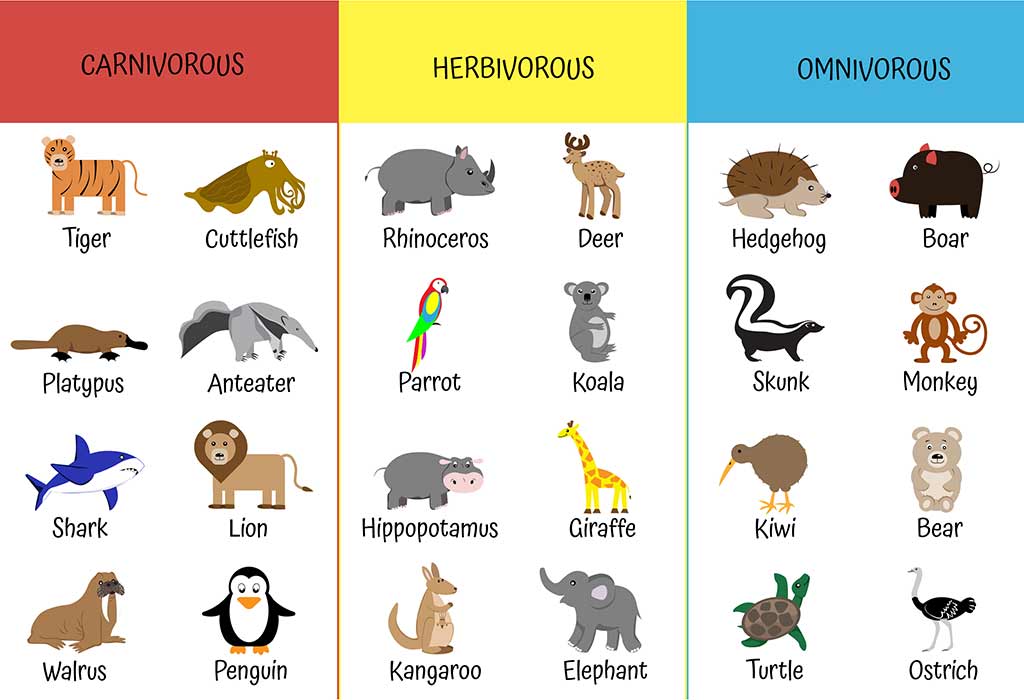
Herbivorous, Carnivorous, And Omnivorous Animals – Chart
This handy list of herbivorous, carnivorous, and omnivorous animals brings everything covered in this article into one simple chart. It’s a quick and easy reference for your child to revisit anytime.
Carnivorous Animals
Carnivorous animals are those that primarily eat meat. They may hunt other animals for food or scavenge for carrion (dead animals). Carnivorous animals have teeth and claws that are adapted for killing and eating other animals.
Carnivores can be found in a variety of habitats, including land, water, and air. They may be solitary hunters, or they may hunt in groups. Some examples of carnivorous animals include lions, wolves, and bears.
The diet of an animal can vary depending on the availability of food in its environment. Some carnivorous animals may occasionally eat plants or insects if meat is scarce. However, the primary source of their nutrition is animal-based.
Characteristics
Many characteristics are associated with carnivorous animals. They are as follows:
- They have a diet that consists primarily of meat: Carnivorous animals rely on a diet that is rich in animal protein.
- They have sharp teeth and claws: Many carnivorous animals have physical adaptations, such as sharp teeth and claws, that allow them to capture and kill their prey.
- They may have a strong sense of smell: Some carnivorous animals, such as wolves and lions, have a very strong sense of smell that helps them locate prey.
- They may have specialised hunting behaviours: Carnivorous animals may have specialised hunting behaviours, such as stalking or ambushing, that allow them to capture prey effectively.
- They may be solitary or social hunters: Some carnivorous animals, such as tigers and leopards, are solitary hunters, while others, such as wolves and lions, hunt in groups.
Examples/List of Carnivorous Animals
Here are 20 examples of carnivorous animals:
- Lions
- Wolves
- Bears
- Sharks
- Eagles
- Cheetahs
- Leopards
- Hyenas
- Foxes
- Coyotes
- Weasels
- Martens
- Otters
- Ferrets
- Badgers
- Wolverines
- Bobcats
- Lynx
- Cougars
- Tigers
Herbivorous Animals
Herbivorous animals are those that primarily eat plants. They may graze on grass and other vegetation, or they may eat leaves, fruits, and other plant parts. Herbivorous animals have teeth and digestive systems that are adapted for grinding and digesting plant matter.
Herbivores can be found in many habitats, including land, water, and air. They may be solitary, or they may live in herds or flocks. Some examples of herbivorous animals include deer, rabbits, and cows.
The diet of an animal can vary depending on the availability of food in its environment. Some herbivorous animals may occasionally eat insects or other small animals if plant matter is scarce. However, the primary source of their nutrition is plant-based.
Characteristics
Many characteristics are commonly associated with herbivorous animals:
- They have a diet that consists primarily of plants: Herbivorous animals rely on a diet that is rich in plant matter, such as leaves, stems, roots, and fruit.
- They may have physical adaptations for feeding: Some herbivorous animals, such as cows and giraffes, have physical adaptations, such as strong molars or long necks, that allow them to feed on a variety of plant material.
- They may have a large digestive system: Many herbivorous animals have a large digestive system, such as a multi-chambered stomach or a long intestine, which allows them to efficiently process large amounts of plant material. For example, cows.
- They may exhibit selective feeding behaviour: Herbivorous animals may be selective about the types of plants they eat, choosing certain species or parts of plants over others.
- They may be found in a variety of habitats: Herbivorous animals can be found in a variety of habitats, including forests, grasslands, and deserts, depending on the availability of suitable plant material.
Examples/List of Herbivorous Animals
Here are 20 examples of herbivorous animals –
- Cow
- Horse
- Sheep
- Goat
- Elephant
- Deer
- Giraffe
- Rabbit
- Kangaroo
- Bison
- Zebra
- Moose
- Llama
- Hippopotamus
- Black bear
- Sloth bear
- Panda bear
- Gorilla
- Chimpanzee
- Orangutan
Omnivorous Animals
Omnivorous animals are those that eat both plants and animals as a part of their diet. They are able to adapt to a variety of food sources and are not as reliant on any one particular type of food.
Omnivorous animals can be found in a variety of habitats, including forests, grasslands, and even urban areas. Examples of omnivorous animals include bears, pigs, raccoons, and many species of birds and rodents.
Characteristics
Many characteristics are commonly associated with omnivorous animals:
- They have a varied diet: Omnivores can eat a wide variety of food sources, including both plants and animals.
- They have adaptable digestive systems: Omnivores have digestive systems that can process both plant and animal matter.
- They may have physical adaptations for foraging: Some omnivorous animals, such as bears and pigs, have physical adaptations, such as strong teeth and claws, that allow them to forage for a variety of food sources.
- They can thrive in a variety of environments: Omnivores can survive in a wide range of environments because they are not reliant on any one particular type of food.
- They may exhibit opportunistic feeding behaviour: Omnivores may take advantage of any available food sources, rather than sticking to a specific diet.
Examples/List of Omnivorous Animals
Examples of Omnivores –
- Bear
- Pig
- Raccoon
- Humans
- Fox
- Crow
- Ravens
- Squirrels
- Chipmunk
- Rat
- Mouse
- Opossum
- Skunk
- Weasel
- Ferret
- Badger
- Marten
- Mink
- Coyote
- Wolf
Differences Between Carnivores, Herbivores, and Omnivores
While all animals need food to survive, the way they eat and what they eat can vary greatly. Here’s a simple breakdown of how these species differ from one another. We have also added examples of herbivores, carnivores, and omnivores for better:
| PARAMETER | CARNIVOROUS ANIMALS | HERBIVOROUS ANIMALS | OMNIVOROUS ANIMALS |
| Food type | Eat only other animals. | Eat only plants. | Eat both plants and animals. |
| Teeth | Sharp teeth and claws for catching and tearing flesh. | Flat teeth for grinding plant food. | A mix of sharp and flat teeth. |
| Digestive system | Shorter digestive tract, suited to meat. | Longer digestive tract, suited to plant food. | Medium-length digestive tract, suited to mixed food. |
| Main diet | Meat, fish, and other animals. | Grass, leaves, fruits, and seeds. | Plants, fruits, insects, eggs, and meat. |
| Habitat and feeding habit | Often hunt for food and live where prey is available. | Usually graze or browse in areas with lots of plants. | Can adapt to many habitats and food sources. |
| Body structure | Often built for speed, strength, and catching prey. | Often built for chewing and digesting plant matter. | Usually have a balanced body structure for varied diets. |
| Jaw movement | Mostly up-and-down biting. | Often side-to-side grinding. | Can use both biting and grinding. |
| Examples | Lion, tiger, wolf. | Cow, deer, rabbit. | Bear, human, crow. |
Facts about Carnivores,Omnivores, and Herbivores for Children
Here are ten more facts about carnivores, omnivores, and herbivores that might be interesting for children:
- Carnivorous animals usually have strong senses, such as a good sense of smell, hearing, or vision, which helps them locate prey.
- Omnivorous animals may have physical adaptations, such as sharp teeth or claws, that allow them to eat both plants and animals.
- Herbivorous animals may have to eat a large volume of plants to meet their nutritional needs because plants are generally lower in nutrients compared to animal-based foods.
- Some carnivorous animals, such as lions and wolves, hunt in groups, while others, such as tigers and leopards, are solitary hunters.
- Omnivorous animals can be found in a variety of habitats, including forests, grasslands, and even urban areas.
- Herbivorous animals may have a large digestive system, such as extra stomachs or a long intestine, to help them process all the large amounts of plant material.
- Carnivorous animals are typically at the top of the food chain in their ecosystem, and play a crucial role in controlling the population of other animals.
- Omnivorous animals may exhibit opportunistic feeding behaviour, taking advantage of any available food sources rather than sticking to a specific diet.
- Herbivorous animals may be selective about the types of plants they eat, choosing certain species or parts of plants over others.
- Some carnivorous animals, such as snakes and crocodiles, are also able to eat insects and other small animals in addition to larger prey.
With this article, you can teach your child all about animals and their food as a first step towards learning and understanding nature and the food cycle. Keep revising these examples and print a poster for your child’s study to memorise the names of herbivores, carnivores and omnivores.
Practice makes learning stick, especially for young minds. This worksheet gives your child a fun way to test what they’ve learned about carnivores, herbivores and omnivores.
FAQs
1. Do Herbivores Ever Eat Insects by Accident?
Yes, herbivores may accidentally eat small insects while grazing on plants, but this does not change their classification, as their main diet is still made up of plants.
2. Why Do Carnivores Have Sharp Teeth While Herbivores Have Flat Teeth?
Carnivores have sharp, pointed teeth to tear through meat, while herbivores have flat, wide teeth suited for grinding tough plant material like leaves and grass.
3. Are Humans Carnivores, Herbivores, or Omnivores?
Humans are generally considered omnivores, as they eat both plant-based food, such as fruits and vegetables, and animal-based food, such as meat, eggs and dairy.
4. Do Baby Animals Eat the Same Diet as Adult Animals?
Not always, as many baby animals drink their mother’s milk in the beginning before slowly switching to the same diet as adult carnivores, herbivores or omnivores of their species.
5. Can an Animal’s Diet Change Based on the Season?
Yes, some omnivores may eat more plants during certain seasons when meat is scarce, and more meat when it is more easily available, adjusting their diet based on the environment.
Understanding the types of animals – herbivores, carnivores, and omnivores – helps children make sense of the natural world and how different creatures survive within it. With the examples, differences and worksheet covered in this article, your child can build a strong foundation in this fascinating topic while developing a lasting curiosity about the animal kingdom.
Also Read:
Teaching Kids about Amphibians
Endangered Animals Names for Kids
Animals Group Names in English for Children