



- 10 Line Speech On Saving Trees
- 1 Minute Speech On Saving Trees
- 2 Minute Speech On Saving Trees
- 5 Minute Speech On Saving Trees
- Short Speech On Saving Trees
- Long Speech On Saving Trees
- Opening And Closing Lines For A Speech On Saving Trees
- Slogans On Saving Trees
- Points To Remember While Preparing Your Own Speech On Saving Trees
- FAQs
Last Updated on August 20, 2026
Trees are essential to life on Earth, providing us with oxygen, shelter, food and a balanced ecosystem, yet they continue to face threats from deforestation and human activity. Delivering a speech on saving trees gives children the opportunity to reflect on this pressing issue while building their confidence in public speaking, whether for a school assembly or an environment day event.
Thank you for reading this post, don't forget to subscribe!
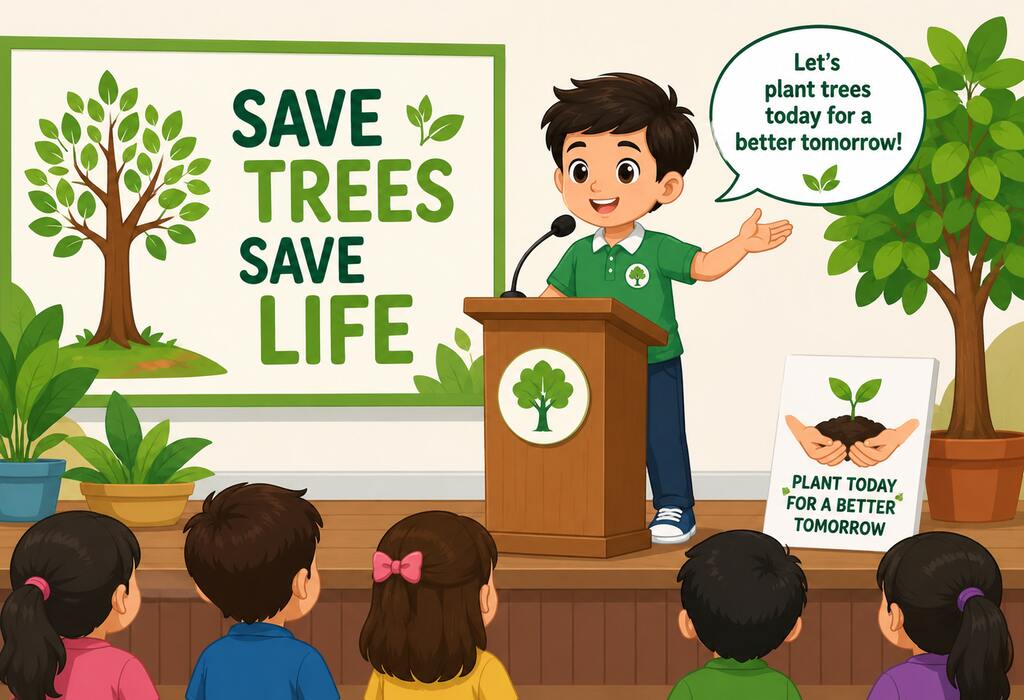
A ‘Save Tree, Save Life’ speech doesn’t need to be lengthy to make an impact; even a short, well-structured piece can effectively convey the urgency of protecting our forests. In this article, we bring you a range of speeches on saving trees, from short ten-line versions for younger students to longer, more detailed ones for older children, to help your child prepare a thoughtful speech on this important topic.
10 Line Speech On Saving Trees
A ten-line speech gives young students just enough room to touch on why trees matter without feeling overwhelming. Here are ten simple lines your child can use for their speech.
- Respected teachers and my dear friends, a very good morning to all of you.
- Today, I would like to speak about the importance of saving trees.
- Trees give us oxygen, which is essential for all living beings to survive.
- They provide shelter and food for countless birds, animals and insects.
- Trees also help keep our air clean by absorbing harmful gases like carbon dioxide.
- Cutting down too many trees leads to problems like soil erosion and climate change.
- We should plant more trees to help protect our environment for the future.
- Simple actions like avoiding paper wastage can also help save trees.
- Every tree we save today makes our planet healthier for tomorrow.
- Let us all promise to protect trees and take care of our environment. Thank you.
1 Minute Speech On Saving Trees
For quick classroom slots, this speech on saving trees in English covers the key points without taking up too much time. It works well when speaking time is limited, but the message still needs to land.
Respected teachers and my dear friends, a very good morning to all of you. Today, I would like to speak about the importance of saving trees. Trees give us oxygen, provide shelter to animals, and help keep our environment clean and balanced. Sadly, deforestation continues to threaten our forests, leading to problems like climate change and soil erosion.
We can all play a part by planting more trees and avoiding unnecessary paper wastage. Every tree saved brings us one step closer to a healthier planet. Let us take a pledge to protect trees today. Thank you.
2 Minute Speech On Saving Trees
Two minutes gives a little more room to explore why saving trees matters beyond the basics. This speech on the theme of ‘Save Trees, Save Earth’ works well for a slightly longer classroom or assembly slot.
Respected principal, teachers and my dear friends, a very good morning to all of you. Today, I stand before you to speak on a topic that affects every living being on this planet: the urgent need to save our trees.
Trees are often called the lungs of the Earth, and rightly so. They absorb carbon dioxide and release the oxygen we breathe every single day. Beyond that, trees provide shelter and food to countless species of birds, animals and insects, forming the backbone of our ecosystems. They also play a crucial role in maintaining soil health, preventing erosion, and regulating rainfall patterns that support agriculture and freshwater supplies.
Despite their importance, forests around the world continue to shrink at an alarming rate due to deforestation, urbanisation and industrial activity. This loss doesn’t just affect wildlife; it directly impacts us too, contributing to rising temperatures, unpredictable weather patterns, and a decline in air quality across our cities.
The good news is that protecting trees doesn’t always require great, complicated efforts. Simple actions, like planting saplings in our neighbourhoods, reducing paper wastage, and supporting local afforestation drives, can collectively make a meaningful difference. Schools, communities and families all have a role to play in reversing this damage.
As the saying goes, ‘Save Trees, Save Earth,’ because protecting our forests today is really about securing a liveable future for generations to come. Let us all take a moment to commit to this cause, in whatever small way we can. Thank you.
5 Minute Speech On Saving Trees
A five-minute slot allows for a much deeper look at why trees matter and the real consequences of losing them. This speech gives older students the space to explore the topic with more depth and detail.
Respected principal, teachers and my dear friends, a very good morning to all of you. Today, I have the opportunity to speak on a topic that affects every living being on this planet, whether they realise it or not: the urgent need to save our trees.
Trees are often described as the lungs of the Earth, and this description isn’t an exaggeration. Through the process of photosynthesis, trees absorb carbon dioxide from the atmosphere and release the oxygen that every living creature depends on to survive. A single mature tree can produce enough oxygen for two people annually, while also absorbing significant amounts of harmful pollutants from the air we breathe. In cities struggling with poor air quality, trees quite literally act as natural filters, making the air around us cleaner and safer.
Beyond their role in air purification, trees are essential to maintaining biodiversity. Forests provide shelter, food and breeding grounds for countless species of birds, insects and animals. When forests are cleared, entire ecosystems collapse, pushing many species toward extinction and disrupting the delicate balance of nature that has taken thousands of years to form.
Trees also play a critical role in protecting our soil and water systems. Their roots hold soil in place, preventing erosion during heavy rainfall, while also allowing water to seep into the ground and replenish groundwater levels. Without adequate tree cover, regions become more vulnerable to floods, landslides and droughts, problems that are already becoming more frequent and severe due to climate change.
Speaking of climate change, deforestation is one of its leading contributors. When trees are cut down, not only do we lose their ability to absorb carbon dioxide, but the carbon stored within them is often released back into the atmosphere, further accelerating global warming. Rising temperatures, in turn, lead to melting glaciers, unpredictable weather patterns, and increasingly extreme natural disasters, effects that impact every corner of the world, not just regions with heavy deforestation.
Despite mounting evidence of these consequences, forests continue to be cleared at an alarming pace to make way for agriculture, urban development and industrial expansion. It’s estimated that millions of hectares of forest are lost every year, a rate that far outpaces natural regeneration or reforestation efforts currently in place.
The good news is that reversing this trend doesn’t solely depend on governments or large organisations. Every individual has a role to play. Simple actions, such as planting trees in our own neighbourhoods, participating in local afforestation drives, reducing paper wastage, and supporting products that come from sustainably managed forests, can collectively create meaningful change over time. Schools can contribute by organising tree-planting initiatives, while families can make small but consistent lifestyle changes that reduce their environmental footprint.
Education also plays a vital role in this effort. The more we understand the true value of trees, not just as a source of wood or shade, but as a fundamental part of the systems that sustain life on Earth, the more likely we are to make choices that protect rather than harm them.
As we reflect on this topic today, let us remember that the health of our planet is deeply tied to the health of our forests. Protecting trees isn’t just an environmental responsibility; it’s an investment in our own future and the future of generations yet to come. Let us all take a moment to commit to this cause, whether through small daily actions or greater collective efforts, because every tree we save brings us one step closer to a healthier, more sustainable world. Thank you.
Short Speech On Saving Trees
Sometimes a shorter speech carries just as much weight as a longer one, especially on a topic this urgent. Here’s a version that stays concise while still making a strong case for protecting our forests.
Respected principal, teachers and my dear friends, a very good morning to all of you. Today, I would like to speak on a topic that concerns every one of us, whether we realise it or not: the urgent need to save our trees.
Trees are often described as the lungs of the Earth, and this isn’t an exaggeration. Through photosynthesis, they absorb carbon dioxide and release the oxygen we depend on to survive. In cities struggling with poor air quality, trees act as natural filters, making the air around us cleaner and safer to breathe.
Beyond air purification, trees play a critical role in maintaining biodiversity. Forests provide shelter, food and breeding grounds for countless species of birds, insects and animals. When forests disappear, entire ecosystems suffer, pushing many species closer to extinction and disrupting the natural balance that has taken generations to form.
Trees also protect our soil and water systems. Their roots hold soil in place, preventing erosion during heavy rainfall, while allowing water to seep into the ground and replenish groundwater levels. Without sufficient tree cover, regions become more vulnerable to floods, landslides and droughts, all of which are becoming increasingly common due to climate change.
Speaking of climate change, deforestation remains one of its biggest contributors. Cutting down trees not only reduces our planet’s ability to absorb carbon dioxide, but also releases the carbon already stored within them, further accelerating global warming. Despite this, forests continue to be cleared at an alarming rate to make way for agriculture, urban development and industry.
The encouraging part is that protecting our trees doesn’t require grand, complicated solutions. Simple actions like planting saplings in our neighbourhoods, reducing paper wastage, and supporting local afforestation efforts can collectively make a real difference over time. Schools and communities can also contribute by organising tree-planting drives and spreading awareness about the true value of forests.
At the heart of it, saving trees isn’t just about protecting the environment; it’s about protecting our own future. The health of our planet is deeply connected to the health of our forests, and every tree we save brings us one step closer to a cleaner, more sustainable world.
As we reflect on this today, let us take a moment to commit to this cause in whatever way we can, whether through small daily habits or greater collective efforts. Every action counts, and together, we can help ensure a greener future for generations to come. Thank you.
Long Speech On Saving Trees
For assemblies or events with more speaking time, this longer speech takes a deeper look at why trees matter and what threatens them today. It gives older students the room to explore both the problem and practical solutions in more detail.
Respected principal, teachers and my dear friends, a very good morning to all of you. Today, I have the honour of speaking on a topic that concerns not just our country, but the entire planet: the urgent need to save our trees. Trees are often taken for granted in our daily lives, yet they quietly sustain nearly every system that makes life on Earth possible.
Importance of Saving Trees
Trees are frequently described as the lungs of the Earth, and this description holds up under closer examination. Through the process of photosynthesis, trees absorb carbon dioxide from the atmosphere and release the oxygen that every living being depends on to survive. A single mature tree can produce enough oxygen to support two people annually, while simultaneously filtering harmful pollutants from the air, making our surroundings cleaner and healthier to breathe.
Beyond air purification, trees form the very foundation of biodiversity. Forests provide shelter, food and breeding grounds for countless species of birds, insects and animals. When forests are destroyed, entire ecosystems begin to collapse, threatening species that have taken thousands of years to evolve and adapt within these delicate environments.
Trees also play a critical role in protecting our soil and water systems. Their roots hold soil firmly in place, reducing erosion during heavy rainfall, while allowing water to gradually seep into the ground and replenish groundwater levels. Regions with insufficient tree cover often become far more vulnerable to floods, landslides and droughts, all of which are becoming increasingly frequent as a result of climate change.
Why Are Trees Under Threat?
Despite their undeniable importance, trees face growing threats from human activity around the world. Deforestation, driven largely by agricultural expansion, urbanisation and industrial development, remains one of the biggest contributors to this crisis. Vast areas of forest are cleared each year to make way for farmland, housing and infrastructure, often without adequate plans for reforestation or sustainable land use.
Illegal logging further compounds the problem, as valuable timber is extracted from protected forests, frequently accelerating habitat destruction and disrupting local ecosystems. Climate change itself has also begun to threaten tree populations, as shifting weather patterns, prolonged droughts and increased instances of wildfires make it harder for forests to regenerate naturally.
Urban development adds another layer to this challenge, as cities expand outward, often at the cost of green spaces that once supported local wildlife and improved air quality. In many regions, short-term economic gains continue to be prioritised over the long-term environmental value that healthy forests provide, creating a cycle that becomes increasingly difficult to reverse without deliberate intervention.
How to Save Trees?
Fortunately, protecting our trees doesn’t require solutions that are out of reach for ordinary individuals or communities. Simple, consistent actions can collectively make a meaningful difference over time. Planting saplings in our own neighbourhoods, parks and school campuses is one of the most direct ways to contribute, especially when paired with proper care to ensure these young trees survive and mature.
Reducing paper wastage is another practical step, as the demand for paper products directly contributes to deforestation. Choosing recycled paper, printing only when necessary, and supporting sustainably sourced wood products can help ease this pressure on our forests.
Community and school-led initiatives also play a significant role. Organising tree-planting drives, participating in local afforestation programmes, and raising awareness about the importance of forests can inspire collective action within neighbourhoods and educational institutions. On a larger scale, supporting policies that protect existing forests, regulate logging practices, and encourage sustainable land use can help address the root causes of deforestation.
Education remains one of the most powerful tools in this effort. When people genuinely understand the far-reaching impact of trees, not just as a source of wood or shade, but as essential components of the systems that sustain life on Earth, they’re far more likely to make choices that protect rather than harm these vital resources.
As we reflect on this topic today, it becomes clear that the health of our planet is deeply intertwined with the health of our forests. Saving trees isn’t simply an environmental responsibility; it’s an investment in a liveable, sustainable future for generations yet to come. Whether through small daily habits or greater collective efforts, every action taken to protect our trees brings us one step closer to a healthier world.
Let us all take a moment today to genuinely commit to this cause, in whatever way we’re able to, because the responsibility to protect our environment ultimately falls on all of us. With that thought, I would like to conclude my speech. Thank you.
Opening And Closing Lines For A Speech On Saving Trees
The way a speech begins and ends often leaves the strongest impression on an audience. Here are some simple opening and closing lines your child can use for their speech on saving trees.
Opening Lines
- Respected principal, teachers and my dear friends, a very good morning to all of you.
- Today, I stand before you to speak on a topic that concerns all of us, saving our trees.
- A very warm morning to everyone present here today.
- It gives me great responsibility to speak about something as vital as saving trees today.
- Good morning to one and all gathered here to discuss an issue close to our future, our trees.
- Respected teachers and my dear friends, today I wish to speak about the green cover we often overlook.
- I am honoured to speak today about a cause that affects every living being: saving our trees.
- A very good morning to everyone as we come together to talk about protecting our forests.
- Respected guests, teachers and friends, welcome to today’s discussion on the importance of trees.
- Today, I would like to share a few thoughts on why saving trees matters more than ever.
Closing Lines
- Thank you, and let us all take a pledge to protect our trees.
- With that thought, I would like to conclude my speech. Thank you.
- Let us plant more trees and give back to the planet that gives us so much. Thank you.
- I hope we all commit to protecting our environment, starting today. Thank you.
- On that note, I would like to end my speech. Thank you for listening.
- Let us always remember that saving trees means saving ourselves. Thank you.
- With this thought, I conclude my speech. Thank you, everyone.
- I hope we all carry this message of environmental care with us. Thank you.
- Let us continue to nurture the trees that nurture us in return. Thank you.
- Thank you all for listening, and let us work together for a greener tomorrow.
Slogans On Saving Trees
A catchy slogan can make a speech more memorable and drive the message home. Here are some of the most popular slogans widely used in speeches and campaigns on saving trees.
- Save trees, save life.
- Trees are the lungs of the Earth.
- Cut the greed, not the green.
- No trees, no mankind.
- If you cut a tree, you kill a life; if you plant one, you plant a life.
- Save trees, save our future.
- Plant a tree, grow a dream.
- Trees on, global warming gone.
- Save today, breathe tomorrow.
- He who plants a tree plants hope.
Points To Remember While Preparing Your Own Speech On Saving Trees
Whether your child is preparing a speech on saving trees for classes 1, 2, and 3, a few key points can help them structure their thoughts effectively. Here’s what to keep in mind while writing.
- Start with a Respectful Greeting – Begin the speech by addressing the audience, such as the principal, teachers and fellow students, before moving into the topic.
- Explain Why Trees Matter – Include simple facts about how trees provide oxygen, shelter and balance to our ecosystem, so the audience understands the core message.
- Keep the Language Simple – Use age-appropriate words and short sentences so the speech is easy to understand and deliver confidently.
- Mention the Threats Trees Face – Briefly touch on issues like deforestation, so the audience understands why this topic is urgent.
- Include Practical Solutions – Add simple, actionable ideas like planting trees or reducing paper wastage, so the speech doesn’t feel like a list of problems without solutions.
- End with a Strong Closing – Conclude with a slogan or a thoughtful line that leaves a lasting impression on the audience.
- Review and Practise – Read through the speech to check for mistakes, then rehearse it a few times aloud to build confidence and improve delivery.
FAQs
1. Can I Mention a Specific Tree or Forest in My Speech?
Yes, mentioning a specific tree near your home or school, or a well-known forest like the Amazon, can make your speech feel more grounded and relatable to the audience.
2. Should I Include Statistics About Deforestation in My Speech?
You can include a simple, well-known fact or figure to highlight the scale of the problem, but avoid overloading your speech with too many numbers, as this can make it harder to follow.
3. How Can I Make My Speech Sound Less Like a List of Facts?
Try connecting each fact to why it matters personally, such as how trees affect the air you breathe, rather than simply stating information one after another.
4. How Can I Practise Delivering This Speech with the Right Emotion?
Try to genuinely reflect on why trees matter to you personally before practising, as this often helps convey sincerity rather than sounding like you’re reciting memorised facts.
5. Should I Mention Global Warming or Focus Only on Trees in My Speech?
You can briefly connect the two, since deforestation is closely linked to global warming, but keep the primary focus on trees to avoid making the speech too broad.
Saving trees isn’t just an environmental lesson; it’s a responsibility every generation must carry forward. Whether your child delivers a short ten-line speech or a longer, more detailed one, the goal remains the same: to remind everyone that protecting our trees today means protecting our future.
Also Read:
Essay on Trees for Kids
Essay on Save Trees for Children
Essay on Banyan Trees for Children
Essay on Trees Are Our Best Friends