



Last Updated on September 15, 2026
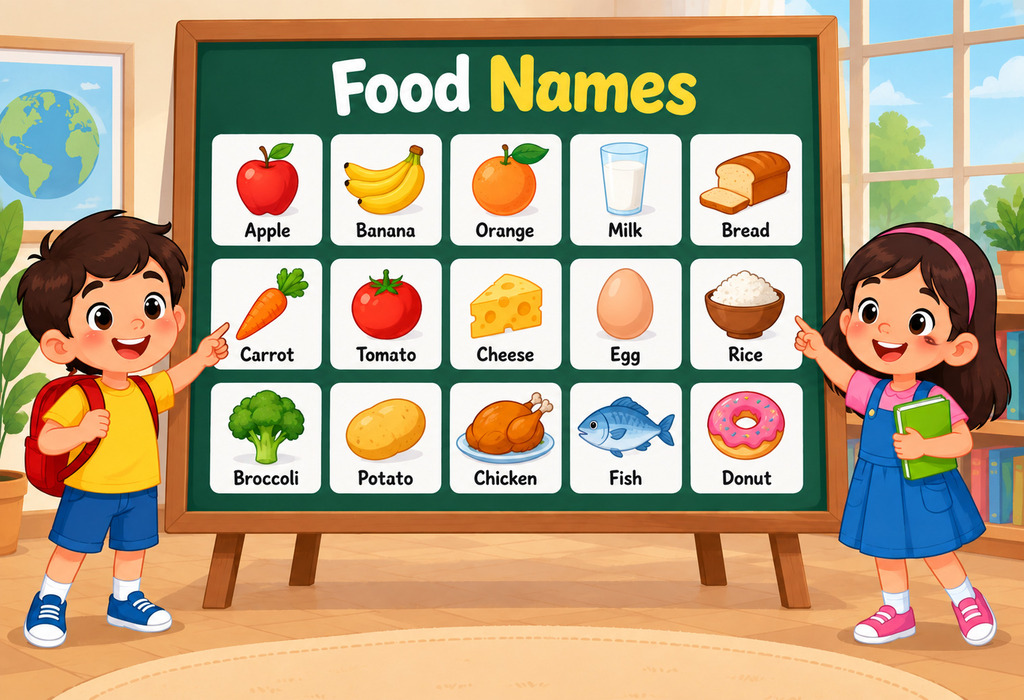
Learning food names in English is one of the most practical vocabulary lessons a child can pick up, since food is something they encounter and talk about every single day. From breakfast to dinner, mealtimes offer countless natural opportunities to introduce new words, making this an easy and engaging way for kids to expand their vocabulary without it feeling like a formal lesson.
Thank you for reading this post, don't forget to subscribe!
This article brings together a simple, organised list of food item names, covering everything from fruits and vegetables to grains, dairy, and snacks. Alongside these, you’ll also find a helpful section on healthy food names, giving children an early understanding of which foods support good health and growth. Whether your child is just starting to learn English or looking to build a stronger vocabulary, this list offers a fun, practical starting point for recognising and naming the foods they see and eat every day.
Why Is Food Important?
Food gives our bodies the energy and nutrients needed to grow, stay active, and stay healthy every single day. Beyond just satisfying hunger, different foods provide different benefits: proteins help build strong muscles, carbohydrates give us energy, and vitamins and minerals keep our immune system strong and our bodies functioning properly. For children especially, eating a balanced variety of foods plays a crucial role in physical growth, brain development, and building healthy habits that last into adulthood. Learning about food early on also helps kids make better choices as they grow, understanding not just what tastes good, but what genuinely nourishes their bodies.
List Of Common Food Names For Children
Introducing your child to food items through pictures is one of the easiest ways to build early vocabulary, since food plays such a central role in everyday life. This list of food names offers a simple starting point for helping kids recognise and name the foods around them.
1. Milk
Milk is a nutritious dairy drink packed with calcium and protein, most commonly sourced from cows, though buffalo, goat, and plant-based versions like almond or soy milk are widely enjoyed too.
2. Yoghurt
Yoghurt is made by adding live bacterial cultures to milk, which thicken it and give it a tangy taste, and it’s often praised for supporting healthy digestion.
3. Cheese
Cheese comes in hundreds of varieties worldwide, from soft, spreadable types like mozzarella to sharp, aged ones like cheddar, each shaped by how the milk is processed and matured.
4. Butter
Butter is made by churning cream until the fat separates from the liquid, a process used for centuries, and it remains a key ingredient in both cooking and baking.
5. Sour Cream
Sour cream gets its tangy flavour from fermenting cream with specific bacteria, and it’s a common addition to savoury dishes like tacos, baked potatoes, and dips.
6. Bread
Bread has been a dietary staple for thousands of years, made by baking a simple mix of flour and water, though today it takes countless forms, from fluffy white loaves to dense whole grain varieties.
7. Bagel
A bagel is unique among breads because it’s boiled briefly before baking, which gives it a distinctively chewy texture and shiny crust, a technique dating back centuries in Eastern European baking.
8. Sandwich
The sandwich is said to be named after the Earl of Sandwich, who reportedly asked for meat between bread slices so he could eat without leaving his card game.
9. Pancake
Pancakes are enjoyed in different forms across cultures, from thick, fluffy American-style stacks to thin, delicate French crêpes, all made from a similar simple batter.
10. Waffle
Waffles get their signature grid pattern from a special iron that presses the batter as it cooks, creating pockets perfect for holding syrup or toppings.
11. Doughnut
Doughnuts are typically fried rather than baked, which gives them their soft, airy texture, and the hole in the centre is believed to have originally helped them cook more evenly.
12. Honey
Honey never truly spoils if stored properly, and archaeologists have found edible honey in ancient Egyptian tombs thousands of years old, a testament to its natural preservative qualities.
13. Oats
Oats are considered one of the healthiest grains available, rich in fibre that helps keep you full longer, making porridge a popular and filling breakfast choice.
14. Chapati
A chapati is made fresh daily in most Indian households, cooked directly over an open flame until it puffs up, a skill often passed down through generations.
15. Dosa
A dosa gets its distinctive tang and crispiness from a batter that’s left to ferment overnight, a process that also makes it easier to digest.
16. Idli
Idlis are steamed rather than fried, making them one of the lighter options in South Indian cuisine, and their soft texture comes from the same fermented batter used for dosas.
17. Dhokla
Dhokla gets its light, spongy texture from fermentation, similar to idli, though it’s made from gram flour rather than rice, giving it a distinct nutty flavour.
18. Egg
An egg is considered one of the most complete sources of protein available, containing nearly all the essential nutrients needed for growth, and can be prepared in dozens of different ways.
19. Bacon
Bacon is made by curing pork with salt, a preservation method dating back centuries, and its smoky flavour often comes from an additional smoking process.
20. Biryani
Biryani’s origins trace back to Persian and Mughal royal kitchens, and today countless regional variations exist across India, each with its own signature blend of spices.
21. Rice
Rice feeds more than half the world’s population daily, making it one of the most important staple crops globally, with thousands of varieties grown across different regions.
22. Pasta
Pasta comes in hundreds of shapes, each traditionally paired with specific sauces, since the shape affects how well it holds onto flavour; thicker sauces for thicker pasta, for example.
23. Noodles
Noodles are believed to have originated in China over 4,000 years ago, and today nearly every Asian cuisine has its own distinct version, from ramen to rice noodles.
24. Tacos
A taco’s tortilla can be made from either corn or wheat flour, and the dish has roots tracing back to indigenous Mexican cooking long before it became popular worldwide.
25. Pizza
Pizza originated in Naples, Italy, with the classic Margherita version reportedly named after an Italian queen; its colours were meant to reflect the Italian flag.
26. Salad
While often thought of as a health food, salads can range from simple leafy greens to hearty combinations with grains, proteins, and dressings, making them incredibly versatile.
27. French Fries
Despite the name, French fries are widely believed to have originated in Belgium, where thin-cut, fried potatoes were a popular street food long before spreading internationally.
28. Chips
Chips are said to have been invented by accident in the 1850s when a chef sliced potatoes unusually thin in response to a customer’s complaint, creating the first crispy version.
29. Carrot
Carrots weren’t always orange; historically, they came in purple, yellow, and white varieties, with the now-familiar orange colour becoming dominant only a few centuries ago.
30. Tomato
Botanically, a tomato is actually a fruit, not a vegetable, though it’s used as a vegetable in cooking due to its savoury flavour profile.
31. Potato
Potatoes were first cultivated by indigenous communities in South America thousands of years ago before being introduced to the rest of the world, and today they’re grown on every continent except Antarctica.
32. Spinach
Spinach is often associated with strength thanks to its high iron content, a reputation famously exaggerated by the cartoon character Popeye.
33. Broccoli
Broccoli is actually an edible flower bud, harvested before it blooms, and it belongs to the same plant family as cabbage and cauliflower.
34. Cucumber
Cucumbers are made up of about 95 per cent water, making them one of the most hydrating vegetables, and their cool taste comes largely from this high water content.
35. Grapes
Grapes have been cultivated for thousands of years, primarily for eating fresh or turning into products like raisins, juice, and wine, one of the oldest cultivated fruits in the world.
36. Orange
Oranges are among the richest natural sources of vitamin C, and their name is believed to have influenced the English word for the colour orange, rather than the reverse.
37. Pineapple
A pineapple isn’t actually a single fruit; it’s made up of many individual berries that fuse as they grow, giving it its distinctive bumpy exterior.
28. Banana
Bananas are berries botanically, and they continue to ripen after being picked, which is why they’re often harvested green and left to ripen during transport.
39. Apple
There are over 7,500 known varieties of apples grown worldwide, each differing in taste, texture, and colour, from tart green varieties to sweet red ones.
40. Watermelon
Watermelon is made up of about 92 per cent water, making it an especially refreshing choice in hot weather, and both its flesh and seeds are edible.
41. Ice Cream
Ice cream’s origins trace back centuries, with early versions made using snow or ice mixed with fruit and sweeteners long before modern freezing technology existed.
42. Cake
Cakes have long been associated with celebration, and the tradition of blowing out candles is believed to date back to ancient Greek offerings made to the moon goddess Artemis.
43. Cookie
The word “cookie” comes from the Dutch word “koekje,” meaning “little cake,” and early versions were often used to test oven temperature before baking a full cake.
44. Pie
Pies date back to ancient times, when early versions used a hard pastry crust mainly as a container for cooking meat, rather than for eating the crust itself.
45. Chocolate
Chocolate comes from the cacao bean, and it was originally consumed as a bitter drink by ancient Mesoamerican civilisations long before sugar transformed it into the sweet treat known today.
46. Muffin
Muffins are technically a type of quick bread, meaning they don’t require yeast or lengthy rising time, which makes them faster to prepare than most baked goods.
47. Popcorn
Popcorn kernels pop because of the small amount of water stored inside each one, which turns to steam under heat and causes the kernel to burst open.
48. Smoothie
Smoothies became widely popular in the 1970s as a quick, nutritious way to combine fruit, yoghurt, or milk into a single drinkable meal.
49. Peanut Butter
Peanut butter was popularised in the early 1900s and is technically made from legumes rather than true nuts, despite peanuts often being grouped with nuts in everyday language.
50. Curd Rice
Curd rice is often eaten at the end of a meal in South Indian households, believed to have a cooling effect on the body, especially in hot weather.
A To Z Food Names For Children
For a quick alphabetical reference, here’s a handy round-up of all the food names kids haven’t come across yet in this list, perfect for building vocabulary from A to Z.
| ALPHABET | FOOD NAMES |
| A | Apple, Apricot, Avocado, Almond, Asparagus, Artichoke, Anchovy, Aubergine |
| B | Banana, Bread, Broccoli, Beetroot, Butter, Blueberry, Beans, Bacon, Biscuit, Blackberry |
| C | Carrot, Cheese, Cherry, Cucumber, Cabbage, Cashew, Chicken, Corn, Coconut, Chocolate |
| D | Dates, Doughnut, Duck, Dragon fruit, Dumpling |
| E | Egg, Eggplant, Edamame, Elderberry, English muffin |
| F | Fish, Fig, Flour, Fennel, French fries, Fudge |
| G | Grapes, Garlic, Ginger, Guava, Gooseberry, Green beans, Gravy, Goulash |
| H | Honey, Ham, Hazelnut, Honeydew melon, Hummus, Hash browns |
| I | Ice cream, Iceberg lettuce, Iced tea, Italian bread, Icing, Instant noodles |
| J | Jam, Jelly, Jackfruit, Jalapeño, Jasmine rice, Jicama |
| K | Kiwi, Kale, Ketchup, Kidney beans, Kohlrabi, Kebab |
| L | Lemon, Lettuce, Lentils, Lime, Lychee, Lasagne, Leek |
| M | Mango, Milk, Mushroom, Melon, Mint, Muffin, Meatballs |
| N | Noodles, Nuts, Nectarine, Nutmeg, Nachos, Navy beans, Navel orange |
| O | Orange, Onion, Oats, Olive, Okra, Omelette |
| P | Pear, Peach, Pineapple, Potato, Pumpkin, Peas, Pasta, Popcorn |
| Q | Quinoa, Quiche, Quince |
| R | Rice, Radish, Raisin, Raspberry, Rye bread |
| S | Strawberry, Spinach, Sweet potato, Sausage, Sandwich, Salmon |
| T | Tomato, Turnip, Toast, Tea, Tangerine, Turkey |
| U | Udon, Ugli fruit, Umami |
| V | Vanilla, Vinegar, Veal |
| W | Watermelon, Walnut, Wheat, Waffle |
| X | — (no common English food word) |
| Y | Yoghurt, Yam |
| Z | Zucchini |
Different Flavours And Textures Of Foods
Flavour refers to how food tastes, whether it’s sweet, sour, salty, spicy, or bitter, while texture describes how food feels in the mouth, such as crunchy, soft, smooth, or chewy. Together, these two qualities shape how much we enjoy eating something, since even the tastiest food can feel unappealing if the texture doesn’t sit well, and the same works the other way around.
Introducing your child to a variety of different flavours and textures from an early age can help them:
- Develop Fine Motor Skills — Picking up different foods with their fingers, whether soft, crunchy, or slippery, helps strengthen hand coordination and grip.
- Build Chewing Skills — Exposure to a range of textures, from soft purees to crunchier foods, encourages healthy jaw development and chewing ability.
- Expand Their Palate — Trying different tastes and textures early on makes children more likely to accept and enjoy a wider variety of foods as they grow.
- Improve Sensory Awareness — Learning to describe food as sweet, sour, crunchy, or smooth helps children build vocabulary while becoming more mindful eaters.
Tastes Of Food
Every food carries its own distinct taste, and learning to recognise these different flavours helps children describe what they’re eating with more than just “good” or “bad.” Here are the basic tastes kids can begin identifying:
- Sweet — Found in foods like fruit, honey, and desserts.
- Sour — Found in foods like lemons, yoghurt, and pickles.
- Salty — Found in foods like chips, crackers, and savoury snacks.
- Bitter — Found in foods like dark chocolate and certain leafy greens.
- Spicy — Found in foods like chilli peppers and spiced curries.
- Umami — A rich, savoury taste found in foods like cheese, mushrooms, and soy sauce.
- Pungent — A sharp, strong taste found in foods like raw onion, garlic, and ginger.
- Astringent — A dry, mouth-puckering taste found in foods like raw banana, pomegranate, and unripe fruit.
Texture Of Food
Texture describes how food feels in the mouth, and learning these differences helps children notice more about what they’re eating beyond just the taste. Here are some common textures kids can begin identifying:
- Crunchy — Found in foods like chips, raw carrots, and crackers.
- Soft — Found in foods like bread, bananas, and mashed potatoes.
- Chewy — Found in foods like caramel, dried fruit, and certain breads.
- Smooth — Found in foods like yoghurt, pudding, and peanut butter.
- Crispy — Found in foods like fried snacks, bacon, and roasted vegetables.
- Sticky — Found in foods like honey, syrup, and rice.
- Creamy — Found in foods like ice cream, cheese, and sauces.
- Grainy — Found in foods like oats, semolina, and certain fruits like pears.
- Juicy — Found in foods like watermelon, oranges, and grapes.
- Fizzy — Found in foods and drinks like soda and sparkling water.
- Slippery — Found in foods like okra, noodles, and boiled eggs.
- Flaky — Found in foods like pastry, pie crust, and croissants.
- Gooey — Found in foods like melted cheese and warm chocolate.
- Dry — Found in foods like crackers, toast, and certain biscuits.
Food Vocabulary For Kids
Now that you’ve understood food textures and tastes, let’s look at some everyday food-related words for children.
1. Breakfast
Breakfast is the first meal of the day, usually eaten in the morning, and is often considered important for giving the body energy after a night’s sleep.
2. Lunch
Lunch is the meal eaten around midday, typically falling between breakfast and dinner, and often serves as a break during a busy school or work day.
3. Dinner
Dinner is generally the last meal of the day, usually eaten in the evening, ideally at least an hour or two before going to sleep.
4. Snacks
Snacks are small portions of food eaten between main meals, meant to satisfy hunger or provide a quick energy boost rather than serve as a full meal.
5. Take-Out Food
Take-out food refers to meals bought from a restaurant or café that are packed to be eaten elsewhere, usually at home rather than at the place they were purchased.
6. Drinks Or Beverages
Drinks, or beverages, refer to anything liquid that we consume, including water, juice, milk, and sodas, each playing a different role in keeping us hydrated and nourished.
7. Meal
A meal refers to the food eaten at a specific time of day, such as breakfast, lunch, or dinner, usually made up of more than one dish or food item.
8. Bite
A bite is a small piece of food taken into the mouth at one time, usually broken off or cut using the teeth before chewing.
9. Chew
Chewing is the process of breaking down food using the teeth, making it easier to swallow and helping the body digest it more efficiently.
10. Food Delivery
Food delivery refers to meals ordered, often through an app or website, and brought directly to a person’s home or chosen location rather than being collected in person.
List Of Healthy And Unhealthy Foods
Understanding the names of types of food also means learning which choices support good health and which are best enjoyed occasionally. Here’s a simple comparison to help kids tell the two apart.
| Healthy Food | Unhealthy Food |
| Spinach | Chips |
| Carrot | Soda |
| Apple | Candy |
| Broccoli | Doughnut |
| Oats | French Fries |
| Yoghurt | Cake |
| Egg | Cookies |
| Salmon | Pizza |
| Almonds | Popcorn (buttered) |
| Beans | Chocolate |
| Brown Rice | White Bread |
| Banana | Ice Cream |
| Sweet Potato | Instant Noodles |
| Cucumber | Sausages |
| Lentils | Fried Chicken |
How To Encourage Your Child To Learn The Names Of Foods
Children need to learn the names of healthy foods in English, and a few simple, everyday activities can make this process both effective and enjoyable. Here are some ways to encourage your little one along the way.
- Involve Them In Grocery Shopping — Take your child along when buying food items for the home, naming each one as you pick it up. This hands-on approach helps them connect real objects with their names naturally.
- Use Flashcards With Pictures — Print out images of different food items and paste them onto flashcards. Show these to your child one at a time and ask them to name each food, turning it into a quick, engaging quiz.
- Play Pretend Cooking Games — Many kids enjoy the classic “kitchen-kitchen” game or similar pretend cooking activities. Encourage them to “prepare” a simple dish using different food items, which helps reinforce food names through play.
- Identify Food At Mealtimes — When serving a meal, ask your child to name what’s on their plate, whether it’s roti, dal, vegetables, rice, or fruit. Making this a daily habit helps the names stick through regular repetition.
- Read Food-Themed Books Together — Choose picture books or storybooks centred around food, mealtimes, or cooking, and pause to name the different items shown on each page. This blends reading time with vocabulary building in a natural, low-pressure way.
FAQs
1. Why Do Some Foods Have Different Names In Different Countries?
Food names often travel and change with trade, migration, and local languages, so the same food can end up with different names depending on where it’s eaten; for example, what’s called “chips” in the UK is called “fries” in the US, while what Americans call “chips” is called “crisps” in the UK.
2. Is It Normal For Kids To Dislike Certain Food Textures?
Yes, texture sensitivity is a well-documented part of childhood development, and it’s common for kids to strongly avoid specific textures, like the slimy feel of okra or the grittiness of certain fruits, long before their taste preferences fully settle.
3. Why Do Some Foods Taste Different When They’re Hot Versus Cold?
Temperature changes how strongly our taste buds detect flavours like sweetness, which is why ice cream can taste less sweet once melted and warm, or why a chilled dessert often tastes milder than the same one served hot.
4. Can Learning Food Names Help With Other Subjects Too?
Yes, food vocabulary naturally overlaps with other subjects, such as learning about food groups and nutrients in science, or exploring how dishes like biryani or pasta reflect the history and geography of the regions they come from.
Learning food names in English gives children a practical, everyday vocabulary they’ll use for the rest of their lives, whether at the dinner table, while grocery shopping, or reading a menu. Beyond just names, understanding tastes, textures, and healthy choices helps kids build a more thoughtful relationship with food as they grow.
Also Read:
Spelling Words for Kids
Animal Riddles for Children
Number Names for Children to Boost Math Skills