



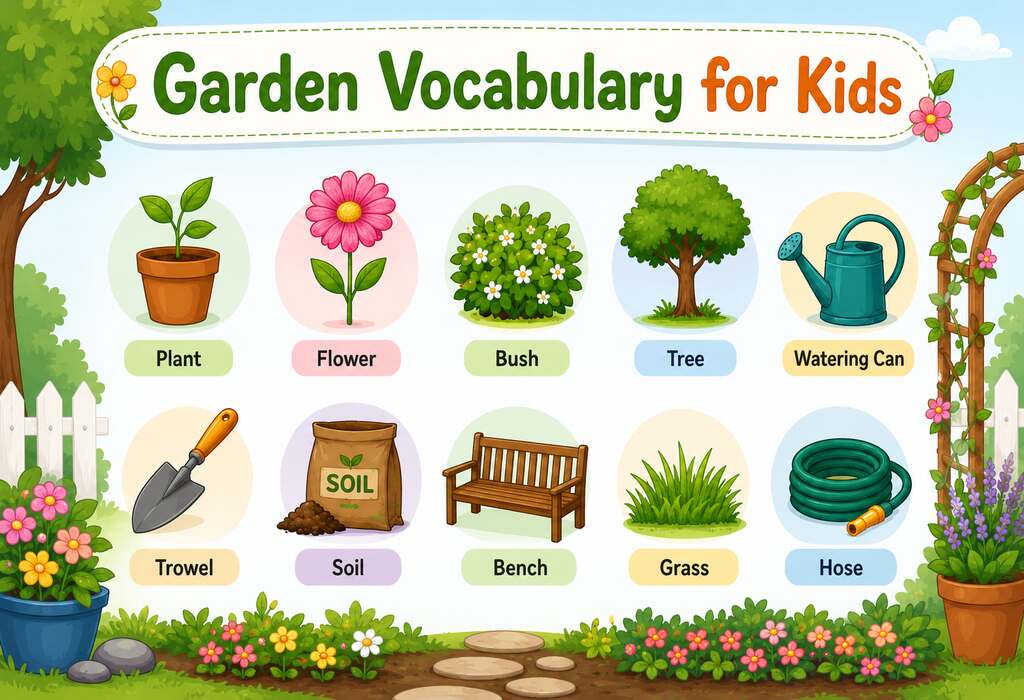
Have you ever walked through a garden and wondered what everything is called? Learning garden vocabulary in English is a wonderful way to connect with the natural world whilst building language skills. From the tiniest seedling to the tallest sunflower, gardens are filled with fascinating words just waiting to be discovered!
Thank you for reading this post, don't forget to subscribe!
In this guide, we will explore essential “In The Garden” vocabulary that every young nature lover should know. Whether you are helping to dig a flowerbed, spotting a bumblebee on a blossom, or getting your hands muddy with planting vocabulary like “sow,” “germinate,” and “compost,” there is so much to learn outdoors.
Gardening is not only enjoyable — it is also a fantastic classroom! So, put on your gardening gloves, pick up your trowel, and let us explore the wonderful world of garden words together.
What is a Garden?
A garden is a piece of land where plants, flowers, trees, and vegetables are grown and cared for. Gardens can be found in many places, such as beside a house, within a school, or in a public park. They come in all shapes and sizes — from a small collection of potted plants on a balcony to a large stretch of land filled with flowerbeds and pathways. A garden requires regular attention and care, including watering, weeding, and pruning, to keep it healthy and beautiful. Gardens are not only pleasant places to spend time outdoors, but they also provide important habitats for birds, insects, and other wildlife.
Why is it Important to Learn Garden Related Words?
Learning garden-related words helps children better understand the natural world around them. When children are familiar with the names of plants, tools, and processes, they can communicate more clearly about what they observe and experience outdoors. Building this vocabulary also supports learning in other subjects, such as science and geography, where knowledge of nature and the environment is essential.
Furthermore, understanding gardening terms encourages children to take an active interest in caring for plants and the environment, helping them develop a sense of responsibility from an early age. Whether reading a book about nature, following planting instructions, or simply exploring a garden, a strong vocabulary makes the experience far more meaningful and enjoyable.
List Of Gardening Words
There are many interesting words associated with gardening, each describing something unique about plants, tools, or outdoor spaces. The following garden vocabulary list covers the most important terms that children are likely to encounter. Becoming familiar with these common garden vocabulary words will make it much easier to understand and enjoy the world of gardening.
| WORD | MEANING |
| lawn | Green grass area |
| tree | Tall plant with trunk |
| bush | Small leafy plant |
| flowerbed | Place where flowers grow |
| flowerpot | Pot for growing plants |
| seeds | Small things that grow |
| soil | Dirt where plants grow |
| weed | Unwanted plant in garden |
| hosepipe | Tube for watering plants |
| watering can | Can for watering flowers |
| gate | Door to garden |
| shed | Small tool storage house |
| lawnmower | Cuts the grass short |
| rake | Tool for collecting leaves |
| spade | Big tool for digging |
| trowel | Small hand digging tool |
| garden fork | Tool for turning soil |
| wheelbarrow | Cart for moving dirt |
| pruners | Scissors for cutting branches |
| hedge | Bush wall around garden |
| greenhouse | Glass house for plants |
| vegetable plot | Place for growing veg |
| compost | Rotting leaves for soil |
| trellis | Frame for climbing plants |
| bud | Small part before flower |
Garden Tool Vocabulary with Pictures
Every garden requires a set of essential tools for planting, digging, and maintaining outdoor spaces. Explore the garden vocabulary words below to learn about the most commonly used gardening tools.
1. Spade
A spade is one of the most essential tools in any garden. It has a flat, sharp-edged metal blade attached to a long handle, making it perfect for digging soil, planting shrubs, and edging garden beds. Children can use a smaller spade to help with basic digging tasks.
2. Rake
A rake has a long handle with a row of metal or plastic teeth at the end. It is used to gather fallen leaves, level soil, and remove debris from the garden. Raking is also a great way to loosen the top layer of soil before planting seeds.
3. Trowel
A trowel is a small, handheld tool with a pointed, scoop-shaped blade. It is ideal for digging small holes, transferring seedlings, and mixing soil in tight spaces. Its compact size makes it one of the most beginner-friendly gardening tools for children.
4. Watering Can
A watering can is a container with a long spout and a perforated nozzle that allows water to flow gently over plants. It is used to water seedlings, potted plants, and flower beds without damaging delicate roots. Lightweight watering cans are a popular first gardening tool for young children.
5. Garden Hose
A garden hose is a long, flexible tube used to deliver water across larger areas of the garden. It can be attached to a tap and used to water lawns, wash garden paths, and rinse tools after use. Many garden hoses come with adjustable nozzles to control the flow of water.
6. Wheelbarrow
A wheelbarrow is a one-wheeled cart with two handles used to transport soil, compost, plants, and garden waste from one place to another. It saves a great deal of time and effort, especially when working on larger garden projects. Children enjoy using mini wheelbarrows to help carry light loads around the garden.
7. Shovel
A shovel is similar to a spade but has a slightly curved blade, making it better suited for scooping and moving loose materials such as soil, gravel, and compost. It is a heavy-duty tool commonly used for larger digging and landscaping tasks in the garden.
8. Garden Gloves
Garden gloves protect the hands from dirt, thorns, splinters, and rough surfaces while working in the garden. They are available in various sizes, including child-friendly versions, making them an important safety essential for young gardeners. Wearing gloves also helps keep hands clean during messy gardening tasks.
9. Lawnmower
A lawnmower is a machine used to cut grass to an even height across a lawn. It comes in manual, electric, and petrol-powered versions, each suited to different garden sizes. While lawnmowers are strictly for adult use, children can learn about lawn care by observing how and when the grass needs to be cut.
10. Plant Pot
A plant pot is a container used to grow plants, flowers, and herbs, particularly when outdoor garden space is limited. They come in a wide range of sizes and materials, including plastic, terracotta, and ceramic. Plant pots are a great starting point for children who want to grow their very first plant.
11. Seed Tray
A seed tray is a shallow container with multiple small compartments used to germinate seeds before transferring them to the garden. It allows gardeners to start growing plants indoors or in a greenhouse during cooler months. Seed trays are a wonderful way to introduce children to the early stages of plant growth.
12. Compost Bin
A compost bin is a container used to collect and break down organic waste such as fruit peels, vegetable scraps, and dried leaves into rich, natural fertiliser. The compost produced is then mixed into garden soil to improve its quality and support healthy plant growth. It is also a brilliant way to teach children about recycling and sustainability.
13. Sprinkler
A sprinkler is a device attached to a garden hose or water supply that distributes water evenly across a lawn or garden bed. It is particularly useful for watering large areas without having to move a hose manually. On a warm day, sprinklers also make for a fun outdoor activity for children.
14. Bucket
A bucket is a versatile, open-topped container used in the garden for carrying water, collecting weeds, mixing soil, and storing small tools. It is one of the simplest yet most useful items to have on hand during any gardening task. Children often use buckets to water plants and collect garden debris.
15. Brush
A garden brush, also known as a yard broom, has stiff bristles attached to a long handle and is used to sweep away dirt, leaves, and grass clippings from paths, patios, and garden surfaces. Keeping the garden tidy is just as important as tending to plants, and a good brush makes the job much easier.
16. Fork
A garden fork has a long handle with several sturdy, pointed prongs and is used to loosen and aerate soil, break up clumps, and mix in compost. It is particularly helpful when preparing a new planting bed or turning over soil that has become compacted over time.
17. Stick
A garden stick, often called a plant stake, is a thin rod used to support tall or climbing plants such as tomatoes, sunflowers, and beans as they grow. It is gently pushed into the soil beside the plant and tied loosely with string to keep the plant upright. Simple as it is, a stick can make a big difference to a plant’s growth and stability.
18. Net
A garden net is a mesh covering used to protect plants from birds, insects, and other pests that might damage crops or flowers. It is also used to support climbing plants or cover ponds for safety. Nets are practical and are a chemical-free way to keep a garden healthy and protected.
19. Basket
A garden basket is used to carry freshly picked fruits, vegetables, flowers, and herbs from the garden. Unlike buckets, baskets are lightweight and easy for children to carry, making them a popular tool for little helpers during harvest time. Wicker and wire baskets are among the most commonly used varieties.
20. Shears
Shears are a large, scissor-like cutting tool used to trim hedges, shape bushes, and cut back overgrown plants. They require a firm grip and careful handling, making them a tool best suited for older children under adult supervision. Regular trimming with shears keeps a garden looking neat and encourages healthy plant growth.
Planting Vocabulary
Planting is one of the most rewarding parts of gardening, and knowing the right words makes the experience far more meaningful. Here is a collection of vocabulary words about gardens and planting to help children get started.
- Seed
- Soil
- Compost
- Germinate
- Seedling
- Transplant
- Roots
- Bulb
- Cutting
- Fertiliser
- Watering
- Sunlight
- Pot
- Bed
- Harvest
Garden Action Words
Gardens are full of activity, with a variety of tasks carried out throughout the seasons. Below is a list of common action words describing what gardeners do when tending their outdoor spaces.
- Dig
- Plant
- Water
- Weed
- Prune
- Sow
- Rake
- Trim
- Harvest
- Mulch
- Compost
- Grow
- Pick
- Transplant
- Fertilise
Gardening Activities
Gardening involves a wide range of activities that keep outdoor spaces healthy, beautiful, and productive. This section covers some of the most common gardening activities that children are likely to encounter and enjoy.
- Planting Seeds
- Watering Plants
- Pulling Weeds
- Raking Leaves
- Picking Flowers
- Digging Soil
- Harvesting Vegetables
- Composting
- Transplanting Seedlings
- Potting Plants
- Feeding Plants
- Collecting Rainwater
- Growing Herbs
- Making a Mud Garden
- Pressing Flowers
Garden Vocabulary Sentences
Learning new words becomes much easier when they are used in context. This section provides simple example sentences using common garden vocabulary words to help children understand how each term is used in everyday language.
- I used a spade to dig in the soil.
- We planted seeds in a small pot.
- The seedling needs water and sunlight to grow.
- She watered the flowers with a watering can.
- The gardener cut the branches with shears.
- We put vegetable scraps in the compost bin.
- The roots grow deep under the soil.
- He raked the leaves into a big pile.
- The carrots were ready to pick from the garden.
- She moved the plant from the pot to the garden bed.
Fun Activities to Learn Garden Vocabulary
The best way to remember new words is to put them into practice. Here are some fun activities to help children explore and enjoy garden vocabulary in an engaging and memorable way.
1. Garden Word Scavenger Hunt
Take children into the garden and give them a list of simple garden words such as “leaf,” “soil,” “seed,” and “pot.” Ask them to find and point to each item as they go. This activity helps children connect words with real objects, making vocabulary much easier to remember.
2. Plant a Seed Together
Help children plant a seed in a small pot and encourage them to describe each step using the correct gardening words. Talking through actions such as “filling the pot with soil” or “pressing the seed in” reinforces planting vocabulary in a natural, practical way.
3. Garden Flashcard Match
Create simple flashcards with a garden word on one card and a picture on another. Ask children to match the word to the correct image. This is a straightforward and enjoyable way to build and review garden vocabulary at home.
4. Garden Vocabulary Drawing
Ask children to draw their ideal garden and label each part using the words they have learnt. Labelling a drawing encourages children to recall and apply vocabulary whilst also allowing them to express their creativity.
5. Read A Gardening Book Together
Choose a simple picture book about gardens or plants and read it together with your child. Pause to discuss any new words that come up and relate them to real objects in your own garden or home. This builds vocabulary in a relaxed and enjoyable setting.
FAQs
1. How Can I Practise Garden Words At Home?
You do not need a big garden to practise. You can grow a small plant on a windowsill and use gardening words to describe what you see each day. Writing a simple plant diary using words like “germinate,” “roots,” and “seedling” is a great way to practise at home.
2. Are There Garden Words That Are Used In Science Lessons?
Yes, many garden vocabulary words are also used in science. Words such as “photosynthesis,” “germination,” “roots,” and “nutrients” are commonly found in science topics related to plants and living things. Learning these words early gives children a helpful head start.
3. How Can I Learn Garden Words If I Do Not Have A Garden?
You can learn garden vocabulary in many ways without having a garden. Watching nature programmes, reading books about plants, visiting a local park, or growing a small herb in a pot on a windowsill are all excellent ways to explore and practise garden words.
4. Is It Helpful To Label Things In My Garden To Learn Vocabulary?
Yes, labelling objects in your garden is a very effective way to learn new words. Write the name of each plant, tool, or area on a small card or stick and place it next to the corresponding object. Seeing the word alongside the real thing every day is one of the most natural ways to build vocabulary.
Garden vocabulary is a wonderful area of language that helps children connect with and understand the natural world around them. From the names of tools and plants to words that describe actions and activities, there is always something new to learn outdoors. With regular practice and a little curiosity, children will find that building garden vocabulary is just as rewarding as gardening itself.
Also Read:
Dictation Words for Kids
School Vocabulary for Kids
Word Building for Children
Pictionary Words for Children